


Onboarding commission-only, territory-based sales reps presents a unique challenge for B2B manufacturers. Unlike salaried employees, these professionals thrive on speed, clarity, and immediate earning potential. A slow, generic onboarding process doesn't just delay revenue; it actively pushes top performers toward your competitors. Replacing a single B2B sales rep can cost between $50,000 and $75,000 when factoring in recruitment, training, and lost sales opportunities. The stakes are too high for a "one-size-fits-all" approach.
To succeed, you need a system built for action, one that leverages a rep's existing relationships and accelerates their path to the first sale. This is where strategic sales onboarding best practices become a critical competitive advantage. A structured program ensures reps can translate their industry network into immediate pipeline activity, rather than getting bogged down in administrative tasks or confusing product training.
This guide moves beyond theory to provide a practical, actionable framework. We will detail 10 essential sales onboarding best practices designed specifically for B2B manufacturers and tech companies hiring independent reps. You will find role-specific checklists, sample 30/60/90-day plans, and success metrics that you can implement immediately. The goal is simple: to equip your new reps to fill empty territories, engage qualified buyers, and drive revenue faster.
1. Pre-Onboarding Assessment and Fit Validation
Effective sales onboarding best practices begin before a representative's first day. A Pre-Onboarding Assessment and Fit Validation process ensures you are bringing on a commission-only rep who is not just qualified but positioned to succeed within your specific territory and market. This crucial first step involves a deep verification of the rep’s existing industry relationships, product category experience, and intimate knowledge of the target territory.

This proactive validation reduces the risk of early turnover and shortens the time-to-first-sale. By confirming alignment beforehand, you avoid placing a rep in a territory where they lack the necessary connections or understanding of the local buyer landscape.
How It Works in Practice
The goal is to move beyond resumes and interviews to tangible proof of fit. This is especially critical for B2B manufacturers where established trust is paramount.
- Medical Device Sector: A manufacturer of surgical instruments would validate that a potential rep has current, active relationships with orthopedic surgeons and hospital procurement managers in their assigned region, not just general healthcare experience.
- Industrial Manufacturing: An industrial pump supplier would confirm a rep knows the key maintenance engineers and plant managers at the major chemical processing facilities within a specific territory, ensuring they can get a meeting on day one.
- B2B Technology: A SaaS firm selling complex logistics software would ensure a candidate has a proven track record of navigating long sales cycles with VPs of Supply Chain in the target vertical.
Actionable Tips for Implementation
To systematize this process, create a standardized assessment checklist. This ensures every candidate is evaluated against the same crucial metrics for success.
- Develop a Territory Scorecard: Rate candidates on their knowledge of key accounts, competitor presence, and buyer personas within the territory.
- Request Specific Account References: Instead of general references, ask for contacts from previous manufacturers they have represented in the same product category.
- Focus on Relationship Depth: Ask probing questions like, "Walk me through your relationship with the lead engineer at XYZ Corp. When was your last meaningful conversation?"
For manufacturers seeking a more streamlined approach, you can learn more about how to find and validate commission-only sales reps on ZillaSales. Using platforms with authenticated industry and regional data simplifies this validation, ensuring you connect with reps who are already verified for your specific needs.
2. Rapid Territory Mapping and Buyer Relationship Documentation
One of the most impactful sales onboarding best practices is to immediately translate a new rep's experience into a tangible asset. Rapid Territory Mapping requires new reps to formally document their existing customer relationships, key contacts, and overall territory landscape within their first week. This process creates a clear, actionable map of who they know, which accounts they can influence, and where the fastest revenue opportunities exist, transforming institutional knowledge into a strategic plan.

This front-loaded activity is crucial for commission-only roles, as it shifts the focus from cold outreach to leveraging warm, established connections. It provides sales leaders with immediate visibility into the rep's network and allows for collaborative strategizing on the highest-potential accounts, accelerating the path to the first commission check.
How It Works in Practice
The objective is to quickly build a shared understanding of the territory's key players and prioritize outreach based on the strength of existing relationships. This turns a new hire's network into a predictable pipeline from day one.
- Industrial Equipment Sector: A new rep for a robotics automation company would map their existing contacts with plant managers, chief engineers, and procurement directors at manufacturing facilities in the Midwest, flagging those they've sold to previously.
- Healthcare Technology: A rep selling patient monitoring systems would document their connections within hospital administration, department heads, and IT purchasing committees across their assigned health networks.
- B2B SaaS: A new account executive for a cybersecurity firm would list the CIOs, VPs of IT, and security directors they already know at target enterprise accounts, noting past projects and pain points discussed.
Actionable Tips for Implementation
To make this a structured part of your onboarding, provide reps with the tools and guidance to complete this task effectively during their first few days.
- Provide a Standardized Template: Use a simple CRM view or a shared spreadsheet with columns for Account Name, Key Contact, Title, Relationship Strength (e.g., strong, moderate, weak), and Last Contact Date.
- Make It a Collaborative Exercise: Schedule a dedicated session in week one for the sales manager and rep to review the documented relationships together, identify the top 5-10 "quick win" accounts, and co-develop an initial outreach strategy.
- Categorize Accounts for Prioritization: Ask the rep to segment accounts into tiers based on their likelihood of immediate adoption, such as "Ready to Engage," "Nurture," and "Future Prospect."
- Incentivize Thorough Documentation: Link a small early-win bonus or incentive to the completion and strategic quality of their relationship map, encouraging transparency and detailed input.
3. Structured Product and Positioning Training (Rapid Format)
Commission-only sales reps are experienced professionals who need to generate revenue quickly, making lengthy, feature-heavy training counterproductive. Structured Product and Positioning Training provides a rapid, high-impact alternative. This approach prioritizes market context, competitive differentiation, and buyer pain points over exhaustive technical specifications, equipping reps to sell effectively from day one.
This method respects the rep’s time and expertise by focusing on what truly matters: articulating value and closing deals. It condenses essential knowledge into 2-3 focused sessions, ensuring reps can confidently position your product within their existing buyer conversations immediately. This is one of the most critical sales onboarding best practices for maintaining momentum.
How It Works in Practice
The goal is to arm the rep with practical sales tools, not to turn them into a product engineer. The training is tailored to real-world scenarios they will face in their territory.
- Industrial Manufacturing: Instead of a long lecture on motor specifications, an equipment manufacturer provides a one-page ROI comparison sheet showing how their product delivers a 15% lower total cost of ownership than the top three competitors.
- Medical Device Sector: A company provides new reps with specific case studies and testimonials from similar-sized hospital networks, demonstrating proven outcomes that address the specific challenges of chief nursing officers.
- B2B Technology: A SaaS firm creates distinct, vertical-specific pitch decks. A rep targeting logistics gets a deck focused on supply chain efficiency, while one targeting finance receives a version highlighting compliance and cost reduction.
Actionable Tips for Implementation
To execute this rapid training effectively, focus on creating modular, reusable assets that are easy for reps to digest and apply.
- Create Positioning One-Pagers: Develop concise documents summarizing key messaging, ideal customer profiles, and pain points for each major buyer persona.
- Develop Competitive Battle Cards: Equip reps with simple cards outlining common competitor weaknesses and your corresponding strengths, along with proven talking points.
- Use Mock Sales Calls for Assessment: Test a rep's understanding through simulated sales scenarios with specific objections, rather than traditional quizzes. This provides practical, real-time feedback.
- Record All Training Sessions: Make all training available on-demand so reps can review key concepts asynchronously without disrupting their selling time.
- Schedule 15-Minute Reinforcement Sessions: For the first month, hold brief weekly check-ins to reinforce key concepts, answer questions, and share early wins.
4. Commission Structure Clarity and Early Validation
For a commission-only sales representative, compensation is their entire livelihood. Effective sales onboarding best practices address this head-on by establishing crystal-clear commission structures, payment timelines, and earning potential from the very beginning. This crucial step ensures reps feel secure and can focus entirely on selling rather than worrying about when or how they will be paid.
Ambiguity in compensation is the fastest way to demotivate a top-performing independent rep. By providing transparent, documented financial terms during onboarding, you build immediate trust and confidence. This validation allows the rep to fully invest their energy into leveraging their network and closing deals, accelerating your market penetration and revenue growth.
How It Works in Practice
The goal is to eliminate any potential for confusion by using straightforward, documented examples. This clarity is vital across all B2B sectors where sales cycles and deal structures can vary.
- Industrial Manufacturing: A rep selling a custom piece of equipment should receive a written example like: "A $50,000 custom machinery sale with a 10% commission rate equals a $5,000 commission, paid within 30 days of the client's final invoice payment."
- B2B Technology: For a SaaS company, clarity might look like this: "An annual software contract valued at $120,000, with an 8% first-year commission, results in a $9,600 commission, paid within 30 days of the signed contract and initial payment."
- Medical Device Sector: A rep needs to understand unit-based deals: "A hospital contract for 500 units at $200 each, with a 5% commission, equals a $5,000 commission, triggered upon delivery and invoice acceptance."
Actionable Tips for Implementation
Systematize your commission communication to ensure every rep receives the same clear message. This prevents misunderstandings and sets a professional tone for the partnership.
- Create a "Commission-at-a-Glance" Document: Provide a simple, one-page PDF that outlines rates, payment triggers (e.g., signed contract vs. paid invoice), and timelines.
- Walk Through Realistic Deal Scenarios: During onboarding, model 2-3 common deal types, showing the exact math from sale price to the final commission payout.
- Establish a Payment Service Level Agreement (SLA): Formally commit to a payment timeline, such as "All verified commissions will be processed and paid within 30 days of the commission trigger event."
A clear and fair compensation plan is foundational to attracting and retaining elite talent. To learn more about structuring these partnerships, explore these in-depth resources about working with commission-only sales reps. Building this financial trust from day one is a non-negotiable step in any successful sales onboarding process.
5. Manager Touchpoint Scheduling and Accountability Framework
For commission-only reps, consistent and structured communication is the lifeline that connects their independent efforts to your company’s strategic goals. An effective sales onboarding best practice is to establish a Manager Touchpoint and Accountability Framework. This system creates a regular cadence of check-ins during the crucial first 90 days, focusing on activity, early pipeline development, and problem-solving rather than micromanagement.
This framework is essential for maintaining momentum and providing support in a performance-based role. It ensures reps feel connected, have a clear channel to resolve obstacles, and stay aligned with your objectives, which directly impacts their motivation and accelerates their path to generating revenue.
How It Works in Practice
The goal is to create a supportive, accountability-driven dialogue that empowers the rep. These touchpoints are about removing roadblocks and celebrating incremental progress, not just demanding sales results.
- Industrial Manufacturing: A sales manager has a weekly 30-minute call with a new rep. The agenda is simple: “Who did you contact? What was the outcome? What’s the next step, and how can I help you get there?” This keeps the rep focused on productive activities.
- Medical Device Sector: A regional manager for a surgical tools company holds bi-weekly calls specifically to discuss hospital access challenges, navigate procurement politics, and answer complex regulatory questions, helping the rep overcome common industry hurdles.
- B2B Technology: A SaaS director schedules weekly pipeline reviews that focus on opportunity qualification and strategy. The conversation is about advancing deals, not pressuring for premature closes, building the rep’s confidence in selling the solution.
Actionable Tips for Implementation
Systematize your check-ins to build a predictable and productive rhythm. A clear agenda prevents calls from becoming aimless and ensures both parties get maximum value from the time.
- Schedule the First Check-In Early: Hold a quick, 15-minute call on day two or three to address initial setup questions and maintain early momentum.
- Establish a Clear Cadence: Move to weekly 30-minute calls for weeks 2-4, then shift to bi-weekly once the rep is more established.
- Use a Standard Agenda: Structure each call around four key points: 1) activities completed, 2) pipeline updates, 3) obstacles encountered, and 4) resources needed.
- Focus on Empowerment: Frame questions to be supportive, such as, "What can I do to help unblock this opportunity?" instead of, "Why haven't you closed a deal yet?"
- Document and Follow Up: Send a brief email after each call summarizing action items to ensure clarity and accountability.
6. Peer Mentoring and Vertical-Specific Knowledge Transfer
One of the most impactful sales onboarding best practices is to formalize knowledge transfer from your seasoned experts to your new hires. Pairing a new representative with an experienced veteran accelerates the learning curve for industry nuances, competitive tactics, and the unwritten rules of a territory. This peer-to-peer approach is especially powerful in a commission-only model where rapid ramp-up and immediate revenue generation are paramount.
This structured mentorship program bridges the gap between theoretical product training and real-world application. It provides new reps with a trusted resource for navigating complex buyer dynamics and shortens the time it takes for them to build the confidence needed to close deals independently.
How It Works in Practice
The goal is to transfer practical, experience-based wisdom that can't be taught in a manual. This involves matching mentors and mentees based on their industry vertical or territory type to ensure the advice is highly relevant.
- Tenured Healthcare Sales Reps: An experienced rep can walk a newcomer through the intricacies of hospital buying committees, GPO contracts, and navigating the specific regulatory hurdles within the medical device space.
- Industrial Manufacturing Veterans: A senior rep mentoring a new hire can share their time-tested strategies for managing long procurement cycles, building relationships with plant managers, and understanding the maintenance schedules that drive purchasing decisions.
- Successful Tech Reps: An established tech sales professional can guide a new rep on how to effectively identify the true software decision-makers, navigate complex IT department approvals, and demonstrate ROI for SaaS solutions.
Actionable Tips for Implementation
To make mentorship a scalable and effective part of your onboarding, create a formal program rather than leaving it to chance. This ensures consistency and accountability for both the mentor and the mentee.
- Structure the Engagement: Plan 3-5 formal mentoring sessions over the first 60 days. This provides a clear framework and avoids sporadic, ad-hoc interactions that lack focus.
- Incentivize Participation: Offer a small bonus, public recognition, or other perks to your top performers for taking on a mentorship role. Always ask for their consent first.
- Formalize Expectations: Create a simple mentorship agreement that outlines goals, time commitment, and key topics to cover, such as territory strategy and customer relationship management.
- Incorporate Shadowing: Mandate peer ride-alongs or virtual call shadowing within the first 30 days to provide direct exposure to successful sales motions in action.
By leveraging the deep expertise within your existing team, you create a powerful support system that fosters faster integration and better performance. You can learn more about how to find reps with deep expertise across various B2B manufacturing industries on ZillaSales. This ensures you start with talent that can quickly become a valuable mentor.
7. CRM Setup and Activity Tracking From Day One
Introducing a CRM or activity tracking system from the very beginning is a foundational element of successful sales onboarding best practices. For commission-only reps, this isn't about micromanagement; it's about creating a shared system for visibility, accountability, and accurate forecasting. A lightweight, intuitive system ensures deal transparency and provides a clear view of territory progress without creating unnecessary administrative friction.
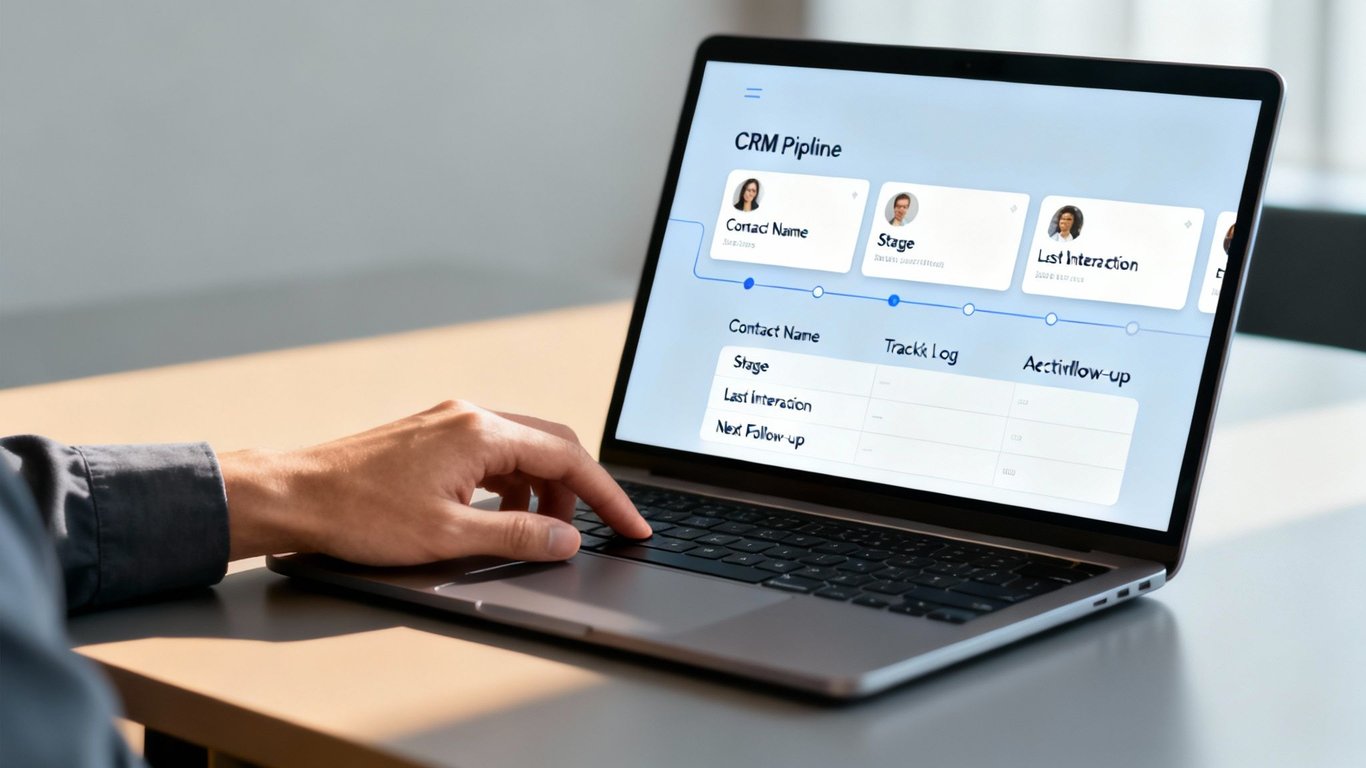
This immediate implementation helps reps organize their efforts and allows managers to provide targeted coaching based on real data. By establishing this discipline on day one, you build a scalable process that supports both the rep's earning potential and the company's revenue goals.
How It Works in Practice
The key is simplicity and clear purpose. The CRM should be a tool that helps the rep sell more efficiently, not a burden that slows them down. It serves as the single source of truth for all territory activities.
- Industrial Manufacturing: A manufacturer pre-populates the CRM with existing accounts. The new rep is tasked with adding new contacts weekly and logging all site visits and quote requests, providing a clear pipeline of potential machinery upgrades.
- Medical Device Firms: Reps use the CRM to track conversations with hospital stakeholders, monitor progress through regulatory hurdles, and log engagement with key decision-makers, ensuring no opportunity is overlooked during long sales cycles.
- B2B Technology: A SaaS company's reps track software trials, RFP submission stages, and contract negotiation statuses. This allows sales leadership to accurately forecast monthly recurring revenue and allocate technical resources.
Actionable Tips for Implementation
To ensure adoption and effectiveness, position the CRM as a benefit to the rep. Make the setup process seamless and integrate its use into your regular sales cadence.
- Keep It Simple: Choose an intuitive system like Pipedrive, HubSpot, or even a structured Airtable. The goal is adoption, not feature overload.
- Day-One Integration: Make CRM setup and training a mandatory part of the first day's onboarding activities. Don't introduce it weeks later.
- Focus on Essential Fields: Require minimal data entry to start: account name, key contact, next action, and expected close date.
- Show the "Why": Demonstrate how the CRM helps reps forecast their own commissions and manage their pipeline, framing it as a personal success tool.
- Leverage Data in Check-Ins: Use CRM data to guide weekly manager calls, focusing conversations on pipeline movement and removing roadblocks.
8. Quick Win Identification and Early Momentum Building
One of the most critical sales onboarding best practices for commission-only reps is generating immediate momentum. The goal is to identify and close one or two 'quick wins' within the first three weeks. These wins leverage a rep's existing relationships to secure a fast sale, validating the partnership and building crucial early confidence.

This strategy is essential in a commission-only model where financial returns must be realized quickly. An early sale proves the product's viability in the territory, generates the rep's first commission check, and solidifies their commitment to your line. It transforms the theoretical potential of the partnership into tangible, bankable results.
How It Works in Practice
The focus is on speed and leveraging established trust. It’s not about landing a whale; it’s about getting on the board fast to prove the concept and fuel future efforts.
- Industrial Manufacturing: A new rep for an industrial adhesive supplier uses their long-standing relationship with a former employer's plant manager to close a small but immediate order for MRO supplies, generating their first commission check within 15 days.
- Medical Device Sector: A rep leverages their connection at a regional hospital to sell an initial trial shipment of a new diagnostic tool. This small win gets the product in the door and builds the internal case for a larger, facility-wide contract.
- B2B Technology: A SaaS rep secures a 30-day paid pilot with a previous software client. This quick deal validates the product's value and provides a powerful local case study to use with other prospects in the territory.
Actionable Tips for Implementation
Systematize the quick win process by integrating it directly into the first week of onboarding. Make it a clear, collaborative objective from day one.
- Identify Hot Prospects: During the territory mapping phase, ask the rep to identify 3-5 accounts where they have a strong, active relationship and high trust.
- Qualify for Speed: Work with the rep to determine which of those accounts has an immediate need, the budget, and the authority to make a swift purchasing decision.
- Empower the Rep: Provide the new rep with the autonomy to offer a small, pre-approved incentive like pilot pricing or a first-order discount to close the deal quickly.
- Celebrate and Reinforce: When the deal closes, celebrate the win publicly within the company and, most importantly, pay the commission promptly to reinforce the value of the partnership.
9. Role Clarity and Expectation Setting (90-Day Milestones)
One of the most critical sales onboarding best practices is establishing unambiguous expectations from day one. A structured 90-day plan with clear, documented milestones ensures the commission-only representative understands precisely what success looks like. This framework moves beyond vague revenue hopes to define the specific activities and pipeline development goals required to achieve long-term results.
This proactive alignment prevents misunderstandings and provides a transparent basis for evaluating progress. For a commission-only model, it’s essential for managing expectations on both sides, ensuring the rep’s efforts are directed toward activities that predictably lead to sales and commissions.
How It Works in Practice
The 90-day plan should be broken down into 30-day increments, with each phase building on the last. The focus should be on leading indicators of success, not just lagging revenue figures, especially in the early stages.
- Industrial Manufacturing Territory: A rep for a new line of industrial adhesives might be tasked with "15 calls per week to new prospects, 2 factory site visits per month, and 3 qualified opportunities in the pipeline by day 60."
- Medical Device Sector: A representative for a new diagnostic tool could have a goal of "10 conversations with hospital administrators, all regulatory questions documented, and 1 trial order secured by day 60."
- B2B Technology: A SaaS rep might need to "conduct 20 discovery calls per week, attend 2 regional industry events, and secure 2 pilot agreements by day 90."
Actionable Tips for Implementation
To make this process effective, the milestones must be realistic, measurable, and collaboratively agreed upon. This fosters buy-in and accountability.
- Focus on Activity Metrics: Set targets for controllable actions like '15 qualified conversations per week' rather than just a final revenue number. This builds the foundation for future sales.
- Differentiate by Territory: Adjust milestones based on territory maturity. A new, undeveloped territory requires different activity goals than a mature territory with an existing customer base.
- Establish Regular Checkpoints: Schedule formal reviews at the 30, 60, and 90-day marks to discuss progress, address obstacles, and adjust the plan if necessary.
- Get Rep Buy-In: Review the 90-day plan jointly with the new representative during their first week. Ask for their input to ensure they believe the goals are achievable and to create a sense of shared ownership.
10. Continuous Communication Cadence and Territory Support Resources
Effective sales onboarding best practices extend well beyond the first 90 days. Establishing a Continuous Communication Cadence and providing robust Territory Support Resources is vital for the long-term success of commission-only reps. This framework ensures that geographically distributed reps remain connected, informed, and equipped to handle any challenge, preventing them from feeling isolated or unsupported in their territory.
This ongoing engagement transforms the relationship from a simple transactional agreement into a strategic partnership. It keeps reps aligned with company goals, updated on product evolution, and motivated to push through complex sales cycles, directly impacting territory revenue and rep retention.
How It Works in Practice
The goal is to create predictable, value-added touchpoints and easy access to critical information. This rhythm keeps reps integrated into the company culture and armed with the latest tools.
- Industrial Manufacturing: A manufacturer sends weekly pipeline reports, monthly market intelligence on raw material pricing affecting customers, and hosts quarterly executive briefings to discuss strategic direction.
- Medical Device Sector: A company provides reps with a digital hub containing the latest clinical data, regulatory updates, and competitive battle cards, along with direct access to clinical specialists for complex sales conversations.
- B2B Technology: A SaaS firm maintains an online portal with industry-specific ROI calculators, customer testimonials, and detailed technical specs, ensuring reps can instantly answer sophisticated buyer questions.
Actionable Tips for Implementation
Systematize your communication and resource management to ensure consistency and prevent reps from falling through the cracks. This proactive support is a cornerstone of successful sales onboarding best practices.
- Establish a Communication Rhythm: Schedule recurring 15-minute weekly check-ins to review priorities. Use monthly business reviews to analyze pipeline and celebrate wins. Conduct quarterly strategic reviews to adjust territory plans based on market feedback.
- Create a Centralized Digital Resource Hub: Use a shared drive or company wiki to organize all marketing collateral, sales tools, and product information. Keep it meticulously organized by product line, buyer persona, and sales stage.
- Designate a Go-To Technical Contact: Provide reps with a dedicated point-of-contact for urgent technical or product-related questions to unblock deals quickly.
- Keep Content Fresh and Relevant: Nothing undermines a rep’s credibility like outdated materials. Assign ownership for updating all collateral on a quarterly basis to reflect new product features, case studies, and market positioning.
10-Point Sales Onboarding Best Practices Comparison
| Practice | Implementation complexity | Resource requirements | Expected outcomes | Ideal use cases | Key advantages |
|---|---|---|---|---|---|
| Pre-Onboarding Assessment and Fit Validation | Medium — structured vetting process | Recruiter time, assessment tools, reference checks, data (e.g., Zilla) | Better rep-product fit, reduced early churn, faster productivity | Commission-only hires; complex manufacturing/tech territories | Prevents mismatches, leverages existing relationships |
| Rapid Territory Mapping and Buyer Relationship Documentation | Low–Medium — simple templates + collaboration | CRM/spreadsheet, manager time, rep input | Prioritized accounts, quicker first sale, less redundancy | New reps with existing contacts; fast ramp territories | Identifies quick wins, clarifies coverage |
| Structured Product and Positioning Training (Rapid Format) | Low — condensed sessions and materials | SMEs, one-pagers, recorded sessions, battle cards | Faster messaging adoption, less time off-field | Commission reps needing rapid enablement; vertical sales | Keeps reps selling, focuses on buyer pain points |
| Commission Structure Clarity and Early Validation | Medium — legal review and clear docs | Compensation design, payroll/process setup, sample scenarios | Trust in pay, fewer disputes, improved retention | Commission-only models; high-value or recurring deals | Builds confidence, aligns incentives |
| Manager Touchpoint Scheduling and Accountability Framework | Low–Medium — recurring cadence and agendas | Manager time, tracking documents, meeting templates | Early obstacle resolution, sustained motivation, reduced ramp | Distributed reps; early-stage territories | Provides coaching, maintains engagement |
| Peer Mentoring and Vertical-Specific Knowledge Transfer | Medium — mentor selection and program design | Senior rep time, incentives, structured sessions | Faster tacit knowledge transfer, better onboarding outcomes | Specialized verticals (medical, industrial, tech) | Transfers real-world strategies, reduces manager load |
| CRM Setup and Activity Tracking From Day One | Low–Medium — simple CRM configuration | CRM license/templates, admin support, brief training | Transparency, accurate forecasting, commission protection | Any commission sales team; remote reps | Ensures pipeline discipline, prevents lost deals |
| Quick Win Identification and Early Momentum Building | Low — targeted opportunity execution | Sales support, flexible terms, targeted collateral | Early revenue, rep confidence, case-study material | New territory launches; commission-first reps | Validates partnership, accelerates motivation |
| Role Clarity and Expectation Setting (90-Day Milestones) | Low — documented milestones and checkpoints | Manager time, agreed KPIs, reporting cadence | Clear success criteria, objective evaluation, aligned effort | Onboarding commission reps across territory maturities | Eliminates ambiguity, guides focus and accountability |
| Continuous Communication Cadence and Territory Support Resources | Medium — ongoing cadence and content upkeep | Marketing collateral, product/tech support, scheduled reviews | Sustained engagement, faster problem-solving, higher retention | Distributed reps; complex or long sales cycles | Keeps reps connected, provides timely resources |
Transform Your Onboarding from a Cost Center to a Revenue Accelerator
Moving beyond traditional, slow-paced onboarding is no longer a luxury; it's a strategic necessity. For organizations relying on the expertise of commission-only, territory-based representatives, the speed and efficiency of your onboarding program directly determine your speed to market and revenue generation. The era of generic training decks and passive learning is over. Today’s most effective sales onboarding best practices are built on a foundation of precision, speed, and mutual accountability, transforming a potential cost center into a powerful revenue accelerator.
This article has detailed ten critical pillars for this modern approach. We moved from the foundational importance of pre-onboarding assessment to ensure you’re engaging the right talent, to the immediate, actionable task of rapid territory mapping. The goal is to leverage the rep’s existing buyer relationships from day one, not spend weeks teaching them what they already know. A structured yet rapid approach to product training, coupled with absolute clarity on commission structures, removes friction and builds the trust necessary for a strong partnership.
From Theory to Tangible Results
The real shift happens when you operationalize these concepts. The difference between a high-performing rep and one who churns often comes down to the support system you build in the first 90 days. Key takeaways from our discussion include:
- Structure Creates Speed: A defined 30/60/90-day plan with clear milestones and manager touchpoints isn't bureaucracy; it’s a runway. It provides reps with a clear path to their first commission check.
- Empowerment Through Tools and Knowledge: Setting up CRM access and activity tracking from the start, combined with a peer mentoring program for vertical-specific insights, equips reps with the tools and tribal knowledge they need to compete effectively.
- Momentum is Everything: The strategy of identifying and pursuing quick wins is a critical component. Early success builds confidence, validates the rep’s decision to partner with you, and creates a powerful feedback loop that fuels sustained performance.
By implementing these sales onboarding best practices, you are not just training a new salesperson; you are launching a strategic business partner into a territory. This system is designed to honor their expertise, respect their time, and provide the precise support they need to start selling.
Your Next Step: Building a High-Velocity Sales Force
Ultimately, a world-class onboarding program for commission-only reps is an exercise in strategic alignment. It aligns your product’s value with the rep’s network, your revenue goals with their financial incentives, and your support resources with their immediate needs. Adopting this focused, action-oriented framework will dramatically reduce time-to-first-sale, improve rep retention, and build a scalable, predictable engine for territory expansion and revenue growth. The investment you make in refining this process is one of the highest-leverage activities a sales leader can undertake. Don't just onboard reps; empower them to win.
Ready to find pre-vetted, industry-specific sales reps who are ready to hit the ground running? Zilla Sales connects you with top-tier, commission-only talent, shortening your recruitment cycle and accelerating your onboarding process from the very start. Visit Zilla Sales to discover how you can build your ideal sales team today.
Keep Reading
More insights for high-performance sales teams.

A Modern Guide to B2B Door to Door Companies
Uncover how modern door to door companies work, the real costs, and the risks. Learn about a smarter alternative for fast B2B territory growth.

Mastering Software Sales Training for Elite Reps
Build a world-class software sales training program. This guide details the curriculum, metrics, and tools needed to accelerate revenue with your sales team.

How Does Commission Work in Sales? A Manufacturer’s Guide
Understand how does commission work in sales. This guide explains common structures, calculation examples, and best practices for B2B manufacturing companies.
Ready to find your sales partner?
Join manufacturers who are successfully expanding their territories with our network. Post a listing in minutes and start receiving matches.
✓ Verified Professionals • ✓ No Long-term Contracts