


When you hear "door-to-door," you might picture someone from a bygone era with a suitcase full of encyclopedias. But for B2B manufacturers, door-to-door companies are something else entirely. They are specialized, third-party sales agencies you can hire to get a field sales force on the ground, fast.
Think of them as a sales team on demand. They come equipped and ready to enter new territories, generate leads, and close deals through direct, face-to-face conversations. For complex products where building a genuine relationship is critical, this model remains highly effective.
What Modern Door to Door Companies Actually Do

Let’s move past the old stereotype. Today's B2B door-to-door firms are sophisticated sales organizations that act as a direct extension of your own team. Their entire business is built around creating and managing a dedicated field sales force to represent your products in a specific city, state, or region.
Their model is built for speed and scale. Instead of spending months recruiting, hiring, and training an in-house team, you can partner with an agency and have representatives in the field within weeks. This is a significant advantage when launching a new product or entering a new market where building from scratch would be prohibitively slow and expensive.
The Power of Personal Interaction
In a business landscape saturated with emails and digital ads, a handshake and a real conversation provide a distinct competitive edge. This is especially true in B2B sectors where trust is the foundation of every transaction.
These outsourced teams are particularly effective in industries like:
- Industrial and Manufacturing: Selling complex machinery often requires an on-site presence to conduct a demonstration or discuss technical specifications.
- Medical and Healthcare: Selling devices or services to hospitals and clinics requires building genuine rapport with key decision-makers.
- Technology and Software: Many B2B solutions require a live demonstration to fully showcase their capabilities and justify the investment.
At their core, these companies are experts at translating your product’s features into compelling, in-person conversations that drive purchasing decisions.
A Thriving and Growing Industry
Despite the rise of digital sales, direct selling continues to grow. According to Grand View Research, the global direct selling market was valued at USD 200.14 billion in 2022 and is projected to grow at a compound annual growth rate (CAGR) of 6.4% from 2023 to 2030. In the U.S. alone, direct selling accounted for $40.7 billion in 2022, demonstrating its continued economic significance. You can analyze the complete direct selling market trends for a detailed overview.
How Outsourced Field Sales Teams Operate
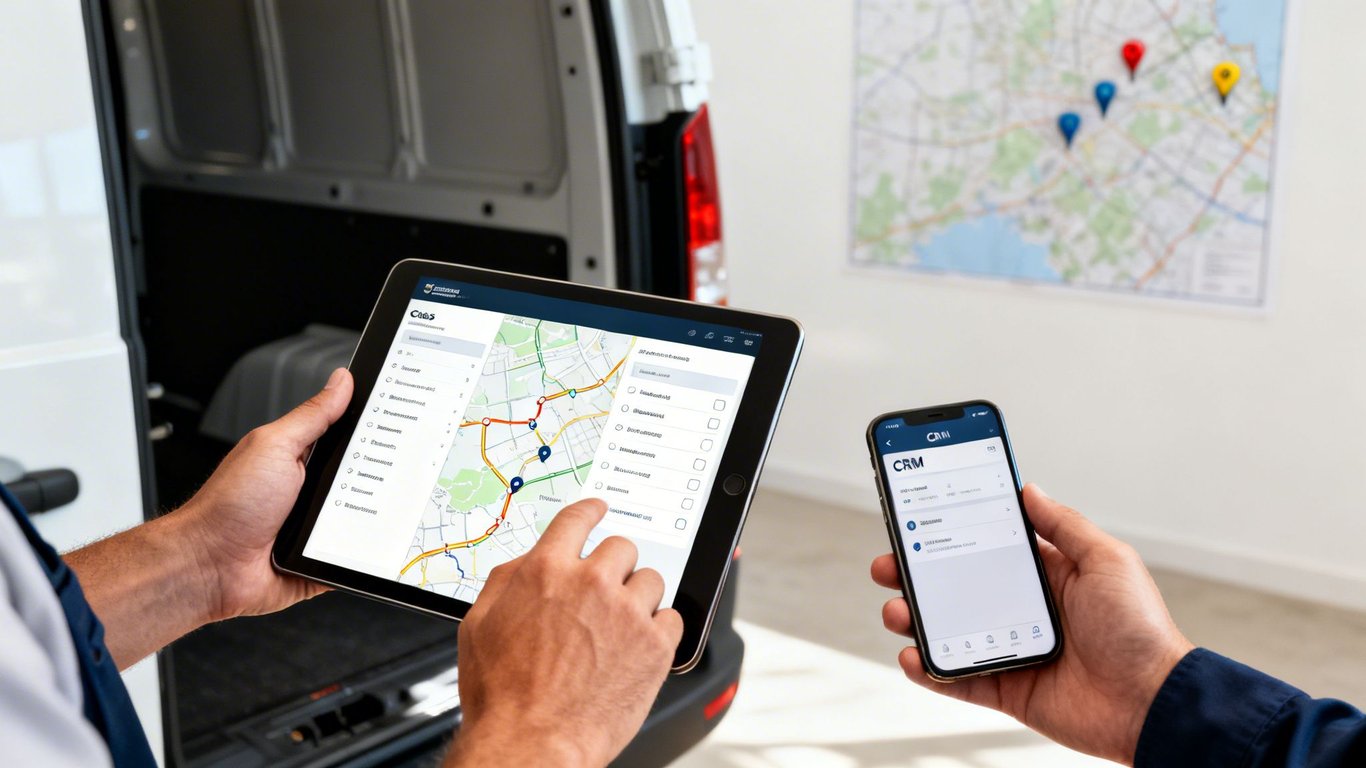
When you partner with a door-to-door sales company, you are engaging a sophisticated operational system. The process begins with strategic territory planning—a deep analysis of your target customer profile and their geographic concentrations.
During this initial phase, the agency analyzes geographic data to identify high-density clusters of potential customers, such as specific industrial parks or commercial districts. They meticulously map out territories to ensure maximum coverage without overlap, assigning clear zones to individual representatives or small teams.
Deploying Reps and Technology
With territories defined, the field team begins outreach. Modern door-to-door companies equip their reps with a technology stack designed to drive field efficiency. This is a data-informed process from start to finish.
A typical representative’s toolkit includes:
- Mobile CRM: Reps use tablets or smartphones to access customer information, log interactions, and update the sales pipeline in real time, ensuring alignment between your company and the agency.
- Route Optimization Software: This software maps out the most efficient daily routes, reducing travel time and fuel costs. This translates to more time spent with prospects.
- Digital Sales Materials: Representatives are equipped with digital presentations, product demos, and pricing on their devices, enabling a more flexible and engaging sales conversation.
This technology-driven approach transforms field sales from an art into a measurable science. It provides a level of tracking and accountability that was not possible a decade ago, ensuring every action is optimized for results.
Behind the scenes, the firm maintains a clear chain of command. Field reps report to a team lead or field manager who handles daily coaching, performance monitoring, and issue resolution. That manager then reports to an account manager, who serves as your primary point of contact for performance updates and strategic planning. You can learn more about how an outsourced sales team is structured to understand how these roles interconnect.
The Sales Process and Reporting
The sales process is not random; it follows a standardized and rehearsed playbook. Representatives are trained on your products, brand messaging, and specific sales tactics tailored for face-to-face encounters. They utilize a mix of cold canvassing, appointment setting, and follow-up on any provided leads.
Performance is tracked meticulously. Expect consistent reports covering key metrics:
- Number of initial contacts made
- Number of conversations initiated
- Qualified leads generated
- Appointments set
- Sales closed
This continuous data feedback loop provides a clear picture of campaign performance and allows for rapid strategic adjustments to ensure the field team remains aligned with your business objectives.
Calculating the True Cost of Outsourced Sales
Before signing a contract with a door-to-door sales company, it is essential to perform a thorough cost analysis. The quoted commission rate is only part of the financial picture. To accurately assess your financial commitment and potential return, you must investigate every potential cost.
Most experienced outsourced sales firms operate on a hybrid pricing model, typically a blend of a fixed monthly retainer and a performance-based commission on closed sales. The retainer covers operational costs like representative salaries, management, and training, while the commission incentivizes results.
However, you must inquire about other potential charges. Some companies assess a one-time setup or onboarding fee to cover initial territory mapping, custom training program development, and campaign launch. Obtain these figures upfront to avoid unexpected costs.
Breaking Down the Financial Models
Outsourcing a sales team allows you to convert high, fixed overhead into more predictable, variable costs. Building an in-house W-2 sales team involves significant financial commitments beyond salary.
Consider the costs of hiring a single direct employee:
- Fixed Salary: Paid monthly regardless of performance.
- Benefits and Payroll Taxes: Can add an additional 20-30% on top of base pay.
- Recruiting and Onboarding: Significant time and financial resources are required to find, hire, and train a new employee.
- Tools and Travel: Expenses for a CRM, company vehicle, fuel, and other necessary equipment.
An outsourced partner converts many of these fixed expenses into variable ones tied directly to activity and results. You can learn more about how this compares to other flexible models, like finding commission-only sales reps, to determine the best structure for your budget and risk tolerance.
Sales Channel Cost and Commitment Comparison
To put it all in perspective, this table compares how different sales channels stack up regarding time and financial commitment.
| Factor | In-House W-2 Sales Team | Door to Door Sales Company | Commission-Only Independent Rep (Zilla Sales) |
|---|---|---|---|
| Upfront Cost | High (recruiting, signing bonus, equipment) | Moderate (setup fees, initial retainer) | Low (platform fees only) |
| Fixed Monthly Cost | High (salary, benefits, taxes, insurance) | Moderate (monthly retainer) | None (reps are 1099 contractors) |
| Performance Cost | Moderate (commissions, bonuses) | High (commissions on sales) | High (commissions on sales) |
| Management Burden | High (direct management, coaching, HR) | Low (agency manages the reps for you) | Low (reps are self-managed entrepreneurs) |
| Speed to Market | Slow (3-6 months to hire and ramp up) | Moderate (4-8 weeks to launch a campaign) | Fast (find and onboard reps in weeks) |
| Risk | High (significant financial loss if a rep fails) | Moderate (retainer is at risk if no sales) | Low (only pay for performance) |
Ultimately, the right choice depends on your company's stage, risk appetite, and desired level of control over the sales process.
Calculating Your Potential ROI and CPA
To make an informed decision, you must calculate your potential return on investment (ROI) and, critically, your cost-per-acquisition (CPA). Your CPA reveals exactly how much you spend to acquire each new customer through this channel.
To calculate it, divide the total campaign cost (retainer + commissions + any fees) by the number of new customers acquired. For example, if you spend $20,000 in a month and acquire 10 new clients, your CPA is $2,000.
The key is to compare this CPA against your other sales and marketing channels. If your outsourced team’s CPA is lower than what you pay to acquire customers through digital ads or an in-house team, it demonstrates a strong financial argument for the partnership.
This data-driven approach removes emotion and guesswork from the decision-making process. It provides a clear, objective method for measuring the financial viability of a door-to-door partnership and ensures your investment is fueling profitable growth.
Managing Your Brand and Legal Risks

When you entrust your brand to an external team, you are extending a significant amount of trust. The moment a third-party salesperson represents your company, they become the face of your brand. Therefore, managing brand alignment and navigating legal complexities is paramount.
A single misstep can damage your reputation or create unforeseen legal liabilities. The only path to success is to treat an outsourced team as a genuine extension of your own, which requires a proactive approach to compliance and training from the outset.
Navigating Legal and Compliance Hurdles
The legal landscape of field sales is complex. Every municipality, county, and state has its own regulations for canvassing and direct sales. A reputable door to door company should manage the necessary permits and paperwork, but any failure on their part can negatively impact your brand.
Worker misclassification is another significant risk. Some agencies may attempt to reduce costs by classifying their representatives as 1099 independent contractors while treating them as full-time employees. If this is discovered by the Department of Labor, your company could be implicated. Your contract must clearly define the employment relationship and include clauses that protect you from this liability.
Your brand's reputation is built on trust and professionalism. Any legal shortcut or compliance failure by an outsourced team erodes that trust, creating problems that can linger long after the sales campaign ends. It's a risk that is simply not worth taking.
It is also crucial to consider how partners represent your products. You can gain insight into industry standards by examining how other sales channels operate, such as the agreements used by manufacturer rep companies, which are often structured around specific compliance requirements.
Ensuring Brand Alignment and Quality Control
Legal issues are only one aspect of risk. To ensure an outsourced team understands your product, brand voice, and target audience, you must engage in deep collaboration and open communication.
Implement a structured plan to maintain alignment:
- Co-Developed Training Programs: Do not simply provide a sales brochure. Work with the agency to build a comprehensive training program. Supply them with your best sales materials, detailed customer personas, and the competitive analyses your internal team uses.
- Standardized Product Demos: Create a script and a clear process for every product demonstration. This is the only way to guarantee every prospect receives a consistent and accurate presentation of your offerings.
- Regular Communication Cadence: Establish weekly or bi-weekly check-ins. These meetings are essential for reviewing performance, addressing challenges, and providing real-time feedback, serving as your primary quality control mechanism.
Investing this effort upfront minimizes the risk of brand message dilution and helps ensure the field team operates as a true part of your company.
Finding a Better Way to Grow Territory Sales
While traditional door to door companies provide a structured way to deploy a field sales force, the model has significant trade-offs. The process can be slow, encumbered by lengthy negotiations and extensive onboarding. Furthermore, high retainers and setup fees mean you assume considerable financial risk before the first sale is made.
For B2B manufacturers with specialized products, the greatest challenge is often a lack of expertise. A new representative, regardless of their enthusiasm, may lack the deep industry knowledge and established relationships to engage credibly with an experienced engineer or procurement director. You end up paying for them to learn your market.
However, a more agile, modern approach exists.
The Power of Independent Sales Professionals
What if you could bypass the agency structure entirely and connect directly with a network of established, commission-only sales professionals? This means partnering with independent industry veterans who have spent years, sometimes decades, building solid relationships within your target territories.
These professionals are not seeking salaried employment; they are entrepreneurs running their own sales businesses. They already possess a book of loyal customers and are actively seeking high-quality, complementary product lines to offer them.
This model reverses the traditional approach. Instead of training someone to build a network from scratch, you are leveraging a network that is already established and productive. It is the difference between planting a sapling and harvesting fruit from a mature tree.
This direct-to-rep model is supported by a large and growing talent pool. In 2023, 13 million people in the U.S. worked as independent sellers in direct selling. This field generated $40.7 billion in 2022 and is on track to hit $62.6 billion by 2030. These are the commission-only professionals who can deliver immediate results. You can find more insights on the relevance of direct selling in 2025 and beyond.
How a Rep Marketplace Accelerates Growth
Today, specialized marketplaces make finding these independent reps easier than ever. This approach offers several game-changing advantages over traditional door-to-door companies.
-
Unmatched Speed: You can post your product line and begin communicating with vetted, qualified reps in your exact territory—often within days, not months. This allows you to fill open territories almost instantly.
-
Zero Financial Risk: It is a purely pay-for-performance model. Because these reps are 1099 contractors who earn a commission only when they close a sale, you eliminate the hefty retainers and fixed costs associated with outsourced agencies.
-
Instant Market Access: This is the most significant benefit. You tap into the representative's established trust and relationships. They are not making cold calls; they are introducing your product into warm conversations with buyers they have known for years.
This modern approach directly addresses the primary challenges for B2B manufacturers: empty territories, high sales costs, and the long ramp-up time required to build a market presence from scratch. It is a smarter, lower-risk strategy for driving immediate growth.
Answering Your Field Sales Questions
Even with a well-defined strategy, questions about outsourcing sales are common. As a B2B leader, you must be confident that you are making the right decision for your company, brand, and bottom line.
Here are direct, practical answers to the most common questions from manufacturers and business leaders considering their options.
How Do I Measure the Success of a Door to Door Sales Campaign?
Measuring success solely by final sales numbers is a common mistake. While revenue is the ultimate goal, you must also monitor the leading indicators—the metrics that reveal the health and momentum of the partnership.
Here are the key performance indicators to track:
- Cost Per Acquisition (CPA): This is your primary metric. It provides a clear figure for what you are spending to acquire each new customer through this channel.
- Qualified Leads Generated Per Week: This indicates whether the team is productively engaging with prospects who fit your ideal customer profile, emphasizing quality over quantity.
- Sales Cycle Length: Track the time from the initial contact to a signed contract. An effective team should see this duration decrease as they gain familiarity with your product and market.
When you're selling complex B2B products, the quality of the new relationships is every bit as important as the quantity of sales. A truly successful campaign doesn't just bring in one-time orders; it fills your pipeline with high-value, long-term partners who will drive recurring revenue for years.
The advantage of working with commission-only reps is that performance measurement is straightforward. Their success is directly tied to the revenue they generate, making the ROI calculation exceptionally clear.
Are Door to Door Companies Effective for Technical B2B Products?
The effectiveness of any outside team selling a technical product depends on one critical factor: representative expertise. A persuasive salesperson will fail if they cannot hold a detailed conversation with an engineer or answer technical questions from a procurement manager.
This is a common challenge for traditional door to door companies, which often employ generalist sales staff who may excel at consumer-level sales but lack the deep industry knowledge required for specialized equipment, complex software, or medical devices.
This is precisely where independent, industry-veteran reps hold a significant advantage. When you connect with professionals who have spent years in your specific field, you gain partners who:
- Speak your customer's technical language fluently.
- Understand the competitive landscape and your unique value proposition.
- Possess established trust and credibility with potential buyers.
For specialized products, an experienced independent rep is not just a salesperson—they are a trusted advisor to their clients, making them exponentially more effective.
What Is the Real Difference Between Hiring a Sales Company and Using Independent Reps?
The two models differ fundamentally on three key aspects: cost, control, and connections. Understanding these distinctions is crucial for selecting the right path for your business.
When you hire a door-to-door sales company, you are purchasing a managed service, which typically involves:
- Higher Costs: You often face significant upfront retainers, setup fees, and long-term contracts.
- Less Control: The agency manages the representatives, their training, and daily operations. You are their client, not a direct manager.
- New Connections: The agency must build a network for you from scratch, which requires time and financial investment.
Conversely, using a marketplace to find independent reps provides direct access to professionals you select. This model offers:
- Lower Costs: It is a flexible, commission-only model with no fixed retainers, which dramatically reduces your financial risk.
- More Control: You build direct relationships with your reps, providing them with the support and product knowledge needed to succeed.
- Existing Connections: Independent reps bring their established book of business, providing immediate market access that a newly trained team cannot replicate.
How Should I Vet an Outsourced Sales Partner or Independent Rep?
Vetting is a non-negotiable step to protect your brand and ensure a return on your investment. The process differs depending on the model you choose.
For a door-to-door sales company, your due diligence should include:
- Requesting industry-specific case studies. You need evidence of their success with products similar to yours.
- Speaking directly to their current clients. Obtain unfiltered feedback on their real-world performance and communication.
- Scrutinizing their training and onboarding process. Understand exactly how they will educate their team on your technical product.
When vetting an independent rep, the process is more direct and personal:
- Ask about their current product lines. Identify any potential conflicts of interest immediately.
- Inquire about their key accounts in your target territory to confirm their relationships are authentic.
- Have them describe their sales process. How do they plan to introduce your product to their established customer base?
The best reps can clearly articulate the value of their network and present a credible, straightforward plan for how they will begin generating sales quickly.
Finding the right sales talent shouldn't be a slow, expensive grind. With Zilla Sales, you can connect with vetted, commission-only sales professionals who are ready to represent your brand in days, not months. Stop searching and start selling. Find your next top-performing rep at https://zillasales.com.
Keep Reading
More insights for high-performance sales teams.

Mastering Software Sales Training for Elite Reps
Build a world-class software sales training program. This guide details the curriculum, metrics, and tools needed to accelerate revenue with your sales team.

How Does Commission Work in Sales? A Manufacturer’s Guide
Understand how does commission work in sales. This guide explains common structures, calculation examples, and best practices for B2B manufacturing companies.

Setting Fair Commission Sales Rates for B2B Manufacturers
Learn how to set effective commission sales rates for independent reps. Our guide covers models, industry benchmarks, and legal tips for manufacturers.
Ready to find your sales partner?
Join manufacturers who are successfully expanding their territories with our network. Post a listing in minutes and start receiving matches.
✓ Verified Professionals • ✓ No Long-term Contracts