


A software sales rep acts as a crucial translator, bridging the gap between a complex piece of technology and the real-world business problem it solves. Their role is to convert technical features into tangible business outcomes—such as increased revenue, improved efficiency, or reduced risk.
What a Modern Software Sales Rep Actually Does

The modern software sales rep is a problem-solver. Their entire function revolves around understanding a potential client's challenges, strategic goals, and internal workflows.
From there, they connect those specific pain points directly to the software's capabilities, crafting a compelling business case for change. This role is centered on education and guidance. They are not just selling a product; they are navigating prospects through a complex buying process. Their objective is to illustrate a future state where problems are resolved and demonstrate exactly how the software delivers a tangible return on investment.
Core Responsibilities and Daily Tasks
The daily activities of a software sales rep blend technical knowledge, business strategy, and strong interpersonal skills. It extends well beyond making calls and sending emails.
Here is a breakdown of their primary functions:
- Strategic Prospecting: This involves methodical research to identify companies that are an ideal fit—those with the precise problems your software is designed to solve.
- Lead Qualification: They analyze both inbound and outbound leads to determine if they possess the Budget, Authority, Need, and Timeline (BANT) required to make a purchase.
- Conducting Discovery Calls: This is a critical stage where they ask insightful, probing questions to uncover a prospect’s primary operational challenges and desired business outcomes.
- Delivering Tailored Demos: An effective demo is not a feature checklist. It is a live demonstration of how the software solves the specific issues identified during the discovery call.
A top-performing software sales rep doesn't sell software; they sell outcomes. They articulate a vision of a better future for the client's business, and the software is simply the vehicle to get there.
Beyond the Initial Sale
The role does not conclude once a contract is signed. The most effective reps understand that building strong client relationships creates long-term value.
This includes post-implementation follow-ups to ensure the client is achieving the expected results and identifying opportunities to introduce new features or products (upselling or cross-selling). They focus on building partnerships, which transforms a one-time customer into a long-term advocate for your brand. If you're considering bringing on these key players, you can explore more about finding top-tier SaaS sales reps in our comprehensive guide. This commitment to long-term value is what separates an average rep from an elite one and fuels sustainable company growth.
Designing a Winning Sales Compensation Plan

A sales compensation plan is more than a budget line item; it is the engine that drives your entire sales motion. An effective plan will attract top talent and motivate your team to exceed targets. A poorly designed plan will leave revenue goals feeling unattainable.
For software sales reps, the compensation structure clearly communicates your company's values.
The industry standard in SaaS is a base salary plus commission. This hybrid model is prevalent because it provides reps with a stable income while offering a significant incentive to achieve and surpass their targets. This stability is crucial for attracting seasoned professionals who require a predictable income.
A competitive plan is non-negotiable. Across the U.S., the median base salary for a sales rep is around $63,230, but the top 25% earn $93,280 or more before commission. The market for incentive management software is expected to reach nearly $8.97 billion by 2033, which demonstrates how seriously companies are taking structured compensation.
The Popular 50/50 Split
The 50/50 base-plus-commission split is common in the software industry. It provides a straightforward way to define a rep's On-Target Earnings (OTE)—the total amount they will earn if they achieve 100% of their sales quota.
For example, a rep with a $140,000 OTE would have a $70,000 base salary and earn the remaining $70,000 in commission by meeting their annual sales goals.
Why is this model so popular?
- Predictability: It offers reps the financial security needed to focus on selling rather than personal finances.
- Motivation: The significant commission potential is a powerful driver, directly linking effort to financial reward.
- Alignment: It balances the company's need for growth with the rep's need for a stable income.
A compensation plan isn't just about paying your people; it's about telling them what matters most. A structure that heavily rewards new logo acquisition will produce different results than one that incentivizes multi-year contracts or account expansion.
Comparing Sales Compensation Models
There are multiple ways to structure pay, and the optimal model often depends on your company's stage and objectives. The table below outlines the most common structures to help determine the best fit.
| Model Type | Typical Structure | Pros | Cons |
|---|---|---|---|
| Base + Commission | 50/50 or 60/40 split of base salary and variable commission. | Attracts top talent, motivates performance, offers stability. | Higher fixed costs for the company. |
| Commission-Only | Reps earn a percentage of the revenue from deals they close. No base salary. | Very low risk for the company, attracts highly confident reps. | Hard to attract experienced reps, can lead to high turnover. |
| Tiered Commission | Commission rates increase as reps hit higher sales tiers (e.g., 8% up to $50k, 10% from $50k-$100k). | Strongly motivates over-performance and rewards top reps. | Can be complex to manage and forecast. |
| Base Salary Only | Reps receive a fixed salary regardless of sales performance. | Predictable costs, good for relationship-focused roles. | Little to no incentive to exceed goals, can demotivate high-performers. |
Ultimately, the goal is to create a structure that is perceived as fair, is easy to understand, and directly rewards the behaviors that drive business growth.
Commission-Only And Performance Accelerators
While not standard for full-time employees, a commission-only model can be an effective strategy in specific contexts. Early-stage startups with limited budgets or companies utilizing sales marketplaces often use this model to minimize fixed costs. It attracts a particular type of rep—entrepreneurial, highly confident, and driven purely by performance.
You can also add layers to your plan to drive specific outcomes. Accelerators are an excellent tool for this purpose. They are multipliers that activate after a rep reaches their quota, increasing their commission rate on all revenue earned above their target.
For instance, a rep might earn 10% commission up to their quota, but 15% on every deal closed after that. These are incredibly powerful for motivating top performers to maintain momentum throughout the quarter. For a deeper analysis of setting the right figures, consult our guide on how to calculate commission rates for your team.
The Essential Skills of Top-Performing Reps
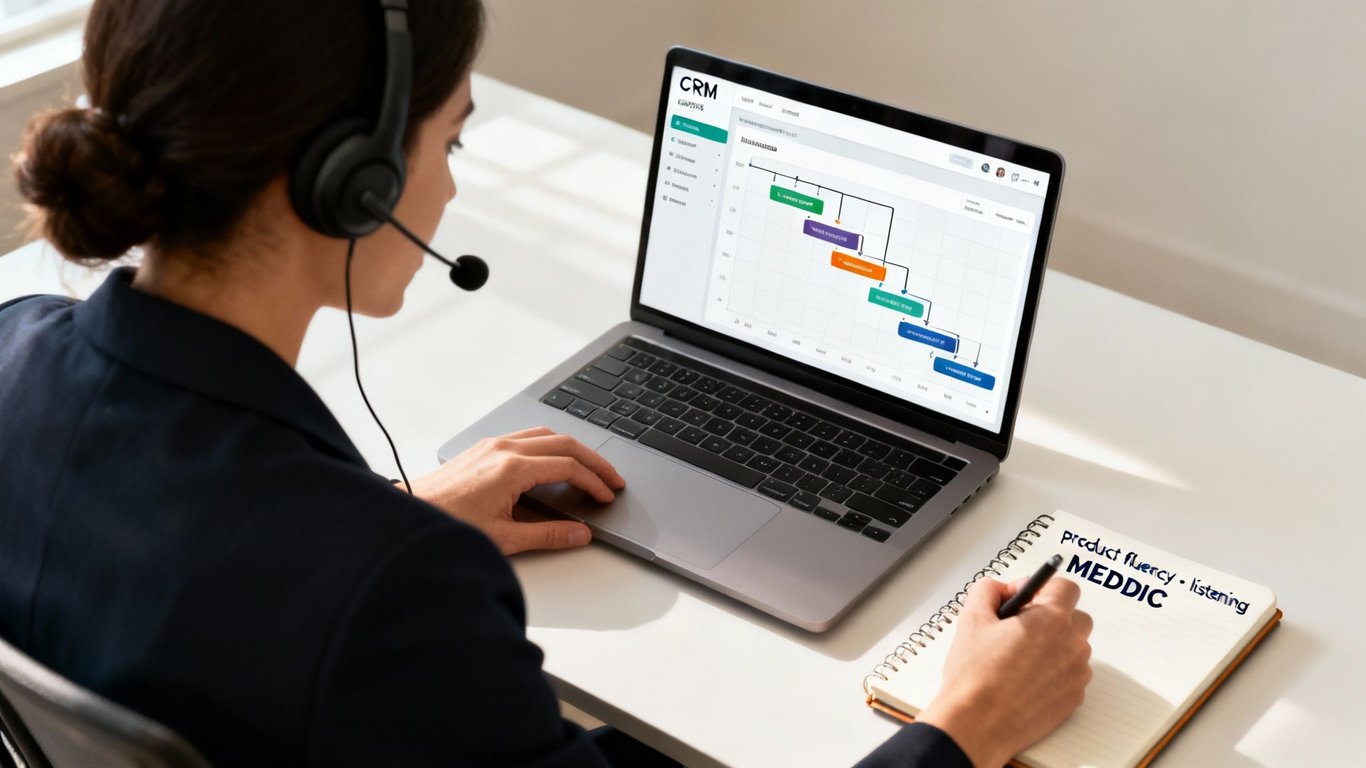 An elite software sales rep is distinguished by a unique combination of technical aptitude, strategic thinking, and personal drive that goes beyond simple communication skills. The best in the field function more like expert consultants who can precisely identify a company’s pain points.
This begins with deep product fluency. They do not merely recite a list of features. They understand how each function solves a real-world operational problem for a client. This enables them to transition from a generic pitch to a customized demo that directly addresses the challenges uncovered during discovery.
Mastering the Sales Process
In addition to deep product knowledge, the best reps have mastered proven sales methodologies. Frameworks like MEDDIC (Metrics, Economic Buyer, Decision Criteria, Decision Process, Identify Pain, Champion) provide a roadmap to qualify leads effectively, ensuring they focus their energy on deals with a high probability of closing.
Many also adopt a mindset from models like the Challenger Sale. This approach is not about being aggressive; it is about teaching prospects something new about their own business, tailoring the message to their primary concerns, and steering the conversation. It is a powerful shift from selling a product to challenging a client's assumptions and leading them to your solution.
The most impactful reps don't just answer questions; they reframe the customer's entire perspective on a problem. They build value by providing insights the prospect hadn't considered, making themselves an indispensable part of the buying process.
The Underrated Power of Soft Skills
While a solid methodology provides the framework, soft skills are essential for execution. These are not merely "nice-to-have" traits; they are critical for navigating the complex, often lengthy sales cycles common in the software industry.
Key soft skills include:
- Genuine Curiosity: The drive to ask intelligent, probing questions and actively listen to the answers. This is how they uncover the root cause of a client's problem, not just the symptoms.
- Resilience: The ability to handle rejection, navigate tough negotiations, and stay motivated when a promising deal stalls.
- Coachability: An eagerness to accept feedback, adjust their approach, and continually refine their process based on what is working.
Finally, data literacy has become a non-negotiable skill. Top reps view their CRM as more than just a contact database—it is a strategic tool. They analyze their own performance metrics, such as conversion rates at each stage of the funnel, to identify weaknesses, forecast their pipeline accurately, and build a repeatable formula for success.
How to Find and Hire Exceptional Sales Talent
Finding the right software sales rep is one of the most critical decisions a growing company can make. You are not just hiring an employee; you are seeking a strategic partner who can translate your product's potential into sustainable revenue. This requires a thoughtful, multi-channel approach that extends beyond posting a job advertisement.
Professional networks should be your initial point of contact. Platforms like LinkedIn are invaluable for identifying candidates with relevant industry experience. However, your job description is a key strategic asset. It must do more than list duties; it must sell the opportunity. It should paint a vivid picture of your company culture, the real-world problems your software solves, and how this role will directly contribute to the company's future.
Where to Source Top Sales Candidates
While traditional job boards can yield results, top-tier candidates are often not actively searching them. To attract high-performing talent, you must be strategic about where you source candidates.
These channels consistently deliver quality candidates:
- LinkedIn Sales Navigator: Use Sales Navigator's advanced filters to proactively identify reps who are succeeding at a competitor or in a related industry.
- Specialized Job Boards: Focus your efforts on platforms dedicated to tech or SaaS sales. The candidates on these sites have already self-qualified their interest in your sector.
- Commission-Only Marketplaces: For startups or companies entering a new market, these platforms can be transformative. They connect you with entrepreneurial reps who are confident enough to work on a performance basis, providing a low-risk way to drive growth.
The sheer volume of sales jobs available on platforms like LinkedIn underscores the fierce competition for skilled professionals. This is why your job posting must stand out and offer a compelling reason for a great rep to choose your company.
Designing a Structured Interview Process
A structured, consistent interview process is your best defense against a bad hire. The goal is to assess a candidate's potential to succeed on your team and within your culture. A multi-stage process is ideal for evaluating different skills at each step.
A great interview process doesn't just vet candidates; it sells them on your company. Each interaction is a chance to showcase your professionalism, culture, and the opportunity you're offering, making top candidates want to join your team.
A robust process typically includes a brief screening call, an in-depth interview with the hiring manager, a mock demo or presentation, and final discussions with key team members. Each stage must have a clear objective. The mock demo, for example, offers direct insight into how a candidate thinks on their feet and presents a product.
To ensure you ask questions that reveal their sales aptitude, use this list of software sales rep interview questions to guide your process. Preparation helps you move beyond rehearsed answers and identify genuine high-performers.
Onboarding Your Reps for Rapid Success

Hiring great sales talent is only half the battle. Without a structured, well-designed onboarding process, even the most promising software sales reps will struggle to become productive. A strong start is what differentiates a new hire who takes months to ramp up from one who begins hitting their quota quickly.
Onboarding should be viewed not as a week of orientation, but as a strategic 30-60-90 day roadmap. The objective is to provide reps with deep product knowledge, a clear understanding of your market, and the necessary tools to begin selling effectively. This initial period establishes the foundation for their entire tenure at your company.
The First 30 Days: Total Product Immersion
The first month must be an intensive dive into your product and your customer. New hires need to move beyond a feature list to a genuine understanding of the problems your software solves. This requires hands-on, practical training, not just passive observation.
Actionable steps for the first 30 days include:
- Intensive Product Training: Have them actively use the software. Encourage them to explore its full functionality and learn every aspect of the platform.
- Defining the Ideal Customer Profile (ICP): They must be able to identify a high-quality prospect. This includes understanding their industry, common challenges, and business objectives.
- Shadowing Top Performers: Arrange for them to listen in on live discovery calls and demos with your best reps. There is no substitute for observing how a seasoned professional handles difficult questions and articulates value.
A great onboarding program doesn't just teach reps what to sell; it teaches them how customers buy. By immersing them in the customer's world, you empower them to build authentic connections and solve real problems.
Building Momentum in Days 30 to 90
As reps move into their second and third months, the focus shifts from learning to execution. They begin applying their knowledge, making their first calls, and building a pipeline under your guidance. A critical component of this phase is achieving proficiency with your tech stack, particularly the CRM.
Your CRM is the central nervous system for any high-performing sales team. The global Customer Relationship Management (CRM) software market is projected to surpass $112 billion. The right CRM can shorten sales cycles by 8-14% and improve forecast accuracy by 42%. Furthermore, 97% of North American sales teams view their CRM as essential for closing deals. You can explore more stats on the impact of CRM systems on Kixie.com. This system provides reps with a complete view of the customer, reduces administrative work, and supplies the data needed for accurate forecasting.
Measuring What Matters: Using KPIs to Coach Your Sales Reps
Effective management and coaching of software sales reps require looking beyond final revenue figures. A strategic mix of Key Performance Indicators (KPIs) provides insight into a rep’s performance and identifies specific areas for improvement.
Sales metrics can be categorized into two types: leading indicators and lagging indicators. Lagging indicators, such as quota attainment or average deal size, are historical stats. They report on what has already happened and are useful for reviewing past performance.
Leading indicators, in contrast, are predictive. They measure the daily activities that generate future results. These are the metrics you can directly influence through coaching, making them your most valuable tool for guiding your team toward its goals.
Focus on the Actions That Drive Results
Focusing solely on a quota is insufficient for steering performance. To effectively guide your team, you must monitor the activities that are building the pipeline for future success.
These forward-looking metrics are essential:
- Meetings Booked: How many qualified demos or discovery calls is a rep scheduling? This is a direct measure of their prospecting activity.
- Pipeline Growth: What is the total value of new, qualified opportunities being added to the funnel? A consistently growing pipeline indicates future health.
- Sales Cycle Length: How quickly are deals progressing from the initial conversation to a signed contract?
- Win Rate: What percentage of their qualified opportunities are they successfully closing?
A balanced KPI scorecard gives you the full picture. It doesn't just show you who is hitting their number, but how they're doing it. That’s how you turn one person’s success into a playbook the whole team can use.
Turning Data Into a Coaching Playbook
Modern sales management relies on data, not intuition. Sales tools have made real-time dashboards accessible to everyone. In fact, 61% of top-performing sales teams already use automation and AI in their process. The sales force automation market was valued at $8.6 billion in 2023 and is projected to reach $19.5 billion by 2030, with AI expected to handle 60% of sales tasks by 2026. You can dive deeper into these sales automation statistics to see their full impact.
This data is most valuable when used for coaching. If a rep’s pipeline is thin, you can intervene to work on prospecting strategies. If their pipeline is full but their win rate is low, it is time to coach them on demo skills or negotiation tactics.
By setting clear, realistic targets for these KPIs, you provide your team with a series of smaller, achievable goals that contribute to the overall revenue target. It gives them a clear path to success, one activity at a time.
Common Questions About Software Sales Reps
Whether you are a founder building a team or a professional entering the field, software sales raises many questions. Here are answers to some of the most common inquiries.
When Should a Startup Hire Its First Sales Rep?
The right time to hire your first software sales rep is after the founders have proven they can sell the product themselves.
You must first establish product-market fit. This means you have a basic, repeatable sales process—even if it's imperfect—and you understand your ideal customer profile. You should have some early, consistent revenue as proof.
Hiring a salesperson before you know who you’re selling to or how to sell to them is a common and costly mistake. You should bring on a sales hire only after you have a foundational playbook they can follow, test, and refine.
Think of it this way: The founders' job is to draw the first rough map. The first sales hire's job is to take that map and find faster, better roads to the treasure.
What Is the Difference Between an SDR, BDR, and an AE?
These acronyms represent distinct roles aligned with different stages of the sales pipeline.
-
Sales Development Reps (SDRs) & Business Development Reps (BDRs): These are the prospectors at the top of the sales funnel. Their primary responsibility is to generate qualified opportunities. SDRs typically handle inbound leads generated by marketing, while BDRs focus on outbound prospecting, such as cold calls and emails. Their main goal is to book meetings for Account Executives.
-
Account Executives (AEs): An AE is the closer. They take the meetings scheduled by SDRs and BDRs and manage the sales process from that point forward. They conduct product demos, negotiate contracts, and are ultimately responsible for signing new deals and generating revenue.
What Are the Benefits of Hiring Commission-Only Reps?
Hiring commission-only software sales reps can be a highly effective strategy, especially for startups or companies testing a new market. It is a low-risk, high-reward model that ties your costs directly to results.
Instead of paying a significant base salary, you are paying for actual performance. This structure naturally attracts highly motivated, entrepreneurial individuals who are confident in their ability to sell your product. It is an ideal fit for products with a strong value proposition and a shorter sales cycle, where reps can realize their earnings in a reasonable timeframe.
Ready to find motivated, industry-vetted sales talent without the high fixed costs? Zilla Sales connects you with experienced, commission-only software sales reps who are ready to hit the ground running. Post your sales opportunity for free and start getting matched with qualified candidates in your target market. Explore the Zilla Sales marketplace today.
Keep Reading
More insights for high-performance sales teams.

A Modern Guide to B2B Door to Door Companies
Uncover how modern door to door companies work, the real costs, and the risks. Learn about a smarter alternative for fast B2B territory growth.

Mastering Software Sales Training for Elite Reps
Build a world-class software sales training program. This guide details the curriculum, metrics, and tools needed to accelerate revenue with your sales team.

How Does Commission Work in Sales? A Manufacturer’s Guide
Understand how does commission work in sales. This guide explains common structures, calculation examples, and best practices for B2B manufacturing companies.
Ready to find your sales partner?
Join manufacturers who are successfully expanding their territories with our network. Post a listing in minutes and start receiving matches.
✓ Verified Professionals • ✓ No Long-term Contracts