


When you hear "outsourcing inside sales," it's easy to picture simply handing over a list of contacts to a call center. But for manufacturers, it's a far more strategic play. It means partnering with a specialized firm to handle some, or all, of your internal sales functions.
Think of it less like hiring temporary staff and more like plugging into a ready-made growth engine. You're gaining access to expert talent, sophisticated sales technology, and proven processes—all without the significant overhead of building it yourself.
Deciding If Outsourcing Inside Sales Is Your Next Move

Before you start evaluating providers, you need to conduct a thorough internal assessment. Is outsourcing the right move for your manufacturing business at this specific moment? This isn't about a simple pros-and-cons list; it's a critical look at your current sales engine, your growth goals, and where your internal team is stretched thin. Outsourcing is a powerful solution for specific problems, not a universal remedy.
The market reflects a growing trend towards this model. According to market analysis, the global outsourced sales market is experiencing significant growth, indicating that more companies are realizing the benefits of this strategic approach.
Key Triggers That Signal It's Time to Outsource
Several recurring scenarios indicate that it's time to consider outsourcing. If any of these sound familiar, you are likely leaving revenue on the table by trying to manage everything in-house.
- You need to scale, fast. Your internal hiring process cannot keep pace with your growth ambitions. If your plan requires ten new reps this quarter, outsourcing provides trained, ready-to-engage personnel almost immediately, bypassing lengthy HR cycles and training delays.
- You're launching something new. Whether entering a new region or introducing a specialized product line, you need speed and expertise. A qualified outsourced partner brings niche experience, generating momentum much faster than a team learning on the fly.
- Your sales team is getting bogged down. Are your top-performing closers spending valuable time on administrative tasks or cold prospecting? Offloading top-of-funnel activities can free up your key players to focus on what they do best: closing deals.
- You have glaring holes in your territory coverage. Many manufacturers have lucrative territories that are underserved or completely ignored due to a lack of personnel. This is a classic problem that models like independent manufacturers' reps are designed to solve.
Here's a critical mindset shift: Outsourcing isn't a life raft for a sinking sales team. It’s a strategic lever you pull to amplify what's working or to accelerate a high-priority initiative.
In-House vs Outsourced Inside Sales: A Head-to-Head Comparison
To help clarify the decision, it's useful to see the two models laid out side-by-side. The differences extend far beyond payroll.
| Factor | In-House Team | Outsourced Provider |
|---|---|---|
| Recruitment & Training | You handle the entire process: sourcing, interviewing, onboarding, and ongoing training. | The provider manages all hiring and training, delivering reps ready to sell. |
| Ramp-Up Time | Can take 3-6+ months for a new rep to become fully productive. | Often 2-4 weeks to start generating qualified leads and activities. |
| Technology Stack | You bear the full cost of CRM, dialers, data tools, and sales engagement platforms. | Leverages a pre-built, optimized tech stack included in the service cost. |
| Cost Structure | High fixed costs: salaries, benefits, taxes, office space, and equipment. | More variable and predictable costs, often tied directly to performance metrics. |
| Scalability | Scaling up or down is slow, expensive, and disruptive. | Elastic. You can add or remove reps quickly based on seasonal or market demand. |
| Expertise & Process | Relies on your internal knowledge and management capabilities. | Access to specialized expertise and proven, data-driven sales processes. |
Looking at this comparison, the choice becomes less about which is "better" and more about which aligns with your current strategic needs for speed, cost-efficiency, and expertise.
A Practical Diagnostic Checklist
Gut feelings are useful, but data drives decisions. Run through this quick internal audit to determine if the numbers point toward outsourcing. Answering these questions honestly will tell you if this is a logical next step or a premature distraction.
-
What’s your current Cost Per Acquisition (CPA)? Calculate it precisely. Sum all your sales and marketing costs—salaries, commissions, software, advertising—and divide by the number of new customers acquired. If the result is uncomfortably high, an outsourced model’s efficiency could provide significant value.
-
How long does it really take to ramp up a new rep? Be honest about the time from a new hire's start date to when they are consistently hitting quota. If it's more than six months, you're losing potential revenue. Effective outsourced partners can have their reps delivering qualified leads in weeks, not quarters.
-
Where are the leaks in your sales process? Do promising leads fall through the cracks? Is your follow-up inconsistent? A specialized partner brings a disciplined, structured process that can immediately plug those gaps and prevent lead loss.
By analyzing these trigger points and metrics, you can build a solid business case—for or against—outsourcing. It ensures your next move is calculated and truly aligned with your company's growth objectives.
Finding the Right Sales Outsourcing Partner
Choosing an outsourcing partner is one of the most critical decisions you'll make. This isn't just about hiring a vendor; it's about entrusting a piece of your revenue engine, brand reputation, and market momentum to a third party. The world of inside sales providers is vast, and selecting the wrong one can be more damaging than keeping the function in-house.

The outdated concept of outsourcing inside sales to a transactional call center is no longer relevant. Today, it’s about integrating with a complete system—a finely tuned machine of trained reps, sophisticated technology, and proven processes designed to deliver scalable, predictable results.
The shift is happening for a reason. Statistics show that cost reduction is a primary driver for outsourcing, with companies often realizing significant savings. But the benefits extend beyond the bottom line. Businesses also report accelerating product launches and reducing labor costs, demonstrating a clear and well-documented financial impact.
Evaluating Different Outsourcing Models
Before you begin evaluating individual companies, you must understand the different ways to approach this. Each model serves a distinct strategic purpose. The right fit depends on your specific goals, budget, and risk tolerance.
-
Full-Service Agencies: Think of these as an all-inclusive solution. They recruit, train, and manage entire teams of inside sales reps for you. This is the standard model for companies that want to completely delegate the function and leverage a provider’s established infrastructure. The trade-off is that it typically comes with the highest fixed costs, usually in the form of substantial monthly retainers per rep.
-
Flexible Marketplaces: Platforms like Zilla Sales offer an alternative path, connecting you directly with a network of vetted, independent sales professionals. This model provides significant flexibility. It’s often performance-based, with reps working on commission-only or low-retainer structures. This is a powerful option for quickly covering open territories or launching a new product without a massive upfront investment. You also gain access to specialized expertise from reps who already have contacts in your target industry.
Remember, your goal isn't just to hire reps. It's to find a partner that genuinely aligns with your sales culture and understands the unique challenges of the manufacturing sector. A poor cultural fit can lead to friction, mixed messages, and ultimately, unsatisfactory performance.
A Scorecard for Vetting Potential Partners
Once you know which model suits you, it's time to be methodical. A simple scorecard is your best tool—it keeps the process objective and helps you focus on what truly matters instead of being swayed by a compelling sales pitch.
Here are the non-negotiable criteria for your scorecard:
- Industry Specialization: Do they have demonstrable experience in manufacturing or the industrial space? Request case studies and references from companies similar to yours. A partner who already understands your terminology and complex buyer personas will ramp up significantly faster.
- CRM and Tech Integration: How well will their systems integrate with yours, especially your CRM? This is not a "nice to have." Deep integration is essential for maintaining visibility and ensuring seamless data flow. Without it, you risk creating data silos and making performance tracking nearly impossible.
- Training and Onboarding Process: You need to examine this in detail. How, specifically, do they train reps on a new, technical product? What is their process for continuous coaching? A top-tier partner will have a structured, robust program that goes far beyond simply providing a product one-pager.
- Performance Management and Reporting: What is their reporting cadence, and what information is included? Insist on access to real-time dashboards, not just a monthly PDF summary. You need transparent, constant visibility into key metrics like call activity, qualified meetings set, and pipeline generated. You can dig deeper into the different types of rep agencies and how they operate to better inform your evaluation.
Tough Questions to Ask Before You Sign Anything
Every potential partner will present their best attributes in initial meetings. Your job is to probe deeper and understand how they operate under real-world conditions.
Here are a few critical questions to ask:
- "How do you ensure your reps will deeply understand our highly niche products and market?" Look for an answer that details a multi-step plan, including direct access to your subject matter experts and some form of ongoing knowledge assessment.
- "What is your exact process for replacing an underperforming rep?" A vague response is a significant red flag. A reliable partner will have a clear, swift process to make a change and minimize any disruption to your sales momentum.
- "Can you walk me through a time you failed to meet a client's expectations and what you did to fix it?" This question reveals their level of accountability and transparency. Every partnership encounters challenges; you want to work with a partner who takes ownership of mistakes and collaborates to resolve them.
Defining Metrics That Actually Drive Revenue
Once you've chosen a partner, the real work begins. A successful outsourced sales partnership hinges on absolute clarity and mutual accountability. Signing the contract is just the start; you must now define precisely what success looks like. It’s time to move beyond vanity metrics and focus on the Key Performance Indicators (KPIs) that directly impact revenue.
Without a solid Service Level Agreement (SLA), you are operating without a clear plan. You need a document that specifies everything: performance targets, reporting frequency, data security protocols, and procedures for addressing issues. This isn't about micromanagement; it's about establishing a shared playbook so everyone understands the expectations.
Moving from Busy Work to Bottom-Line Results
A common mistake is focusing too heavily on activity metrics. Fixating on the number of dials, emails sent, and total talk time assumes that more raw activity automatically leads to more sales. While effort is important, it's the quality and focus of that effort that builds a healthy pipeline.
Your outsourced team could make 10,000 calls, but if none of them convert into qualified conversations, that activity is just an expensive use of time. The goal is to measure results, not just motion.
Consider a medical device manufacturer that initially used "appointments set per week" as its primary metric. They soon discovered that nearly half of these meetings were with unqualified prospects, wasting the time of their senior field sales engineers.
The game changed when they shifted their primary KPI from "Appointments Set" to "Sales Accepted Opportunities (SAOs)." This one adjustment forced the outsourced team to prioritize quality over sheer volume, aligning their daily activities with outcomes that mattered.
This pivot completely transformed their results. The total number of appointments decreased, but the value of the sales pipeline generated from qualified appointments increased dramatically.
Essential KPIs for Your Outsourced Inside Sales Team
To get an accurate measure of performance, you need a balanced scorecard. A mix of metrics covering activity, quality, and financial outcomes provides a complete, 360-degree view of your partner's performance.
Here’s a look at the core metrics you should be tracking.
Essential KPIs for Your Outsourced Inside Sales Team
| KPI Category | Metric | Why It Matters | Industry Benchmark (B2B Manufacturing) |
|---|---|---|---|
| Activity | Dials & Conversations | Establishes a baseline for effort and helps spot top-of-funnel problems early. | 50-70 dials per rep, per day |
| Quality | Lead-to-Appointment Rate | Shows how effective the team is at turning a contact into a scheduled meeting. | 2-5% on cold outreach |
| Quality | Appointment-to-SAO Rate | This is crucial. It tells you how well the reps are qualifying leads before your closers get involved. | 50-75% |
| Outcome | Pipeline Value Generated | The ultimate measure of the program's contribution to future revenue. Ties their work directly to your sales goals. | Varies by deal size |
| Outcome | Lead-to-Close Conversion Rate | Measures the end-to-end effectiveness of the entire process, from that first call to a signed contract. | Varies by sales cycle length |
Remember, these benchmarks are just a starting point. Your own numbers will depend on your product's complexity, brand recognition, and average deal size. The key isn't to hit a specific number on day one, but to establish a baseline and then work with your partner to consistently improve it.
Crafting a Bulletproof Service Level Agreement
Your SLA is the governing document for this relationship. It should be written with clarity to avoid any misinterpretation. While your legal team will handle the standard clauses, you and your sales leaders need to own the operational details.
Here are the non-negotiables that must be in your SLA:
- Performance Metrics: List the primary and secondary KPIs, the exact targets for each, and the timeline for ramping up to those goals.
- Reporting Cadence: Be specific about the frequency (weekly, bi-weekly) and format of reports. Insist on direct access to a real-time dashboard from a platform like Salesforce in addition to any summary calls.
- Data Security & Confidentiality: Clearly outline how your customer and prospect data will be handled, stored, and protected, especially if you need to comply with regulations like GDPR or CCPA.
- Communication Plan: Define the regular meeting rhythm. A good structure includes a weekly tactical check-in and a more strategic quarterly business review (QBR). Name the key points of contact on both sides.
- Escalation Procedures: Map out a clear, step-by-step process for what happens when performance dips. It should start with the direct account manager and define who to contact next if the issue isn't resolved.
By defining these metrics and cementing them in a detailed SLA, you're building the foundation for a transparent, accountable, and high-performing partnership.
Weaving Your Outsourced Team into the Fabric of Your Company
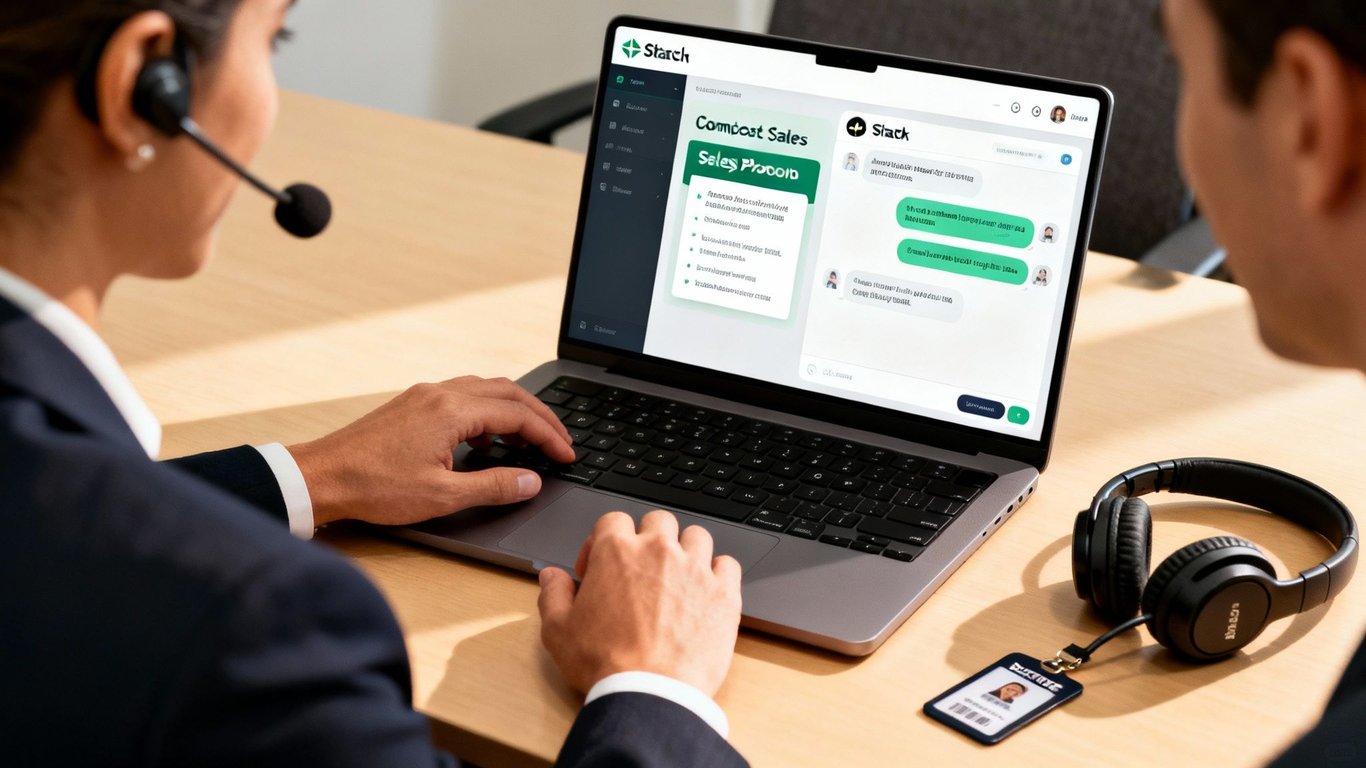
Many outsourcing partnerships fail because the new team is treated like a separate, siloed entity. To ensure success, you need deep, seamless integration.
Think of your outsourced reps not as a vendor, but as an extension of your company. Their success is directly tied to how well you integrate them into your culture, arm them with the right knowledge, and connect them to your existing systems. This process should begin the moment the contract is signed.
The goal is to eliminate the distinction between your in-house team and your external partners. You are building a single, unified sales engine, with all components aimed at the same target. Anything less creates an "us vs. them" mentality that leads to miscommunication and missed revenue targets.
Your Onboarding Playbook: The Single Source of Truth
You cannot expect a new team to perform without proper guidance. They need a concise, actionable sales playbook that serves as their primary resource from day one. This should be a dynamic guide built for quick reference and immediate action, not a lengthy document that will be ignored.
Keep the playbook focused on what a rep needs to know to start having quality conversations immediately. Save the detailed company history and granular technical specifications for later, as they can slow down the initial ramp-up.
Your playbook must include:
- The Elevator Pitch: A short, powerful statement on what you do, who you help, and the main problem you solve.
- Ideal Customer Profiles (ICPs): Be specific about the titles, common pain points, and purchasing drivers of your target customers.
- Core Messaging Points: A bulleted list of the top three value propositions and how they address your ICPs' biggest challenges.
- Objection Handling Cheat Sheet: Provide proven, scripted responses to the most common objections they will encounter.
The purpose of the playbook is to give your outsourced reps the confidence to speak with the same authority as your most experienced in-house salesperson. It’s about a rapid, effective transfer of institutional knowledge.
Getting the Tech and Tools Dialed In
A great playbook is useless if your team lacks the tools to execute. Smooth technical integration is the backbone of a successful partnership, ensuring free-flowing data and constant communication. This requires careful planning around access, security, and workflow.
First, secure, role-based access to your CRM is non-negotiable. This is the central hub for all lead, contact, and opportunity data. Without it, your outsourced team is working in the dark, and you have no visibility into their activities. Modern CRMs like Salesforce or HubSpot allow you to create custom permission sets, granting access only to necessary records and fields to maintain data security.
Next, establish clear communication channels. Email is often too slow. A more effective approach is to integrate your outsourced reps into your company’s internal chat platform, like Slack or Microsoft Teams. Create a dedicated channel where they can ask questions in real-time, get instant feedback from your product experts, and absorb the daily communications of the in-house team. This simple step is more effective at building a collaborative culture than numerous formal meetings. This level of access is vital for any sales model, including those built on performance-based commission-only sales reps.
Building One Sales Culture, Not Two
Finally, you must address the human element. The most common point of failure in outsourcing is cultural friction. If your in-house team views the outsourced reps as external help or, worse, a threat, collaboration will cease. Proactive leadership is required to prevent this.
According to research from Grand View Research, companies that properly integrate outsourced teams can see significant benefits in speed and cost-efficiency.
Here’s how you build that bridge:
- Introduce Them as Teammates. From the first all-hands meeting, refer to them as partners or an extension of the team. Avoid terms like "vendor" or "the agency."
- Include Them in Your Rituals. Invite them to your weekly sales huddles, team meetings, and celebrations when a major deal closes. Make them feel part of the success.
- Encourage Cross-Team Collaboration. Actively pair outsourced reps with your in-house account executives to work on key accounts. This builds direct relationships and a powerful sense of shared ownership.
By focusing on these three pillars—a solid playbook, seamless tech, and a unified culture—you will move beyond a simple vendor relationship and forge a true strategic partnership.
Measuring ROI and Optimizing for Long-Term Growth

Launching your outsourced inside sales program is a significant accomplishment, but it's only the beginning. The primary objective is to turn this new team into a predictable, scalable engine for growth. This requires a shift from vendor management to active partnership optimization.
Success is not just about hitting initial targets. It's about continuously refining the process to extract more value over time. This final phase focuses on building a framework for accountability and sustained success. You will calculate the real return on your investment, establish a productive review cadence with your partner, and use data to improve every aspect of the program.
Calculating the True ROI of Your Program
It’s easy to calculate a superficial ROI by comparing your partner's invoice to the revenue they generated. However, a more accurate picture emerges when you factor in the avoided costs and new opportunities.
Start with the direct metrics:
- Pipeline Generated: The total dollar value of qualified opportunities the team has created.
- Closed-Won Revenue: The actual revenue from deals originating with your partner.
- Total Program Cost: All fees, retainers, and commissions paid.
Now, add the indirect financial impacts:
- Cost Avoidance: This is crucial. Calculate the salaries, benefits, payroll taxes, software licenses, and recruitment fees you would have spent to build an equivalent in-house team. This represents real savings.
- Opportunity Cost Captured: Quantify the revenue you were likely losing from neglected territories or market segments that your outsourced team is now actively covering.
By factoring in cost avoidance and captured opportunity, you move from a simple expense analysis to a strategic investment assessment. This comprehensive view often reveals that a well-executed outsourcing inside sales program pays for itself much faster than initially anticipated.
The Cadence of Continuous Improvement
Data is meaningless without a structured process to analyze it and take action. A disciplined review cadence is the heartbeat of a healthy partnership. It allows you to address small issues before they escalate and to replicate successes across the board. This is about collaborative problem-solving, not just performance monitoring.
A two-tiered approach is highly effective:
- Weekly Tactical Check-ins: Keep these short, around 30 minutes. The focus is on immediate concerns. Review weekly KPIs against targets, listen to call recordings for coaching opportunities, and resolve any roadblocks the reps are facing.
- Quarterly Business Reviews (QBRs): This is a more strategic, 60- to 90-minute session. Here, you will analyze trends over the past 90 days, ensure the program remains aligned with your overall sales goals, and plan strategic adjustments for the next quarter.
This rhythm keeps you synchronized, managing daily operations while maintaining a long-term strategic direction.
Using Data for Collaborative Optimization
The reports and dashboards from your partner are more than just report cards; they are a source of valuable insights. During your reviews, go beyond asking, "Did we hit the numbers?" and start asking, "What are these numbers telling us?"
Become a pattern-seeker, looking for trends that indicate opportunities for improvement.
- Analyze Conversion Rates: If you are seeing a high number of appointments but few convert to qualified opportunities, it could indicate a mismatch with your Ideal Customer Profile (ICP). Work with your partner to refine targeting or adjust qualifying questions.
- Spot Messaging Resonance: If certain email subject lines or call openers are performing exceptionally well, identify what is working and collaborate with your provider to implement these tactics across the entire team.
- Troubleshoot Funnel Bottlenecks: If promising conversations are not leading to booked meetings, you may have an issue with your call-to-action. Work together to test different offers or "next steps" that create more clarity and urgency for the prospect.
When you treat performance data as a shared tool for improvement, the entire relationship transforms. It becomes a true partnership where both parties are invested in a constant cycle of testing, learning, and refining to drive progressively better results.
Answering Your Top Questions About Outsourcing Inside Sales
Even with a solid plan, it's natural to have lingering questions when considering a significant step like outsourcing your inside sales team. Let's address some of the most common concerns from manufacturing leaders to help you move forward with confidence.
What’s This Going to Cost Me?
This is usually the first question, and the honest answer is: it depends entirely on the model you choose. The pricing structures can vary significantly.
Full-service agencies, for example, typically work on a retainer basis. You can expect to pay anywhere from $5,000 to $10,000+ per rep, per month, often with performance bonuses layered on top. You are paying for a fully managed, hands-off solution, which comes with a significant fixed monthly cost.
Alternatively, some models are designed to reduce fixed costs and tie spending directly to revenue. Marketplaces that connect you with independent, commission-only sales reps offer a different approach. Instead of a large retainer, you might pay a small platform fee to access a network of experienced professionals. The primary cost is the commission you pay when they close a deal. This converts a fixed overhead into a variable, performance-based expense—a strategic choice if you want to minimize upfront risk while expanding your market presence.
Ultimately, the right cost model comes down to your appetite for risk and your growth goals. Do you want the predictability of a fully managed service, or the pay-for-performance agility of a commission-based team?
Will They Really Understand My Technical Product?
This is a valid and critical concern. When you manufacture a highly specialized or technical product, you need a sales rep who can communicate its value proposition with authority.
This is precisely why industry specialization is a non-negotiable requirement. Do not consider a generalist provider.
The best partners and platforms have solutions for this challenge. Here's what to look for:
- A Niche Focus: Find a provider that specializes in your industry. A partner with a deep roster of reps who have previously sold into industrial manufacturing will have a significant advantage.
- A Serious Onboarding Process: Professional firms have a structured training program to immerse reps in your products, your market, and the specific challenges your customers face.
- Access to Industry Veterans: Some platforms, like Zilla Sales, connect you directly with seasoned reps who already have experience and contacts in your field. This can reduce ramp-up time from months to weeks and ensure they can have credible conversations from day one.
A detailed sales playbook, access to product demonstrations, and ongoing training are the pillars that ensure any outsourced team sounds as knowledgeable as your own.
How Do I Keep Control of Our Brand and Messaging?
Giving up some control can be challenging, but a successful partnership involves clear guardrails and a constant feedback loop, not a complete release of the reins. This starts with a rock-solid sales playbook that serves as the single source of truth for anyone selling your product.
This playbook should cover your brand voice, core messaging, the specifics of your ideal customer profile, and the exact sales process you want them to follow.
Beyond the playbook, you need a few key mechanisms to maintain alignment:
- Weekly Check-ins: Schedule a recurring call to review performance, address messaging questions, and share market feedback.
- Call Recording Reviews: Listening to a sample of call recordings provides unfiltered insight into how your brand is being represented.
- Shared CRM Access: Real-time visibility into the CRM is essential. It allows you to track activity, monitor pipeline health, and ensure your process is being followed without constant requests for updates.
The goal isn’t to micromanage. It’s to create a seamless extension of your in-house team, ensuring every prospect conversation reflects the quality and expertise your brand is known for.
Ready to cover empty territories with experienced, commission-only sales reps who already know your industry? Zilla Sales connects you with a network of verified, independent sales professionals ready to grow your revenue. Post your opportunity for free and start seeing matches in as little as 48 hours. Find your next top performer at https://zillasales.com.
Keep Reading
More insights for high-performance sales teams.

A Modern Guide to B2B Door to Door Companies
Uncover how modern door to door companies work, the real costs, and the risks. Learn about a smarter alternative for fast B2B territory growth.

Mastering Software Sales Training for Elite Reps
Build a world-class software sales training program. This guide details the curriculum, metrics, and tools needed to accelerate revenue with your sales team.

How Does Commission Work in Sales? A Manufacturer’s Guide
Understand how does commission work in sales. This guide explains common structures, calculation examples, and best practices for B2B manufacturing companies.
Ready to find your sales partner?
Join manufacturers who are successfully expanding their territories with our network. Post a listing in minutes and start receiving matches.
✓ Verified Professionals • ✓ No Long-term Contracts