


For manufacturers, outsourcing B2B sales is a powerful strategy for tapping into a pool of experienced, commission-only sales professionals who already have the buyer relationships you need. This approach allows you to penetrate new markets or launch new products without the time-consuming and expensive process of building an in-house team from scratch.
Why Top Manufacturers Are Outsourcing B2B Sales

Many sales leaders invest heavily in salaried in-house teams, only to find them buried in administrative work. This leaves little time for actual selling, causing growth to stall, key territories to sit empty, and revenue targets to be missed.
The root of the problem is often how sales resources are allocated. According to research from HubSpot, the average B2B sales rep spends less than 35% of their time on actual selling activities. The rest of their time is consumed by prospecting from scratch, data entry, and internal meetings, which creates a significant drag on productivity. You can get a deeper look into this dynamic by exploring more on why B2B sales outsourcing works.
A Strategic Shift to Agility and Speed
Outsourcing sales is more than a cost-cutting measure; it is a strategic move toward market agility. Instead of dedicating months to recruiting, hiring, and training new employees, you can partner with vetted independent sales professionals who are ready to generate opportunities from day one.
This model fundamentally changes the growth equation. It flips the script from a fixed-cost, high-overhead structure to a variable, performance-based approach where you only pay for tangible results.
This shift provides a clear competitive advantage, especially for rapid scaling:
- Instant Market Access: You gain access to an entire network. Partnering with reps who already own territories and have deep relationships with buyers gives you an immediate foothold in new regions or industries.
- Drastically Reduced Ramp-Up Time: Outsourced professionals can achieve full productivity in under 90 days, compared to the six months or more it often takes to get a new in-house hire up to speed.
- Cost-Effective Expansion: A commission-only structure minimizes financial risk. You avoid the heavy burden of salaries, benefits, and overhead associated with full-time employees.
- Sharpened Internal Focus: Freeing leadership from the day-to-day management of a sales team allows for greater concentration on high-level strategy, product innovation, and other core business functions.
In-House vs. Outsourced B2B Sales: A Comparison
To put it in perspective, this table breaks down the core differences between the traditional in-house model and partnering with independent reps.
| Factor | Traditional In-House Team | Outsourced Independent Reps |
|---|---|---|
| Speed to Market | Slow: 6-12 months for hiring, onboarding, and training. | Fast: Productive in under 90 days. |
| Upfront Cost | High: Salaries, benefits, recruitment fees, overhead. | Low: No salaries or benefits; commission-based pay. |
| Market Access | Limited: Built from scratch, one relationship at a time. | Immediate: Taps into reps' existing networks and territories. |
| Financial Risk | High: Fixed costs regardless of sales performance. | Low: Pay is directly tied to closed deals and revenue. |
The choice is not just about who makes the calls; it is about fundamentally different approaches to growth, risk, and speed.
Turning Stagnation into a Revenue Engine
Outsourcing transforms a stagnant sales pipeline into a dynamic revenue engine. It directly solves the pain of empty territories and sluggish product launches by injecting proven expertise and established relationships into your sales process. You get to skip the "building from scratch" phase entirely.
This approach is particularly effective for manufacturers launching a new product line or trying to break into a competitive market. By working with a network of independent manufacturer representatives, companies can dramatically shorten their time to first sale and achieve a much faster return on investment. You can discover more about the benefits of working with manufacturers’ reps in our detailed guide.
Is Outsourced Sales Your Next Winning Move?

Before committing to outsourcing B2B sales, a thorough analysis of your current operation is necessary. It is not a universal solution, but for the right company at the right time, it can be a powerful growth engine. The first step for any sales leader is to evaluate core business areas to determine if this model aligns with your goals.
Start by examining your existing sales engine. How quickly are deals moving from initial contact to a closed contract? If your sales velocity has flatlined or your pipeline is thin, it is a sign that your current approach may have reached its limit. This slowdown is often a symptom of an overstretched team rather than a lack of effort.
Look at Your Sales Cycle and Product Complexity
The nature of your product and sales process holds important clues. If you sell a highly technical product with a long, complex sales cycle that demands deep, consultative conversations, a dedicated in-house team is likely the better choice. These scenarios require a level of product mastery that is difficult to transfer to an outside partner.
Conversely, if your product has a clear value proposition and a moderately complex sales cycle, an outsourced team can be highly effective. Independent reps excel at opening doors by leveraging their existing networks to secure meetings with key decision-makers quickly.
Your goal isn't to replace deep product expertise but to inject market access and speed where it's needed most. An outsourced team can create the initial opportunity, which your internal experts can then support during later-stage, technical discussions.
This hybrid model combines the rapid market penetration from outsourced partners with the deep technical bench strength of an internal team.
Scenarios Where Outsourced Sales Delivers High ROI
Certain business situations are well-suited for an outsourced sales model. If your company fits one of these scenarios, the decision becomes clearer.
Here are a few triggers where bringing in outside reps often has the biggest impact:
- Breaking into a New Geographic Region: An independent rep who has owned a territory for years brings an entire book of business, potentially cutting your time-to-first-sale from a year down to a few weeks.
- Launching a Niche Product: Finding reps who already sell complementary products to your specific target audience—such as medical devices for orthopedic surgeons or components for aerospace engineers—provides immediate, qualified access.
- Targeting an Industry with High Barriers to Entry: In industries like government contracting or specialized manufacturing, a rep with established trust and credibility can navigate gatekeepers who would block a new entrant for months.
When an In-House Team Is the Smarter Choice
Outsourcing B2B sales is not always the answer. It is crucial to recognize when keeping sales in-house is the more strategic play.
Consider keeping your team in-house in these situations:
- Your Product Requires Deep, Ongoing Customization: If every sale involves heavy engineering or bespoke configuration, the constant collaboration is managed more efficiently by an internal team located alongside product and engineering staff.
- Brand Control is Paramount: For early-stage companies, every customer interaction is an opportunity to refine the brand voice. Direct, hands-on control over the sales team is non-negotiable in this phase.
- The Sales Cycle is Extremely Long and Relationship-Heavy: When deals regularly take over 18 months to close and require building deep C-suite relationships from scratch, the investment in a salaried, full-time employee is almost always justified.
Ultimately, the choice comes down to your specific growth goals, product, and market. An honest assessment of whether you need to prioritize speed and market access or deep integration and absolute control will point you toward the correct decision.
How to Find and Vet Elite Commission-Only Sales Reps

Once you've decided an outsourced B2B sales model is right for your company, the next step is finding the right talent. Many manufacturers treat the search for an independent rep like any other hiring process, which is a fundamental mistake.
Elite, 1099 professionals are not scrolling through job boards. They are busy managing their existing book of business and are highly selective about the new product lines they represent. They look for synergistic opportunities through specialized networks and industry marketplaces. Your sourcing strategy must meet them where they operate.
This is a growing market. The global B2B sales outsourcing market is projected to grow from $8.5 billion in 2024 to an estimated $15.2 billion by 2033, a compound annual growth rate (CAGR) of 7.4%. While North America has been the leader, Europe and the Asia-Pacific regions are quickly embracing this model, fueled by new sales technology and the need for specialized expertise. You can get a deeper look at the numbers and B2B sales statistics and trends that are driving this shift.
Probing Beyond the Resume
A traditional interview reviewing a resume is inadequate for vetting an independent rep. Your evaluation should focus on three key areas: their current network, their existing product portfolio, and their proven sales process. You are not just hiring a salesperson; you are partnering with a business owner.
The conversation should be a strategic alignment meeting. Ask them to walk you through their territory, identify the key players, and describe their relationships with decision-makers. A top-tier rep can discuss market dynamics, key accounts, and the competitive landscape with specificity.
The real acid test? Ask a potential rep to name three to five specific accounts in their network where your product is a perfect fit, right now. If they can't immediately name names and articulate a clear value prop for those buyers, their "network" might just be a list of contacts.
Essential Interview Questions for Independent Sales Reps
To determine if a rep is the right partner, you must ask targeted questions. Ditch generic interview questions and focus on uncovering proof of their ability to deliver. The table below outlines questions that separate professionals from pretenders.
| Question Category | Sample Question | What to Look For in the Answer |
|---|---|---|
| Network & Territory | "Walk me through your top five accounts. Who are your key contacts, and what is the nature of your relationship with them?" | Specificity. They should provide names, titles, and context that demonstrate deep, established relationships—not just a LinkedIn connection. |
| Portfolio Synergy | "Describe the other product lines you currently represent. Where does our product fit, and how will you position it to your buyers?" | Strategic fit. You want to hear about complementary, non-competing products. They need to clearly explain how your line enhances their existing offerings. |
| Sales Process | "Tell me about a recent complex deal you closed. What was your process from initial contact to the final signature?" | A repeatable system. Listen for a structured process—prospecting, qualifying, presenting, and closing. True professionals have a defined methodology. |
| Ramp-Up Plan | "If we partner together, what would your first 30 days look like to start generating opportunities for our product?" | A clear action plan. A great rep already has a mental roadmap for introducing your product to their network, showing they are serious and ready to begin. |
A successful interview reveals a rep who has already thought through how they would sell your product.
The Critical Portfolio Review
The interview is only half the story. You must review their current product portfolio to look for synergy, not conflict. A direct competitor's line is an obvious red flag, but subtle conflicts can be just as damaging.
If a rep's main product line is a low-cost, high-volume commodity, they may not have the patience or skill for your high-ticket, consultative sale. The ideal fit is a product that solves a new problem for the same buyers they already call on, making it a natural addition to their conversations. For a closer look at these dynamics, explore our full guide on working with commission-only sales reps.
The Red Flag Checklist
During the vetting process, watch for these common warning signs to avoid a partnership that is destined to fail.
- Overcommitment: The rep carries too many lines (a good rule of thumb is more than 5-7), especially non-synergistic ones. Their focus will be diluted.
- Lack of Specificity: They talk about their "vast network" but become vague when pressed for details on key accounts or recent wins.
- Mismatched Sales Cycle: Their experience is in quick, transactional deals, but your product has a 6-12 month sales cycle requiring a consultative approach.
- No Digital Presence: A rep with no professional online footprint (like an active LinkedIn profile) may be out of touch with modern B2B buyers.
- Fixation on Retainers: While some arrangements include retainers, a rep who pushes hard for upfront fees may lack confidence in their ability to sell your product on commission.
By taking a disciplined approach to vetting, you can build a high-performance outsourced sales team that drives measurable growth.
Creating an Onboarding Program That Enables Quick Wins
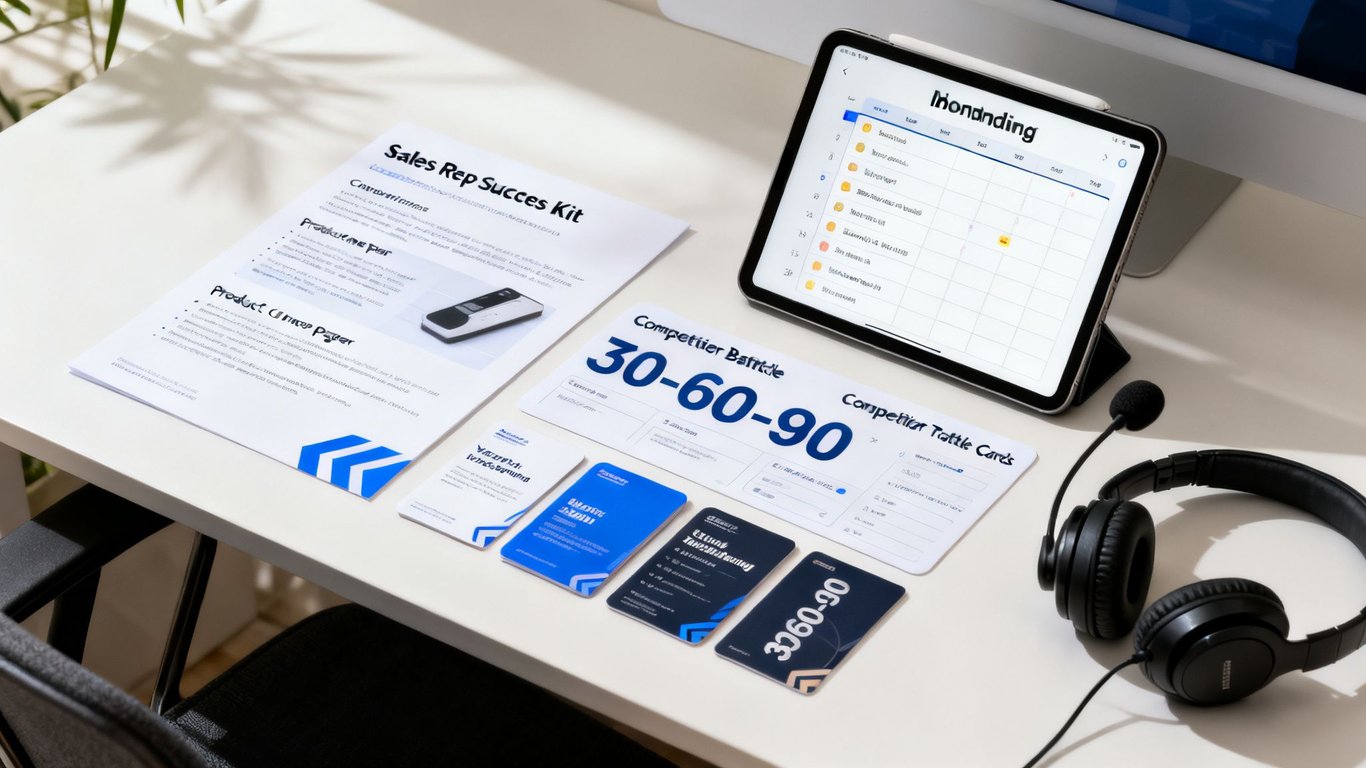
Securing an elite independent sales rep is a milestone, but the real work begins now. Many outsourced sales partnerships fail in the first 90 days due to a flawed onboarding process that kills momentum.
You are not onboarding a typical employee. These are seasoned professionals who need practical, targeted tools to get them into high-quality sales conversations quickly, not a seminar on your company's history.
A Practical 30-60-90 Day Onboarding Plan
Your onboarding program must be focused on one goal: enabling quick wins. A structured 30-60-90 day plan provides a clear roadmap for both you and your new partner. It prevents overwhelm and respects their position as an independent business owner. This approach delivers product knowledge, buyer insights, and sales process essentials in short, digestible sprints.
The First 30 Days: Building the Foundation
The first month is about arming the rep with the core knowledge needed for confidence. The goal is not to close deals but for them to master your value proposition and begin mapping initial targets within their network.
- Week 1: Start with a live, interactive product demo. Immediately after, provide your "Sales Rep Success Kit" so they have all essential materials in one place.
- Weeks 2-3: Schedule two brief, 30-minute check-ins per week. These are opportunities for them to ask questions and for you to hear what they are learning from initial exploratory calls.
- Week 4: Review their initial target account list together. Help refine it against your ideal customer profile (ICP) and share any insider knowledge you have.
Onboarding an outsourced sales rep isn't about teaching them how to sell. It's about giving them the specific ammunition they need—product knowledge, competitor intel, and clear value props—to effectively integrate your product into their existing sales motion.
Days 31-60: Generating Initial Opportunities
With a solid foundation, month two is about action. The focus shifts from theory to practice, getting your product in front of real buyers and generating the first qualified meetings.
- Activities: The rep should be actively reaching out to their refined target list. This is the real-world test for your messaging.
- Support: Provide a direct line to a technical expert on your team. A seamless and fast handoff for deep-dive questions is critical to avoid losing deal momentum.
- Review: At the end of 60 days, schedule a one-hour pipeline review. Analyze early results, identify common objections, and be prepared to adjust the strategy together.
Days 61-90: Converting Pipeline to Revenue
The final phase focuses on converting early activity into a tangible pipeline. By now, your rep should be comfortable with the product and holding substantive conversations with qualified leads. The objective is to secure the first few wins and establish a repeatable sales process.
The Sales Rep Success Kit
To get your new partner up to speed quickly, provide a concise, high-impact toolkit on day one. Avoid sending them to a sprawling internal wiki. The "Sales Rep Success Kit" should be a curated package of essentials.
What to Include in Your Success Kit:
- Product One-Pager: A single document outlining the problem you solve, key features, and your ideal customer.
- Competitor Battle Cards: Simple, direct comparisons against your top 2-3 competitors, focusing on key differentiators.
- Case Studies & Testimonials: Two or three of your most powerful success stories that demonstrate clear ROI relevant to the rep's target market.
- Pricing Sheet: A clear document explaining your pricing, the commission structure, and standard terms.
- Key Contacts List: A simple cheat sheet of who to contact for technical questions, marketing support, and contract approvals.
This focused approach gives your outsourced B2B sales partners what they need to start selling effectively, turning a new relationship into a revenue-generating machine.
Setting Up Your Reps for Success: Compensation and Key Metrics
Once a new independent sales rep is onboarded, the next step is creating a framework that fuels their drive while protecting your interests. This involves three core components: a smart compensation plan, a solid contract, and meaningful performance metrics.
The compensation structure is the heart of any commission-only partnership. It must be tailored to your product's margins, sales cycle length, and the specific actions you want to incentivize. A poorly designed plan creates friction and can undermine a promising partnership.
Choosing the Right Commission Structure
There is no one-size-fits-all formula. The best commission model depends on your business objectives.
Here are the most common models for outsourced B2B sales:
- Flat-Rate Commission: The rep earns a fixed percentage of every deal closed. This is straightforward and works well for products with consistent price points and shorter sales cycles.
- Tiered Commission: This model rewards top performers by increasing the commission percentage as reps hit specific sales targets. For example, they might earn 10% on sales up to $50,000 and 15% on all sales once they cross that threshold in a quarter.
- Residual Commission: Ideal for subscription-based or recurring revenue products. The rep earns a commission on the initial sale and continues to get paid as long as the customer remains active. This incentivizes finding high-quality, long-term customers.
The Independent Contractor Agreement
Your compensation plan must be codified in a legal document. A detailed independent contractor agreement is essential for providing legal guardrails that protect both parties and prevent future disputes.
To dive deeper, we've put together a comprehensive guide on the key elements of a commission sales contract.
At a minimum, your agreement must clearly define these clauses:
- Commission Structure: Detail the exact percentages, tiers, and payout triggers.
- Payment Schedule: Specify when payments are made (e.g., upon customer payment, net-30, monthly).
- Territory Definition: Clearly define the geographic areas, verticals, or specific accounts they are assigned.
- Termination Clause: Outline the conditions under which either party can end the agreement.
A strong contract isn't about mistrust; it's about creating a transparent and predictable framework for success. It ensures everyone understands the rules of engagement from day one, which is the cornerstone of a healthy, long-term partnership.
Defining KPIs That Actually Matter
Tracking activity metrics like calls dialed or emails sent can be misleading. With an outsourced team, focus on key performance indicators (KPIs) that directly reflect pipeline growth and forward momentum. The right KPIs provide a data-driven view of performance without micromanagement, helping you and your partner identify issues early and adjust strategy.
KPIs to Track for an Outsourced Sales Team:
- Lead-to-Opportunity Conversion Rate: This measures a rep's effectiveness at turning initial interest into a qualified sales opportunity. A high rate indicates they are targeting the right leads.
- Pipeline Velocity: This tracks how quickly deals move through the sales stages. A healthy velocity shows that opportunities are being actively advanced.
- Average Deal Size: This ensures that the rep's efforts align with your revenue goals by tracking the value of the deals they are pursuing.
- Sales Cycle Length: This measures the average time it takes to close a deal. A decreasing cycle length indicates growing efficiency and effectiveness.
Focusing on these outcome-driven metrics is what makes outsourcing B2B sales so powerful. For example, one company with a "practically non-existent" pipeline generated £1.2 million in qualified opportunities within just 90 days by partnering with the right outsourced team. In contrast, an in-house hire can take six months just to become fully ramped up. You can discover more insights about designing a modern B2B sales team on punchb2b.com.
Got Questions About Outsourcing B2B Sales? Let's Get Them Answered.
Embarking on outsourced B2B sales can raise questions about control, quality, and remote management. This section provides direct answers to common concerns about protecting your brand, managing remote reps, and safeguarding your company's proprietary information.
How Do I Keep Our Brand and Messaging Consistent?
Maintaining brand integrity is a primary concern. The key is to treat outsourced partners as an extension of your team, not as vendors.
This starts with comprehensive onboarding. Provide them with the same deep dive you would give a new employee, including core messaging frameworks, competitor battle cards, and clear brand voice guidelines.
To ensure long-term consistency, implement these practices:
- Sign Off on Initial Outreach: Review and approve initial scripts and email sequences to set the standard from day one.
- Set Up Regular QA and Feedback: Schedule weekly or bi-weekly sessions to review call recordings and email threads. This is for coaching and collaboration, not micromanagement.
- Insist on a Shared CRM: All activity—every call, email, and note—must be logged in your central CRM. This provides real-time visibility into every prospect interaction.
How Do We Manage Communication with Remote Reps?
Managing an independent, remote sales team requires a different approach than managing in-house staff. Constant check-ins can undermine the autonomy that makes these partnerships effective. The solution is to establish a predictable, structured communication rhythm.
Shift the focus from activity to outcomes. Instead of asking, "How many calls did you make today?" ask, "What are you hearing from the market this week?" This transforms a supervisory check-in into a strategic collaboration.
Your communication strategy should be built on scheduled, high-value touchpoints. This respects the rep's independence while giving you the strategic oversight you need to guide the partnership and ensure everyone is aligned on goals.
An effective communication plan typically includes:
- A Weekly Tactical Sync: A 30-minute call to review the pipeline, discuss active deals, and resolve immediate roadblocks.
- A Monthly Strategic Review: A deeper dive to analyze performance against KPIs, discuss market intelligence, and plan the next month's priorities.
- An "As-Needed" Lifeline: Ensure reps have a single point of contact, such as a sales manager or dedicated channel manager, for urgent questions.
What About Protecting Our Intellectual Property and Customer Data?
Handing over product details and CRM access to an outside partner requires trust. Protecting your intellectual property (IP) and customer data is non-negotiable. Your Independent Contractor Agreement is the legal firewall that protects your business.
Make Sure Your Contract Includes These Clauses:
- A Rock-Solid NDA: This should be a comprehensive clause that explicitly forbids the rep from sharing any proprietary information, including products, pricing, and internal strategies.
- Crystal-Clear Data Ownership: The contract must state that all customer data, leads, and contacts generated belong exclusively to your company.
- System Access and Termination: Clearly define the scope of their access to your systems (like your CRM) and outline the exact process for revoking that access immediately upon contract termination.
By proactively addressing these questions, you can build a strong, secure foundation for a B2B sales partnership that drives growth.
Ready to stop hunting for individual reps and start connecting with a network of vetted, territory-owning sales professionals? Zilla Sales provides a dedicated marketplace where you can find the right commission-only partners to fix empty territories and accelerate your time to market. Post your opportunity for free and start seeing matches in under 48 hours.
Keep Reading
More insights for high-performance sales teams.

A Modern Guide to B2B Door to Door Companies
Uncover how modern door to door companies work, the real costs, and the risks. Learn about a smarter alternative for fast B2B territory growth.

Mastering Software Sales Training for Elite Reps
Build a world-class software sales training program. This guide details the curriculum, metrics, and tools needed to accelerate revenue with your sales team.

How Does Commission Work in Sales? A Manufacturer’s Guide
Understand how does commission work in sales. This guide explains common structures, calculation examples, and best practices for B2B manufacturing companies.
Ready to find your sales partner?
Join manufacturers who are successfully expanding their territories with our network. Post a listing in minutes and start receiving matches.
✓ Verified Professionals • ✓ No Long-term Contracts