


Deciding to become an independent sales rep is a significant career move, shifting your mindset from that of an employee to a business owner. This journey involves establishing your own company, finding the right product lines to represent, and leveraging your professional network. At its core, you're building a curated "line card" of complementary products, forging partnerships with manufacturers, and becoming the CEO of your own sales territory. This change offers substantial freedom and earning potential.
Your Roadmap to Becoming an Independent Sales Rep

Going independent requires a complete mental shift. You are no longer just selling; you are building a business from the ground up. This path is for the entrepreneurial, where your income is a direct reflection of your performance, not a predetermined salary.
The most effective starting point is your most powerful asset: your industry knowledge and existing relationships. Avoid trying to break into a new market. Your first action should be to leverage the buyers you already know and the market you understand thoroughly. That existing foundation is precisely what manufacturers seek.
Defining Your Business Structure
Before you represent a product line, you must set up your business properly. This process is more than paperwork; it's about building a professional framework that protects you legally and financially. The choices you make now will affect everything from your taxes to your personal liability.
The most successful reps view themselves as strategic partners to manufacturers, not just commission-based sellers. They bring market intelligence, established buyer trust, and a clear go-to-market plan to the table.
This foundational work sets the stage for long-term growth. To do this correctly, you need to think like a business owner from day one. Here are the essentials:
- Legal Entity: Decide if you’ll operate as a sole proprietorship or form an LLC to shield your personal assets from business liabilities.
- Financial Setup: Open a dedicated business bank account. Keeping your personal and business finances separate is non-negotiable for accurate bookkeeping and tax purposes.
- Territory Plan: Clearly define your geographical area or the specific industry vertical you will focus on. A tight focus is more effective than a broad approach.
Building Your Initial Line Card
Once your business is officially established, it’s time to source your first product lines. The objective is to build a "line card" of products that are complementary but non-competing, allowing you to sell them to the same group of buyers. This makes every sales call more efficient and increases your value to your customers.
For instance, if your key relationships are with procurement managers at hospitals, your line card might include medical devices, disposable supplies, and diagnostic equipment. Each product solves a different problem for the same buyer, positioning you as an indispensable resource.
Understanding the world of independent sales reps is critical as you build these initial partnerships. It’s a strategic process of piecing together the right products, territory, and manufacturer relationships to create a business that is not just profitable but sustainable.
Key Milestones for Launching Your Rep Business
To provide a clearer picture, here is a high-level overview of the critical stages and realistic timelines for getting your independent sales business operational.
| Milestone | Key Actions | Estimated Timeline |
|---|---|---|
| Foundation & Legal Setup | Choose a business name, form an LLC or sole proprietorship, open a business bank account, and consult a CPA. | 2-4 weeks |
| Strategy & Planning | Define your territory, ideal buyer profile, and target industries. Create a simple one-page business plan. | 1-2 weeks |
| Sourcing Product Lines | Identify and vet potential manufacturers. Start outreach, conduct initial interviews, and request product samples. | 4-8 weeks |
| Negotiation & Contracts | Negotiate commission rates and contract terms. Have an attorney review final agreements before signing. | 2-3 weeks |
| Onboarding & Launch | Complete manufacturer training, organize sales materials, and officially launch outreach to buyers. | 1-2 weeks |
This table is not a rigid formula, but it provides a solid framework. Some steps might happen faster, while finding the perfect anchor line could take longer. Remain focused and methodical.
Getting Your Business Off the Ground
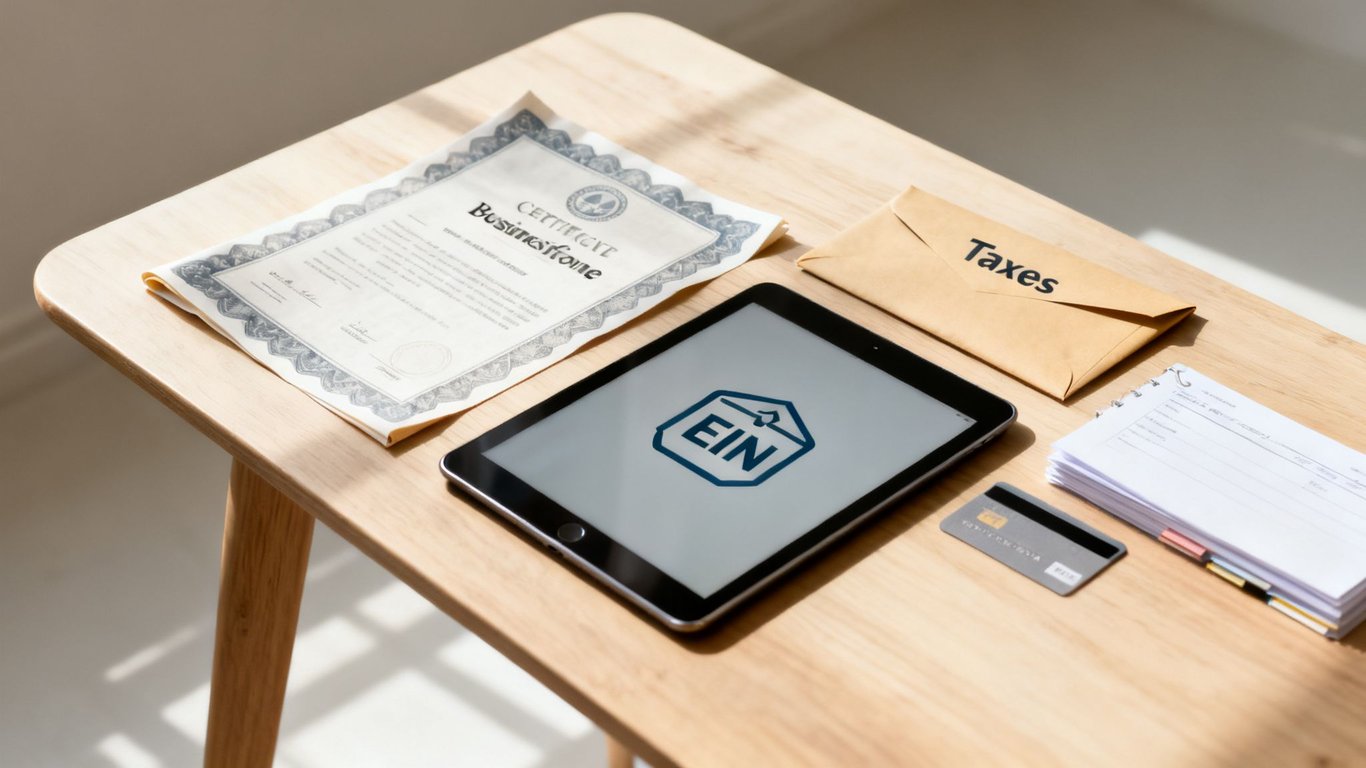
Before you pitch your first product line, you must build a solid foundation for your business. This is about protecting yourself, establishing a professional presence, and getting your financial house in order. Many new reps overlook these details, which often leads to future complications.
Your first major decision is how to structure your business. This choice has real-world consequences for your personal liability and taxes, so it is worth taking the time to get it right.
Choosing Your Legal Structure
For most independent reps, the choice comes down to two options: operating as a sole proprietorship or forming a Limited Liability Company (LLC).
A sole proprietorship is the simplest option. You and your business are legally the same entity. However, that simplicity comes with significant risk: there is no liability protection. If your business incurs debt or is sued, your personal assets—your house, car, and savings—are vulnerable.
This is why forming an LLC is highly recommended. It creates a legal separation between your business and personal life. If the business encounters financial trouble, your personal assets are shielded. That peace of mind alone is worth the minimal extra paperwork.
Forming an LLC does more than just protect you. It signals to manufacturers that you are a serious, professional operation. That credibility can make a significant difference during contract negotiations.
Making your business official involves a few non-negotiable steps:
- Register Your Business: This process varies by state but typically involves registering your business name and filing articles of organization if you choose the LLC route.
- Get an Employer Identification Number (EIN): This is like a Social Security number for your business. You will need an EIN from the IRS to open a business bank account and file taxes, even without employees.
- Open a Business Bank Account: This is critical. Never mix personal and business finances. A separate account is essential for clean bookkeeping, simplified tax preparation, and maintaining the LLC liability shield.
Managing Your Money Like a Business Owner
Once you are legally set up, the next immediate priority is managing your cash flow. As a 1099 contractor, taxes are not withheld from your paychecks. You are solely responsible for managing them. This is the most common financial mistake new reps make.
A simple rule can prevent significant issues: immediately transfer 25-30% of every commission check into a separate savings account dedicated to taxes. Do not touch it. This discipline transforms a potential year-end tax crisis into a manageable, planned expense.
You also need a basic cash flow projection. Before commission checks become consistent, you must know your financial runway. This does not require complex software; a simple spreadsheet mapping out your expected expenses and potential income is sufficient to start.
Building Your Foundational Contracts
Finally, having your own standard Independent Contractor Agreement drafted and ready is a professional move. While most manufacturers will have their own contracts, arriving with your template demonstrates that you understand the business side of the relationship.
Your agreement should outline your ideal terms for commission rates, payment schedules, and contract termination. It becomes a valuable reference point during negotiations, helping you quickly identify where their offer differs from your baseline and what points require discussion.
To better understand what these agreements entail, review our guide on the life of 1099 sales reps and the contracts that shape their careers. Mastering these foundational elements—legal, financial, and contractual—is how you build a rep agency that is built to last.
Finding Your Niche and Sourcing the Right Product Lines

The most successful reps are not generalists; they are specialists. They build a smart, non-competing line card that allows them to sell multiple solutions to a single buyer. This is the key to generating significant income as an independent rep.
Before you pursue every new product opportunity, you need to assess your own background. Your most powerful asset is your professional history and the network you have spent years building. That is where you will find your advantage.
Audit Your Own Background First
Start with a simple audit of your experience and contacts. Your goal is to pinpoint a core market where you already have credibility and relationships. This is not just about listing old jobs—it is about strategically assessing your current assets.
Ask yourself these questions:
- Who do I actually know? List the decision-makers you can contact today. Think of procurement managers, engineers, or department heads with whom you have built genuine trust.
- What industries do I genuinely understand? Where does your expertise lie? Medical devices? Industrial manufacturing? Consumer goods? Stick to what you know.
- What problems have I solved for people? Reflect on the specific pain points you have helped customers with. This reveals the types of products you are already effective at selling.
The answers will point you directly to a niche where you have an immediate head start. For instance, if you have spent your career selling industrial pumps to factory managers, your path is clear. You should be looking for other industrial products that the same audience needs.
Build a Line Card That Makes Sense
Once you have identified your niche, it is time to find product lines that fit together. A powerful line card is built on synergy. Each product should enhance the value of the others, turning every sales call into a cross-selling opportunity. Aim to become an indispensable resource for your buyers, not just another vendor.
For example, if your core buyer is a hospital administrator, a synergistic line card could look like this:
- Line 1: High-tech diagnostic equipment (a capital expense).
- Line 2: Specialized disposable supplies for that equipment (a recurring revenue stream).
- Line 3: A software platform for managing patient data (a service-based sale).
Each product solves a different problem for the same buyer. This approach makes you a multi-faceted partner and maximizes the value of every relationship you have.
How to Source and Vet Manufacturers
With your focus defined, it is time to find manufacturers that need representation. The demand for good reps is always there—you just have to know where to look. While traditional methods like trade shows are still relevant, modern marketplaces have made the process more efficient.
The real art of being an independent rep is finding partners who not only have a great product but also understand and respect the value of a commission-only sales force. Their support infrastructure is just as important as their commission rate.
Platforms like Zilla Sales were built specifically to connect verified reps with manufacturers actively searching for territory coverage. Instead of making endless cold calls, you can browse opportunities filtered for your industry and region. This can shorten the search from months to days.
Once you have a shortlist of potential partners, the vetting process begins. Do not skip this step. Partnering with the wrong company can waste your time and damage your reputation.
- Check Their Reputation: Do they have positive reviews? Are their products respected? A quick search for case studies or testimonials can reveal a lot.
- Get Your Hands on the Product: Always request samples or a demo. You must believe in what you sell, and that starts with confirming the product's quality.
- Analyze Their Rep Support: This is crucial. How do they support their reps? Ask specific questions about training, marketing materials, lead generation, and the responsiveness of their internal team. A manufacturer who invests in their reps is a partner worth having.
The sales world is increasingly focused on specialized, relationship-based selling. The demand for skilled sales reps is high, with sales roles accounting for a significant portion of the workforce. According to Zippia, there are over 4.7 million sales representatives currently employed in the United States. To learn more, explore the current sales labor market and see how strategic partnerships are shaping the future of sales.
How to Pitch and Negotiate a Profitable Rep Agreement
Finding a great product line is only half the battle. Next, you must convince the manufacturer that you are the right person to establish them in your territory. This is where you transition from thinking like a salesperson to acting like a business partner.
You are not just asking for a product to sell; you are presenting a business case. You must demonstrate that signing you is the fastest and most effective way to gain market share.
Crafting a Pitch That Sells You
A generic presentation is a waste of time. Your pitch needs to be built on a foundation that directly addresses a manufacturer’s primary concerns: market access, genuine industry expertise, and a concrete plan for getting started.
You must prove you have done your homework and are ready to begin immediately. Frame your value proposition around these key areas:
- Established Relationships: This is your most valuable asset. Name the key accounts and types of buyers you can contact immediately. Draw a direct line between your network and their ideal customer.
- Deep Industry Knowledge: Show them you understand the market. Discuss market dynamics, their competitors, and the specific problems their product solves. You are a source of market intelligence, not just a rep.
- A Clear Territory Plan: Do not just say you will sell. Show them how. Present a simple 30-60-90 day plan that outlines which accounts you will target first, the messaging you will use, and your initial sales goals. This demonstrates you are a strategist.
Dissecting the Commission Structure
Once you have their attention, the conversation will turn to compensation. A profitable agreement is more than a single percentage point. You need to understand different commission structures to negotiate a deal that rewards your hard work.
The earning potential in B2B sales is a major draw. According to a 2024 report, on-target earnings can range from $85,000 for an entry-level SDR to over $700,000 for a top-performing Strategic Account Executive. You can get more details on sales salaries in the full report. These figures highlight why commission-only roles are so appealing—your income is not capped by a salary.
When discussing numbers, think beyond a simple flat rate. Consider these common structures:
- Tiered Commissions: This structure rewards high performance. For example, you might earn 10% on sales up to $250,000, which increases to 12% for the next quarter-million, and 15% on everything after that. It provides a powerful incentive to exceed targets.
- Residual Commissions: This is ideal for products with recurring revenue, such as subscriptions, services, or disposables. Securing residuals means you continue to get paid as long as the customer remains. It is how you build a stable, long-term income stream.
- Commission Draws: Some companies offer a "draw," which is an advance against future commissions. It can help with cash flow initially, but it is a loan you must repay from your sales, which can add pressure in the first few months.
A strong rep agreement is a partnership document, not a list of demands. The best negotiations result in a contract where both you and the manufacturer feel you have won, creating a foundation of mutual respect and shared goals.
Negotiating Key Contract Terms Beyond the Rate
A high commission rate is worthless if the contract's fine print works against you. This is where your long-term success is either secured or undermined. Your negotiation should focus on creating a partnership that is clear, fair, and protects your business.
Do not be afraid to discuss the details. A manufacturer unwilling to have a reasonable discussion about these points may not be the right partner.
Ensure these items are on your negotiation checklist:
-
Territory Exclusivity: This should be non-negotiable. You need exclusive rights to sell the product line within a well-defined geographical area or to a specific list of accounts. This protects you from investing months of work only to have another rep or an internal salesperson take the deal.
-
Termination Clauses: Examine the "termination for convenience" clause. You need a fair notice period, typically 30-90 days. More importantly, the contract must state that you will be paid for all orders secured before termination and on subsequent business from those clients for a set period afterward (e.g., 90-180 days). This protects your pipeline.
-
Marketing and Sales Support: What are they bringing to the table? Ask about product samples, professional marketing materials, support for trade shows, and access to any leads they generate. Their investment in your success is a strong indicator of how much they value the partnership. For a deeper look at what to include in your agreement, check out our guide on how to structure commission sales contracts.
Your First 90-Day Sales Plan: From Launch to Lift-Off

The first three months as an independent rep are crucial. This period is about building the habits, momentum, and confidence that will sustain you. A solid plan prevents wasted effort and ensures every action has a purpose.
Think of this roadmap as your launch sequence. It is designed to be aggressive yet achievable, focusing on high-impact activities that generate cash flow and prove your value to your new manufacturing partners.
The First 30 Days: Mastering Your Craft
Your first month is for deep immersion, not immediate sales calls. You cannot sell what you do not truly understand, and you cannot conquer a territory you have not mapped out. The focus is on building your internal knowledge base before you start selling.
Your main goal is to become an undeniable product expert. Get your hands on the product. Go beyond sales slicks and spec sheets to understand its real-world applications and how it has solved problems for customers.
This is also the time to organize your territory. It is more than a map—it is a network of accounts, relationships, and opportunities.
-
Weeks 1-2: Product Immersion. Speak with your manufacturer's product managers and engineers. Ask them to explain common use cases, what makes their product different, and the toughest customer objections they encounter. Your mission is to anticipate and answer any question a buyer might ask.
-
Weeks 3-4: Territory and Contact Segmentation. It is time to organize your contact list. Use a CRM or a simple spreadsheet to segment your buyers into tiers. Tier A contacts are your warm leads—people who already know and trust you. These are your first calls.
The Next 30 Days: Hitting the Ground Running
With a solid product foundation and a prioritized contact list, month two is for execution. You shift from planning to doing, making contact, and getting real-world feedback. The goal is not just closing deals; it is about testing your message and refining your approach.
You are re-engaging your network as a trusted advisor bringing a valuable new solution. Start with your Tier A list. These early conversations are low-risk opportunities to practice your pitch and build confidence.
Your email and call scripts are not meant to be read verbatim. They are a starting point. The best reps listen more than they talk, adapting their message to fit the buyer's immediate pain points.
Use this simple email template to start a conversation with a warm contact:
Subject: Quick question about [Their Company's Area of Focus]
Hi [Contact Name],
Hope you're doing well. I'm now representing [Product Name], a new line that solves [Specific Problem], and it immediately made me think of the work you're doing at [Their Company].
Are you open to a 15-minute call next week to see if it’s a potential fit?
Best, [Your Name]
It is quick, respects their time, and focuses on a specific value proposition. It is a simple way to open the door to a real conversation.
The Final 30 Days: Ramping Up and Refining
The last month of your initial plan is about scaling your efforts and establishing systems for consistent performance. By now, you should have meetings scheduled and possibly a few early orders in the pipeline. The focus shifts from outreach to diligent follow-up and pipeline management.
This is also when you need to analyze what is working. Are certain industries responding better than others? Does one part of your pitch resonate particularly well? Use this feedback to fine-tune your strategy for the months ahead.
Consistently hitting quotas is challenging. Recent data from HubSpot shows that 65% of B2B outside account executives met their sales quotas, compared to lower rates for other sales roles. This proves that the strong field relationships cultivated by independent reps are more critical than ever for driving results. It's the entire principle behind platforms like Zilla Sales, which connect manufacturers with reps who already own those key buyer relationships. You can check out more sales statistics and insights to see how the market is trending.
The habits you build in this final month will set the stage for your long-term success.
- Develop a Strong CRM Habit. Be disciplined about updating your CRM after every call and meeting. Track your leads, follow-up dates, and notes. This discipline separates professionals from amateurs.
- Do Not Be Afraid to Ask for Referrals. After a successful meeting or a closed deal, always ask. The best new leads often come from your happiest customers.
- Plan Your Next 90 Days. Success is a cycle. Use the last week of this plan to review your accomplishments and build your next 90-day plan, setting slightly more ambitious goals based on what you have learned.
Got Questions About Going Independent? We've Got Answers.
Stepping out on your own as an independent rep is a significant move, and it is natural to have questions. Getting clarity from the start is what separates a confident launch from a hesitant one. Let's address some of the most common inquiries.
Consider this your final checkpoint. We will cover the reality of income potential, the skills that truly matter, and how to get started.
So, How Much Can I Really Make?
This is the most common question, and the honest answer is: there is no ceiling. That is both the biggest attraction and the biggest challenge of this career. Your income is a direct result of your effort, the commission rates you negotiate, and your industry. You are paid for performance, with commissions often ranging from 5% to over 20% of a sale.
Be prepared for the first three to six months to be lean as you build your pipeline from scratch. However, once you are established with a strong, complementary set of product lines, experienced reps can earn well into six figures, and sometimes much more. It all comes down to landing profitable lines and leveraging your network to shorten the initial sales cycle.
The most liberating part of being an independent rep? You are in complete control of your income. Your effort, your strategy, and your ability to close are the only things that matter.
Using a platform like Zilla Sales can provide a significant advantage. It helps you find high-commission product lines from quality manufacturers, enabling you to start earning much sooner than if you were sourcing opportunities on your own.
What Skills Do I Actually Need?
Being good at selling is a given. But the skills that truly define success in this role are entrepreneurship, discipline, and networking. You are not just taking a sales job; you are running a business. That means you are the CEO, CFO, and head of marketing, all in one.
Self-discipline is non-negotiable. Without a boss to manage you, you must be the one to set goals, manage your time, and hold yourself accountable. No one else will do it for you.
Above all else, your network is your currency. The top earners are masters at building and nurturing genuine relationships. Your connections with both manufacturers and buyers are your most valuable asset.
Can I Really Start This with No Product Lines?
Yes, absolutely. Every independent rep in history started with a blank slate. Your most powerful asset is not a list of products; it is your deep industry knowledge and the relationships you have already built with buyers.
You start by leveraging what you already know. Focus on the niche where you have experience and connections. From there, you search for manufacturers who need a presence in your territory.
- Build a strong profile on a marketplace where manufacturers are actively looking for reps.
- Attend industry trade shows. Nothing beats a face-to-face meeting with a decision-maker.
- Work your professional network. Connect with sales managers and VPs in your target industries.
When you pitch a manufacturer, you are not selling them on the products you carry—you are selling them on the access you provide. To them, your warm market of potential customers is invaluable and far more compelling than a rep with a handful of unrelated lines.
Ready to find product lines that match your expertise? Zilla Sales connects you directly with manufacturers actively seeking reps in your territory. Build your profile and start exploring commission-only opportunities today.
Keep Reading
More insights for high-performance sales teams.

A Modern Guide to B2B Door to Door Companies
Uncover how modern door to door companies work, the real costs, and the risks. Learn about a smarter alternative for fast B2B territory growth.

Mastering Software Sales Training for Elite Reps
Build a world-class software sales training program. This guide details the curriculum, metrics, and tools needed to accelerate revenue with your sales team.

How Does Commission Work in Sales? A Manufacturer’s Guide
Understand how does commission work in sales. This guide explains common structures, calculation examples, and best practices for B2B manufacturing companies.
Ready to find your sales partner?
Join manufacturers who are successfully expanding their territories with our network. Post a listing in minutes and start receiving matches.
✓ Verified Professionals • ✓ No Long-term Contracts