


Hiring independent sales reps can be a strategic move for scaling sales efforts without the high fixed costs of a traditional sales team. This model provides access to professionals with established networks, enabling companies to enter new markets efficiently. However, success depends on building a solid foundation before beginning the search.
Building Your Foundation for Sales Success
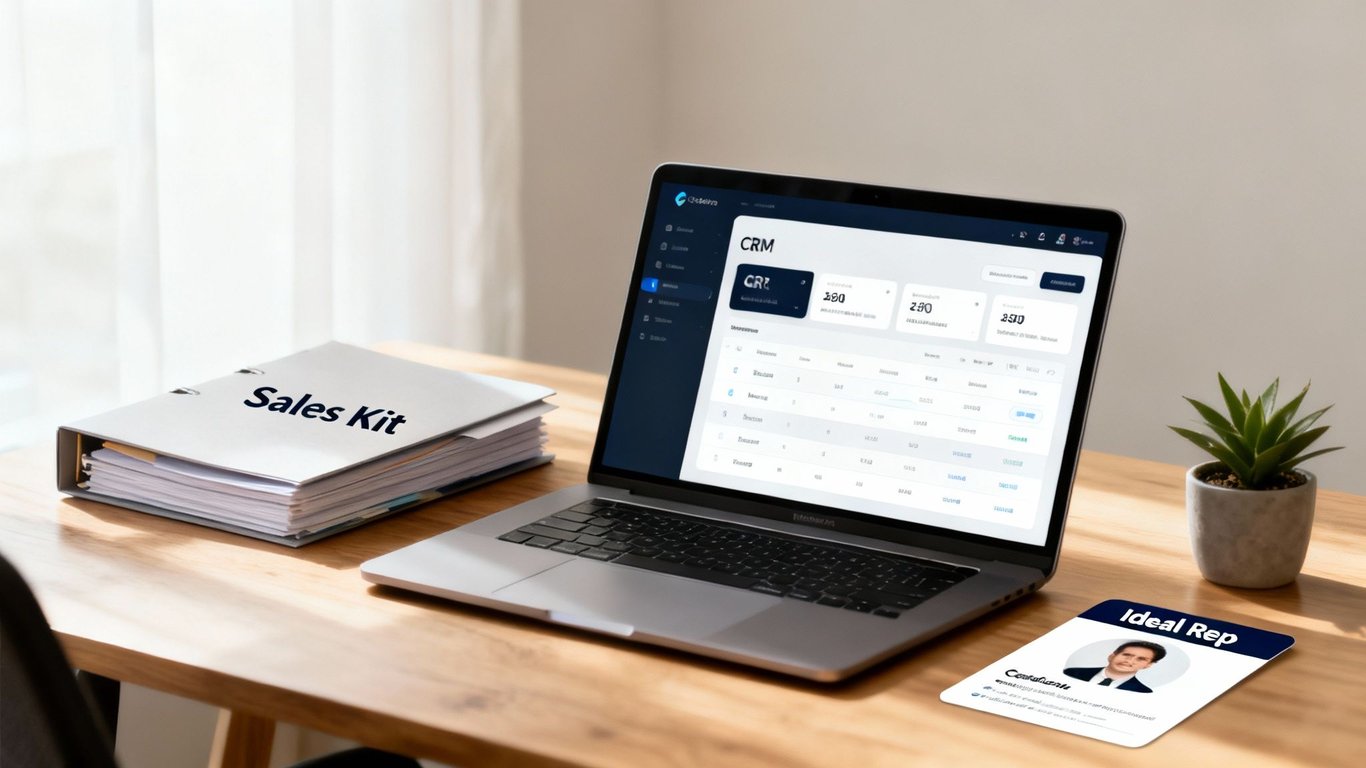
Before posting any opportunities, it's critical to prepare your internal systems and define your offer. Top-performing reps require a solid platform to succeed, and skipping this preparatory step often leads to high turnover and wasted resources.
The best independent reps are vetting your company just as thoroughly as you are vetting them. A professional, well-organized setup signals that you are a serious partner committed to mutual success.
Define Your Ideal Rep Profile
First, create a detailed profile of the ideal candidate. Move beyond generic "sales skills" and focus on the specific attributes required for your product, market, and company culture. An independent rep is a business partner, not just an employee.
Key criteria for your profile should include:
- Existing Network and Territory: The ideal rep should have a book of business that aligns with your target customer base. For example, a company selling industrial lubricants should seek a rep who already has relationships with manufacturing plant managers.
- Industry Expertise: The candidate must possess deep industry knowledge to establish credibility and shorten the sales cycle. A rep selling medical devices requires a different background than one selling construction materials.
- Entrepreneurial Mindset: Look for a self-starter who is organized, motivated by performance-based income, and comfortable managing their own schedule, pipeline, and business expenses.
An independent rep's most valuable asset is their existing network. Prioritize the relevance of their connections over years of general sales experience.
Craft a Compelling Value Proposition
Top independent reps are selective. They evaluate new product lines based on their potential to generate income. Your opportunity must be presented as a compelling business partnership, not just a job opening.
Your value proposition should address their entrepreneurial motivations:
- High Earning Potential: Clearly outline the commission structure. Use realistic sales projections to illustrate potential first-year earnings. Uncapped commissions are a significant draw for high-achievers.
- A Product That Sells: Provide evidence of market demand through case studies, customer testimonials, and data that shows your product solves a significant problem. Reps need to believe they can sell it effectively.
- Robust Support System: Detail the resources you will provide, such as marketing-qualified leads, a comprehensive sales kit, product samples, or access to technical support. This demonstrates your investment in their success.
Prepare Your Internal Systems
Finally, ensure your internal operations are ready before bringing a new rep onboard. A disorganized onboarding process can damage a new partnership from the outset.
Confirm these essential systems are in place:
- A Configured CRM: Your CRM should be set up to assign leads, track pipeline activity, and calculate commissions accurately. Provide the new rep with a dedicated login and ensure the system is user-friendly.
- Ready-to-Go Sales Collateral: Assemble a complete digital sales kit, including brochures, product spec sheets, a polished sales deck, and video demonstrations. This allows them to start selling immediately.
- A Simple Training Structure: Design a concise and focused onboarding program. The initial training should cover critical product knowledge and your ideal customer profile, enabling the rep to begin selling as quickly as possible.
Establishing this foundation transforms the process of hiring independent reps from a speculative venture into a strategic business decision.
Finding and Attracting Elite Sales Talent

The best independent sales reps are typically not searching on generic job boards. They are seasoned professionals who are already successful, which means you must be proactive to get their attention.
This requires a multi-channel strategy that combines specialized platforms with targeted, personalized outreach.
Go Where the Pros Are
To connect with experienced reps, you must engage with the platforms and communities they trust. Posting on general job sites often yields candidates who lack the specific experience required for a 1099 role.
Focus on platforms designed for these partnerships:
- Industry-Specific Marketplaces: Platforms like Zilla Sales connect companies with proven independent reps. These marketplaces allow you to filter candidates by industry and territory, ensuring you reach individuals with relevant networks. You can post an opportunity directly to this targeted audience.
- Trade Associations: Many professional associations in your industry have newsletters, forums, or career sections where you can share your opportunity with a highly relevant audience.
- Networking at Trade Shows: Attending key industry trade shows provides an excellent opportunity to meet established reps who are actively working and building connections in your market.
Using LinkedIn for Surgical Precision
LinkedIn is a powerful recruiting tool when used correctly. Instead of waiting for applicants, you can proactively identify ideal candidates. Blasting generic connection requests is ineffective.
Use tools like Sales Navigator or advanced search filters to find reps selling non-competing products to your ideal customers. Search for titles like "Independent Sales Representative," "Manufacturers' Representative," or "President/Owner" of a sales agency, as these indicate an entrepreneurial mindset.
When you reach out, your message must be authentic and respectful of their time:
- Personalize Your Message: Reference a specific detail from their profile, such as a shared connection, a recent post, or their experience with a relevant product line.
- Frame it as a Partnership: Use language that suggests a business partnership, such as "exploring a potential collaboration" or "adding a high-value product to their portfolio."
- Keep it Short: Briefly introduce your company, the product, and why you believe it would be a good fit for their existing customers. End with a low-pressure call to action, such as, "Would you be open to a 15-minute call to determine if there's a fit?"
The reps you want are almost always already working. Your objective is to find a top performer who is open to a better opportunity with a greater upside.
Craft a Job Posting That Actually Sells
Your opportunity posting should read like a sales pitch, not a corporate job description. Independent reps are business owners who evaluate opportunities based on autonomy, support, and financial potential.
Here’s how to structure a posting that will capture their attention:
- Lead with the Money: Use a headline that highlights the earning potential, such as uncapped commissions or a realistic first-year income. For example: "Partner With Us and Add $100k+ to Your Annual Income."
- Sell the Product and Market: Clearly explain the problem your product solves and for whom. Support your claims with statistics, testimonials, or case studies to demonstrate market demand.
- Detail Your Support: List the resources you provide, such as qualified leads, marketing materials, CRM access, and a comprehensive sales kit. Show that you are invested in their success.
- Define the Ideal Partner: Instead of a list of requirements, create an "Ideal Partner Profile." Describe the networks and industry experience that would make a candidate a perfect fit.
This approach changes the dynamic, allowing you to engage in meaningful conversations with elite performers who can make an immediate impact on your revenue.
Crafting a Commission Structure That Motivates

The commission plan is the most critical document in your relationship with an independent rep. It serves as your primary recruiting tool and the engine for their motivation. A convoluted structure can kill momentum, while a clear, compelling plan attracts top talent and aligns their efforts with your business goals.
The 2025 sales compensation survey on asicentral.com found that 25% of reps work as independent contractors, earning a median of $75,000 if they have an established book of business. To attract these professionals, your plan must be competitive and easy to understand.
Core Commission Models for Independent Reps
The right commission model depends on your product, sales cycle, and business objectives.
Common frameworks include:
- Straight Commission: A flat percentage of every sale. This is simple to calculate and highly motivating for high-ticket items. For example, a 10% commission on a $100,000 sale yields a clear $10,000 payout.
- Tiered Commission: The commission rate increases as reps meet and exceed revenue targets. This model incentivizes over-performance and is ideal for driving aggressive growth.
- Residual Commission: Reps earn a recurring commission for as long as a client they acquired remains a customer. This is essential for subscription-based businesses (e.g., SaaS) as it encourages long-term customer relationships.
If a rep needs a calculator to determine their earnings on a deal, your plan is too complex. Simplicity and clarity are essential for motivation.
Building a Competitive and Fair Plan
The details of your commission plan are where you build trust. Experienced reps will scrutinize the terms, so transparency is key to a strong, long-term partnership.
Below is a comparison of common commission structures.
Comparison of Common Commission Structures
| Structure Type | Best For | Pros | Cons |
|---|---|---|---|
| Straight Commission | Businesses with high-ticket items and straightforward sales cycles. | Simple to understand and calculate; very motivating for high-value sales. | Can encourage a focus on volume over customer fit; less stable income for reps. |
| Tiered Commission | Companies looking to drive aggressive growth and reward top performers. | Strongly incentivizes exceeding goals; scales rewards with performance. | Can be complex if tiers are poorly defined; may demotivate mid-level performers. |
| Residual Commission | Subscription-based models (SaaS, services) and businesses focused on retention. | Promotes long-term customer relationships and loyalty; creates stable, recurring income. | Payouts are smaller and spread out over time; requires robust tracking. |
| Commission + Bonus | Situations requiring a focus on specific strategic goals (e.g., new markets). | Flexible and can be tied to key business objectives; adds excitement. | Can complicate the plan if not implemented clearly; bonuses may feel arbitrary. |
The goal is to align the rep's financial success directly with the company's goals.
Actionable Example: A Tiered Commission Plan
A software company focused on user growth could implement the following structure:
- Tier 1: 15% commission on the first $50,000 in annual recurring revenue (ARR).
- Tier 2: 20% commission on ARR from $50,001 to $150,000.
- Tier 3: 25% commission on all ARR above $150,000.
This structure actively encourages reps to surpass initial targets to reach more lucrative earning brackets.
The Nitty-Gritty Details Reps Will Ask About
Be prepared to answer detailed questions about your plan. Having clear policies demonstrates professionalism. We cover this in more detail in our guide on structuring plans for commission-only sales reps.
You must have clear answers for these points:
- Payout Timing: Specify when commissions are paid—upon contract signing, after the first customer payment, or upon full payment. Paying within 30 days of the company receiving funds is a common standard.
- Chargeback Policy: Define what happens if a customer cancels or defaults on payment. A fair policy might include a clawback on commissions for a limited time, such as the first 90 days.
- Strategic Bonuses: Consider offering bonuses for achieving key company goals, such as a $1,000 bonus for landing the first client in a new market or a 5% kicker for securing a multi-year contract.
Your commission structure is a statement of intent. It communicates that you value their skills and are committed to a mutually beneficial partnership.
Finding a True Partner: The Interview Process
When hiring an independent sales rep, discard the standard employee interview script. You are not hiring an employee; you are vetting a potential business partner. The objective is to identify a self-sufficient entrepreneur who can build and manage a book of business without constant supervision.
Your questions and due diligence must probe for autonomy, resilience, and business acumen.
Questions That Reveal Real-World Drive
Avoid generic questions like "What are your strengths?" Instead, use situational questions that require concrete examples of past behavior.
Pose real-world scenarios to assess their operational capabilities:
- "Walk me through a time you built a territory from scratch. What were your specific actions in the first 90 days?" This question reveals their strategic thinking and ability to generate momentum independently.
- "How do you maintain organization and motivation without direct supervision?" Listen for specific systems, such as CRM habits, time-blocking techniques, or personal goal-setting rituals. Vague answers are a red flag.
- "Describe a situation where a product you represented had a significant flaw or faced intense competition. How did you continue to sell it effectively?" This uncovers resilience and problem-solving skills, which are critical for an independent business owner.
These questions shift the focus from what they claim they can do to what they have actually done.
The Due Diligence You Absolutely Cannot Skip
A successful interview is only one component. You are entrusting a significant portion of your company's revenue potential to this individual. This requires a thorough verification process.
You are verifying their ability to run a business, not just their sales skills. Their past performance as an independent contractor is the best predictor of future success.
Begin by asking to see their portfolio of current, non-competing product lines. An experienced rep will be willing to share this, providing immediate insight into their existing customer relationships.
Next, conduct targeted reference checks:
- Verify Their Numbers: When speaking with references (ideally principals or sales managers from other lines they carry), ask specific questions. For example: "Can you confirm they generated approximately $500,000 in new business during their second year?"
- Confirm Their 1099 Status: Ask directly, "Was this individual contracted as a 1099 independent contractor or a W-2 employee?" The required mindset and skills are vastly different.
- Ask About Their Business Practices: Inquire about their professionalism and communication. Ask questions like, "How accurate was their forecasting?" and "Did they provide proactive pipeline updates without prompting?"
This rigorous approach helps distinguish true professionals from those merely experimenting with the independent model. Treating the process like a partnership negotiation significantly improves your chances of finding a long-term, revenue-driving asset.
Onboarding Your New Rep for a Fast and Profitable Start
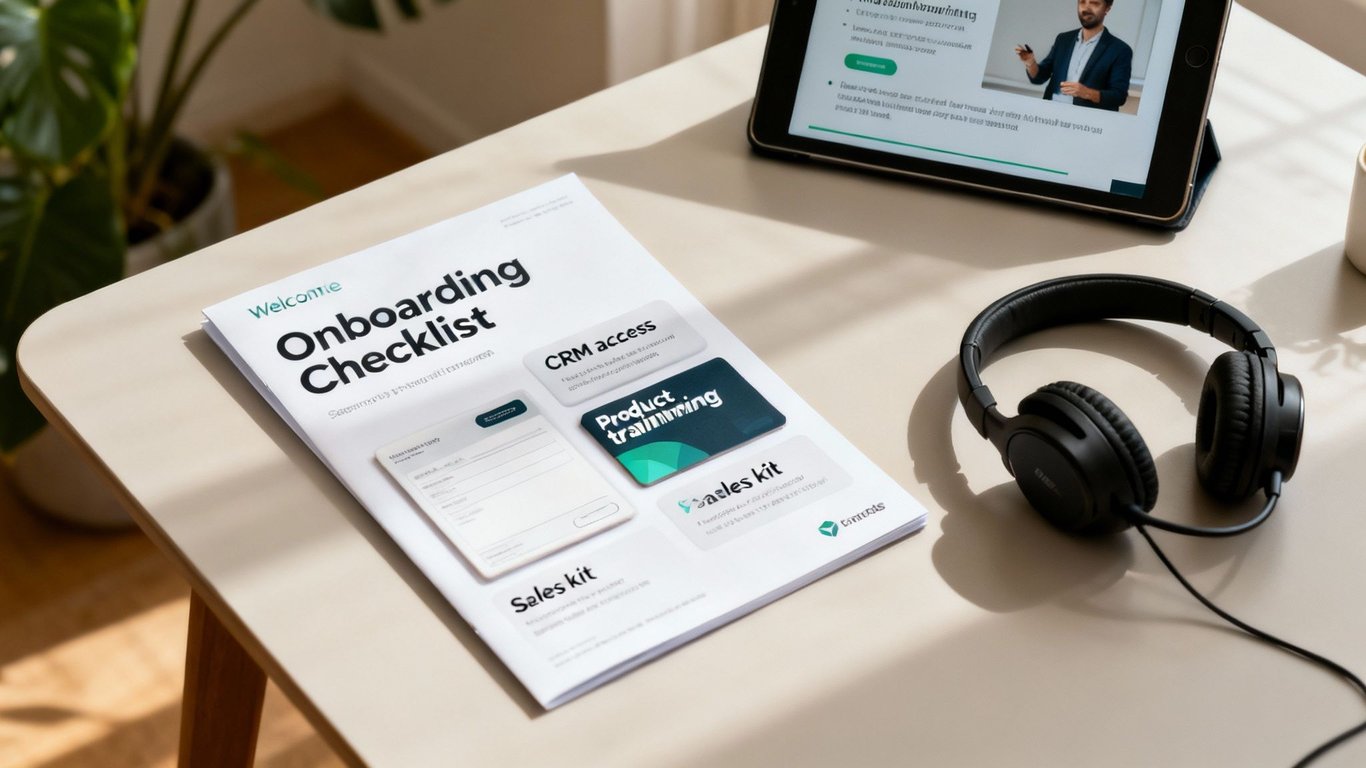
Once you've selected a rep, the success of the partnership depends on a solid contract and a streamlined onboarding process. A professional, organized approach builds confidence and enables your new partner to start selling much faster. The goal is to empower them as a business owner, not micromanage them as an employee.
Fortifying the Partnership with a Clear Contract
Before any sales activity begins, secure a signed Independent Contractor Agreement. This document is your primary legal protection and the single source of truth for the relationship. It should be drafted or reviewed by legal counsel specializing in contract law.
The agreement must clearly define several key elements:
- Commission Terms and Payouts: Specify the exact commission rates, the point at which a commission is considered "earned," and the payment timeline.
- Territory Rights: Define geographical areas, specific industries, or named accounts with clarity to prevent future conflicts.
- Confidentiality and IP: Include a robust non-disclosure clause to protect your intellectual property, customer lists, and other sensitive data.
- Termination Conditions: Outline the process for how either party can end the agreement, including notice periods and final commission payout procedures.
A clear, fair contract prevents misunderstandings and protects both your company and the rep. It is the foundation of a stable partnership.
Getting this right demonstrates that you are a serious, professional organization and gives the rep confidence in your integrity.
An Onboarding Checklist for Self-Starters
Onboarding an independent rep is about enablement, not orientation. They need the tools and knowledge to generate revenue immediately. A streamlined process that respects their time is essential.
Provide them with an organized, easily accessible "business-in-a-box" kit for selling your product.
Here is a practical checklist for your onboarding process:
- Product Knowledge Immersion: Conduct a focused training session on core value propositions, key differentiators, and the ideal customer profile. Record the session for future reference.
- CRM and Systems Access: Provide immediate login credentials to your CRM, ensuring their view is configured for their leads and accounts. A user-friendly CRM is critical.
- The Digital Sales Kit: Grant access to a shared folder (e.g., Google Drive) containing all essential sales collateral, including brochures, case studies, technical spec sheets, and a polished sales deck.
- Marketing and Lead Gen Support: Explain your lead distribution process, if applicable. Provide approved email templates for outreach. According to recent data, over 70% of B2B decision-makers prefer remote interactions, making digital selling skills crucial. Reps who master these skills can generate 45% more opportunities, as detailed by martal.ca.
- Key Contacts and Support Channels: Provide a simple list of go-to contacts for technical, order processing, and commission inquiries to ensure they can get answers quickly.
This structured, resource-rich approach demonstrates your commitment to their success, shortens their ramp-up time, and builds a partnership designed for profitability from day one.
Common Questions About Hiring Independent Sales Reps
Engaging 1099 sales reps often raises specific questions. Addressing these common concerns can help you move forward with confidence and avoid potential pitfalls.
The Legal Distinction Between Reps and Employees
The primary legal distinction between an employee and an independent contractor is control.
With a W-2 employee, an employer dictates the what, how, and when of their work, including hours, processes, and tools.
With a 1099 independent contractor, your control is limited to the outcome of the work. You cannot mandate their work schedule, sales methods, or exclusivity. Misclassifying an employee as a contractor can lead to significant legal and financial penalties. Consult with legal counsel if you are uncertain about the classification.
Managing Performance Without Micromanaging
Accountability with independent reps is focused on results, not daily activities. You transition from a manager to a partner.
Set clear Key Performance Indicators (KPIs) that are agreed upon from the start. These should measure meaningful outcomes, such as:
- Qualified leads generated per month
- Total pipeline value added per quarter
- Number of closed deals or total revenue
Schedule regular check-ins (e.g., bi-weekly or monthly) to review progress against these KPIs and discuss strategy. The purpose of these meetings is to ask, "What support do you need to succeed?" Your role is to provide a great product, necessary resources, and prompt support. The rep's role is to drive sales.
A partnership thrives on mutual respect. You provide the tools and product; they provide the sales engine. Attempting to control their process undermines the autonomy that makes the independent model effective.
Deciding if Commission-Only Is the Right Fit
The commission-only model is not suitable for every business. It works best for companies with high-margin products, a proven sales process, and a relatively short sales cycle. These factors create a clear and fast path to significant earnings, which is highly attractive to top reps.
This model can be challenging for businesses with low-ticket items, a long sales cycle, or a new, unproven product. In these cases, it is difficult to attract experienced, commission-only talent who need to see a reliable potential for income.
For a deeper analysis, review our guide to understanding 1099 sales reps.
Ready to stop searching and start connecting? Zilla Sales is a dedicated marketplace that matches you with verified, industry-specific independent sales reps who are ready to sell. Find your next top performer at https://zillasales.com.
Keep Reading
More insights for high-performance sales teams.

A Modern Guide to B2B Door to Door Companies
Uncover how modern door to door companies work, the real costs, and the risks. Learn about a smarter alternative for fast B2B territory growth.

Mastering Software Sales Training for Elite Reps
Build a world-class software sales training program. This guide details the curriculum, metrics, and tools needed to accelerate revenue with your sales team.

How Does Commission Work in Sales? A Manufacturer’s Guide
Understand how does commission work in sales. This guide explains common structures, calculation examples, and best practices for B2B manufacturing companies.
Ready to find your sales partner?
Join manufacturers who are successfully expanding their territories with our network. Post a listing in minutes and start receiving matches.
✓ Verified Professionals • ✓ No Long-term Contracts