


If you're trying to hire commission-only sales reps, it's time to throw out the old playbook. For manufacturers, the traditional route of expensive job boards and recruiters often fails to deliver. The modern, effective approach is to connect directly with experienced independent reps who already have the buyer relationships you need. This process cuts down your hiring time and dramatically lowers your financial risk.
Why Your Old Sales Hiring Playbook Is Broken

As a sales leader in manufacturing, you've likely experienced this scenario. A key territory is open, sales are flatlining, and the pressure is on to find someone to fill that seat. You fall back on what you know: posting on large job boards or hiring a costly recruiter.
What happens next is predictably frustrating. The process drags on for months, your budget takes a significant hit, and you're left with a handful of candidates who aren't the right fit. This isn't just inefficient; it’s a fundamentally flawed way to find the specific kind of sales talent that drives real growth.
The problem lies in a total mismatch of incentives. Traditional hiring platforms are built for W-2 employees, not for the entrepreneurial, 1099 professionals you’re seeking. You can waste countless hours sifting through resumes from people who want a steady paycheck, not a true performance-based partnership.
The High Cost of a Bad Hire
The financial risk of bringing on a salaried rep who fails to deliver is substantial. It's not just their salary and benefits. The real damage comes from wasted training time, missed sales opportunities, and the potential harm to customer relationships in that territory. When that new hire eventually leaves, the clock resets, and you’re right back where you started—only with less time and money.
This isn't just bad luck. It's a systemic failure. The old process isn't designed to screen for the most critical asset an independent rep brings to the table: an existing book of business and trusted relationships with buyers.
The real challenge isn't just finding a sales rep; it's finding a proven business partner who can generate revenue from day one. Old methods are designed to fill a headcount, not to build a high-performance, results-driven sales force.
The Revolving Door of Sales Talent
The problem gets worse with high turnover, which creates a never-ending cycle of recruitment. For manufacturers, this churn is especially painful. Every empty territory is a direct hit to your market share and a roadblock to growth.
High turnover is a massive issue. According to a LinkedIn report on global talent, nearly a quarter of all sales reps are either actively looking for a new job or plan to within the year. The primary reasons reps leave—ineffective training, the daily grind of prospecting, and economic uncertainty—all point to the inherent instability of traditional sales roles. You can read more about global hiring trends and what they mean for your team.
This constant churn is a significant drain on your resources:
- Recruitment Costs: Recruiter fees and job board subscriptions add up quickly.
- Onboarding Expenses: Every dollar and hour you spend training a rep is lost when they walk out the door.
- Lost Revenue: An open or underperforming territory is a direct liability on your P&L.
Let's look at how the old way stacks up against a modern approach.
Traditional Hiring vs. Independent Rep Marketplace
| Factor | Traditional Hiring (Job Boards/Recruiters) | Independent Rep Marketplace (e.g., Zilla Sales) |
|---|---|---|
| Speed to Hire | 3-6 months on average | As fast as 1-4 weeks |
| Upfront Cost | High (recruiter fees 20-30% of salary, job board fees) | Low to none (often a subscription or success fee) |
| Risk | High financial risk with salaried hires who may not perform | Low risk (commission-only model means you only pay for results) |
| Candidate Quality | Generalists, often seeking salaried roles | Specialists with existing industry relationships and a book of business |
| Access | Limited to active job seekers | Direct access to a vetted pool of proven, passive candidates |
The contrast is stark. The traditional model is a slow, expensive gamble. A marketplace connects you directly with the exact professionals you need, without the upfront financial burden.
The solution isn't to get better at playing a broken game. It's time to change the game entirely. The goal is to shift from a high-risk, high-cost hiring model to an agile approach that puts you in direct contact with proven, commission-only sales professionals who are ready to sell from day one.
Building Your Ideal Independent Rep Profile
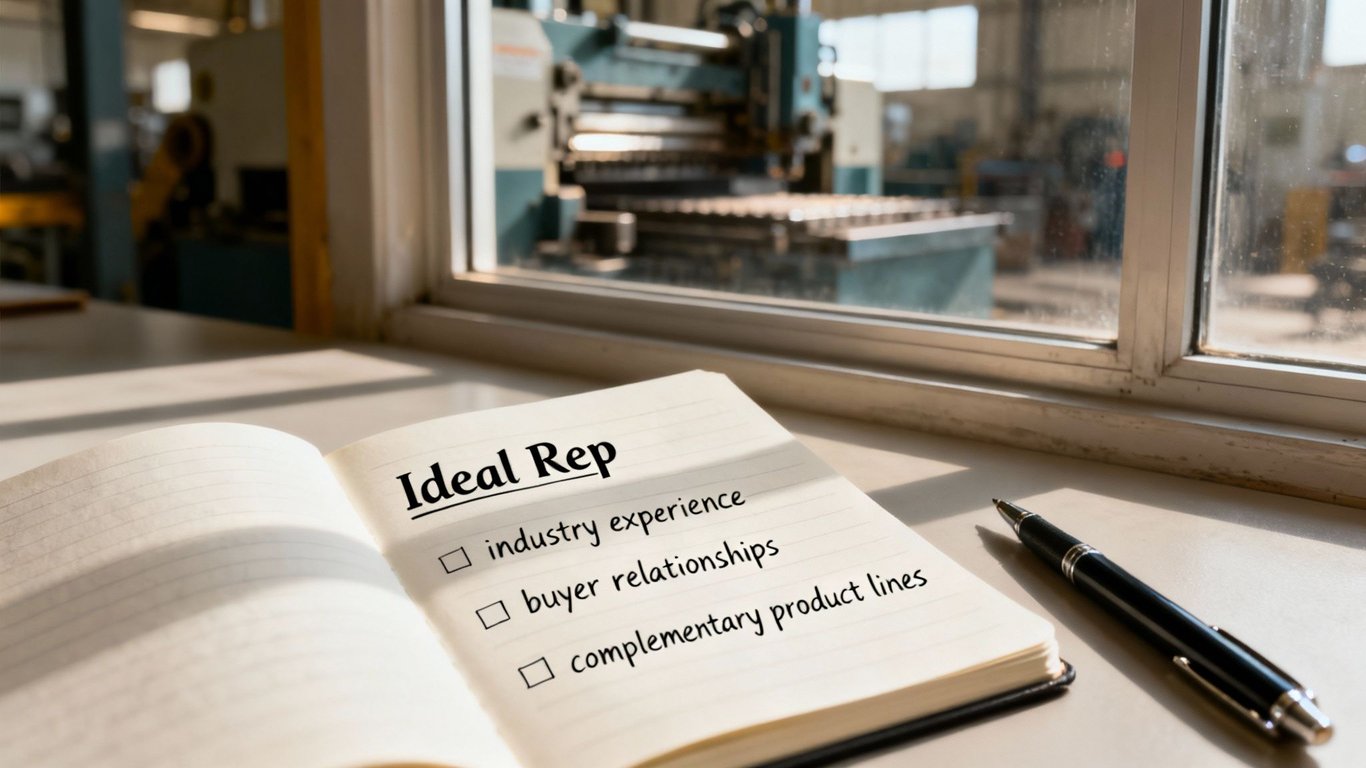
Before you post an opportunity, you need to know exactly who you're looking for. This isn't about writing a generic job description. It's about building a detailed, clear picture of the perfect sales partner for your specific product and market.
Get this part wrong, and you'll waste months sifting through mismatched candidates. But get it right, and your search becomes targeted for the kind of serious, professional reps who can move the needle for your business.
Defining Your Non-Negotiables
Top independent sales reps are rarely generalists. They are specialists who have spent years, sometimes decades, carving out a niche and building a fortress of relationships within it. Your profile needs to reflect that reality by zeroing in on the absolute must-haves.
These are the deal-breakers, the criteria that directly predict whether a rep can start selling for you quickly.
- Deep Industry Experience: Don't just say "manufacturing." Get specific. Do you need someone with "experience selling CNC machinery to aerospace component suppliers"? Spell it out.
- Established Buyer Relationships: Who do they need to have on speed dial? Be precise about the job titles and companies. For example, "existing relationships with purchasing managers at Tier 1 automotive manufacturers."
- Complementary Product Lines: The best reps carry a line card that doesn't compete with you but sells to the very same buyers. This synergy is invaluable—it means your product gets introduced into conversations that are already happening.
This isn't just about finding any salesperson. You're looking for a strategic partner whose existing business is a perfect fit for yours.
Translating Product Value into Rep Skills
With your non-negotiables in hand, it's time to connect what your product does to the skills a rep needs. A fuzzy understanding here leads to a vague search and mediocre results.
For example, if you sell a high-tech medical device that requires significant technical explanation, your ideal rep profile has to prioritize someone with a clinical background or a proven track record selling complex medical equipment. They need to speak the language and have instant credibility with surgeons or hospital administrators.
Creating a detailed persona is the single most important upfront investment you can make in the hiring process. It forces you to think like a top-performing rep and define what success looks like before you even post an opportunity.
Here’s a real-world example. A manufacturer of specialized industrial adhesives was struggling to find reps. Their initial search targeted reps with general industrial sales experience. It wasn't working.
They went back to the drawing board and refined their profile to target reps who specifically sold dispensing equipment to the same assembly plants. This simple shift was a game-changer. Suddenly, they were talking to reps who were already in front of the right buyers, understood the application, and could easily add the adhesive to their existing sales calls.
That's the kind of strategic thinking you need when you want to hire sales reps who deliver results, not just promises. The clearer you are about who you need, the faster you'll find them.
How to Craft an Opportunity That Top Reps Can't Ignore
Once you've nailed down exactly who you're looking for, it's time to create an opportunity listing that gets their attention. Elite independent reps aren't scrolling through job boards like traditional employees. They're entrepreneurs looking for their next lucrative partnership.
If your listing reads like a standard corporate job post, it will likely be ignored.
To catch the eye of a seasoned professional, you have to speak their language. Frame your opening as a compelling business opportunity, not a job. The entire focus should be on mutual growth, the strength of your product, and, most importantly, the earning potential. You're not writing a job description; you're crafting an investment prospectus for a very discerning audience.
Think Like an Investor, Not a Hiring Manager
The typical job post is a laundry list of responsibilities and qualifications. That approach is ineffective when you want to hire commission-only sales reps. An experienced rep's eyes will glaze over at phrases like "maintain a CRM" or "attend weekly meetings."
They have a mental checklist that focuses on three questions:
- Product-Market Fit: Is this a quality product I can sell with confidence?
- The Opportunity: Is there a real, accessible market for it?
- The Payday: Can I make significant money selling this product?
Your listing needs to answer these three questions quickly. Cut the corporate jargon and get straight to what matters to a business owner.
The Anatomy of a Winning Opportunity Listing
A powerful listing is structured to cut through the noise, build immediate interest, and give a rep all the information they need to decide if this is worth their time. Here’s what it should include.
-
A Headline That Sells the Opportunity: "Sales Representative Needed" is a guaranteed way to be ignored. Try something like, "High-Margin Industrial Coatings Line for Reps Calling on Automotive OEMs." This headline instantly qualifies the right people and communicates value.
-
A Clear and Punchy Value Proposition: Kick things off with a quick summary of what you make and why it’s a game-changer. Is your product more durable? Does it save customers money? Is it more efficient than anything else out there? Lead with your strongest competitive advantage.
-
Target Market and Territory Details: Be specific. Define the exact customer profile and list the available geographic territories. Reps need to know right away if this opportunity fits their existing call patterns and network. Any ambiguity here is a major red flag.
-
Transparent Commission Structure: Don't be vague. State the commission percentage clearly and upfront. If you offer a tiered or residual structure, explain exactly how it works. Top reps respect transparency and won't waste a second on a listing that hides the most critical detail.
This direct approach builds trust from the get-go and filters out anyone who isn’t a serious fit. It shows you respect their time and understand how they think.
When you're done writing, ask yourself this: "If I were a top-performing rep with a full line card, would this listing make me stop and consider adding another product?" If the answer is no, go back and rewrite it.
The Good, The Bad, and The Ignored
Let's look at two different ways to pitch an opportunity for a manufacturer of advanced welding equipment.
The Ineffective Listing: "Seeking motivated sales professionals to join our team. Responsibilities include prospecting new clients, demonstrating products, and closing sales. Must have 3-5 years of sales experience. Competitive commission."
This is a classic example of what not to do. It’s generic, filled with corporate buzzwords, and offers zero compelling reasons for an independent rep to care. "Competitive commission" is a lazy, meaningless phrase that signals you may be hiding a low rate.
The Effective Listing: "Seeking Independent Reps with existing relationships in aerospace and defense manufacturing. We offer a new line of robotic welding systems that reduces production time by up to 30%. Exclusive territories available in the Southeast. 20% commission on new systems, plus residuals on consumables. Ideal for reps currently selling CNC machinery or other high-value capital equipment."
See the difference? This version is specific and hits all the right notes. It instantly identifies the target market, quantifies the product's value (30% time reduction), states the commission rate, and even suggests the ideal complementary lines. It presents a clear business case, not a vague job opening. When you set out to hire sales reps who can truly move the needle, this is the level of detail you need.
How to Source and Vet Candidates Effectively

Now that you’ve crafted a compelling opportunity, it's time to get it in front of the right people. The old playbook of posting on massive, generic job boards doesn't work here. Top-tier independent reps aren’t looking for “jobs”—they’re scouting for strategic partnerships on specialized platforms where opportunities are relevant and vetted.
Think of these dedicated marketplaces as a curated environment. They connect you directly with authenticated sales professionals who are actively looking to add new lines to their portfolio. Unlike the endless noise of a general job board, these platforms are built for precision. You can filter candidates by the criteria that actually matter: industry expertise, existing buyer relationships, and specific geographic territories.
This targeted approach radically shortens the sourcing cycle. Instead of waiting for applications to trickle in, you get immediate access to a searchable database of qualified candidates. You can build a shortlist of ideal partners in days, not weeks.
Decoding a Rep's Profile
As you start reviewing potential matches, you need to look beyond the resume. An independent rep's profile is a snapshot of their entire business, and every detail is a clue to how well they might fit with your company. You have to scrutinize their profile with a strategic eye to find the serious contenders.
Pay close attention to these critical areas:
- Current Product Lines: This is a crucial element. Do their current lines complement yours without directly competing? A rep selling industrial pumps to chemical plants is a perfect fit for your line of corrosion-resistant valves. It's a natural conversation for them.
- Target Industries and Buyers: Look for specifics. Vague descriptions like "sells to manufacturers" are a red flag. A strong profile will say something like, "deep relationships with plant managers and maintenance supervisors in the food and beverage processing sector." That’s someone who knows their market.
- Professional Communication: How a rep presents themself in their profile—the grammar, the clarity, the overall professionalism—is your first indication of how they'll represent your brand to customers.
The goal is to find reps whose existing business provides a natural launchpad for your product. You're not just looking to hire a salesperson; you're looking to plug your product directly into an established sales channel.
Filtering Candidates for a Strong Shortlist
As you source candidates, your mission is to move from a long list of possibilities to a short list of high-potential partners. Create a simple scorecard based on the "Ideal Rep Profile" you built earlier. This keeps your evaluation consistent and objective.
To build your shortlist effectively, focus on a few key actions.
- Prioritize Inbound Interest: The reps who actively reach out about your posted opportunity are often the most motivated. Always start your review with this group.
- Conduct Proactive Searches: Don't just wait. Use the platform’s filters to actively search for reps who match your ideal profile, even if they haven't applied. Then, invite them to review your opportunity.
- Initial Message Screening: Send a brief, professional introductory message to your top candidates. Their response time and the quality of their questions will tell you a lot about their interest and professionalism.
This systematic approach ensures you spend your valuable interview time only on candidates who are a genuine fit. With platforms designed specifically for this, you can quickly post an opportunity and start identifying qualified matches for your open territories.
Running an Interview That Reveals True Potential

The interview for an independent sales rep is entirely different compared to hiring a W-2 employee. You're not just filling a seat; you’re vetting a potential business partner. This demands a complete shift in your mindset and your line of questioning.
Your primary goal isn't just to review their resume—it's to validate their entire business model. You need concrete proof that they have the established relationships, deep industry knowledge, and complementary product lines to make your product a success. Think of it as a conversation between two business owners, not a typical job interview.
Shifting From “Tell Me About Yourself” to “Show Me Your Business”
Forget the standard interview questions. Asking about their greatest weakness or where they see themselves in five years is a waste of time here. It won't tell you what you actually need to know. The entire discussion has to be anchored in tangible evidence of their existing business and exactly how your product fits into it.
You need to drill down into three core areas: their current book of business, their real-world sales process, and their expertise in the territory. Vague, generic answers are your biggest red flag. A top-tier rep can speak with absolute clarity about their customers, their process, and their market.
A successful interview with an independent rep feels less like an interrogation and more like a strategic discovery call. You're both qualifying each other to see if a partnership makes financial sense.
Key Interview Questions for Independent Reps
When you start talking, your questions need to force specific, detailed answers. These aren’t trick questions; they are designed to dig past surface-level claims and get to the heart of what a rep can actually do for you.
Here are some questions that can be incredibly revealing.
Key Interview Questions for Independent Reps
| Category | Sample Question | What to Listen For |
|---|---|---|
| Buyer Relationships | "Walk me through your top three customer accounts. What products do you currently sell them, and who are your key contacts?" | Specific company names, job titles, and a clear understanding of the customer's business needs. They shouldn't hesitate. |
| Sales Process | "Describe your process for introducing a new product line to your existing customers. What's your 30-60-90 day plan?" | A structured, repeatable process. They should talk about initial email intros, follow-up calls, and scheduling demos. |
| Territory Knowledge | "Who are the key distributors or decision-makers in the [Your Target] territory that you have strong relationships with?" | Immediate recognition of key players. They should be able to name names and describe their history with them. |
| Line Card Synergy | "Which of your current lines would create the best opportunities to introduce our product? Can you give me an example?" | A clear, logical connection. For instance, "I sell them conveyor belts, so your industrial lubricant is a perfect add-on." |
This direct approach helps you quickly see if their claims hold water. If a candidate fumbles or gives fuzzy answers about their network, it’s a big sign they may not have the deep relationships they advertised.
Spotting Red Flags and Green Lights
As you conduct these interviews, you'll start to notice patterns that separate the true professionals from the rest. Knowing what to look for can save you from a costly bad partnership down the road.
Here are some signs you're on the right track:
- They ask sharp questions about your business. A great rep will ask you about marketing support, lead times, and product quality. They are vetting you just as much as you are vetting them.
- They talk in terms of numbers. They can easily tell you their average deal size, sales cycle length, and commission earnings from their current lines.
- They have a clear vision for your product. They can immediately articulate which of their existing accounts would be a good fit for your product and explain exactly why.
On the flip side, be wary of candidates who focus too much on a potential base salary or draw when the role is commission-only. This often means they don't have the financial stability or the confidence in their ability to sell. When you hire sales reps, you want partners who are confident they can generate income through performance. Their focus should be squarely on the commission structure and the product’s market potential.
Crafting a Commission Structure That Actually Sells
A handshake deal is a recipe for disaster. If you're serious about building a profitable, long-term partnership with an independent rep, you need a rock-solid commission agreement. This isn't just a legal formality; it's the foundation of your working relationship, spelling out exactly how everyone gets paid and what's expected.
The heart of this document is the commission structure itself. Your aim is to create a true win-win, where a rep’s hard work and success directly translate into their financial gain and your company's growth. If your plan is too complicated or confusing, you'll create mistrust. Keep it simple.
Common Commission Models for Manufacturers
The right model depends on your sales cycle, product margins, and overall business goals. Most manufacturers find success with one of these three structures.
-
Flat-Rate Commission: This is the simplest and often the best starting point. The rep gets a fixed percentage of every sale they bring in. For instance, they earn a straight 15% on the gross margin of any piece of equipment sold. It’s clean, easy to calculate, and perfect for products with fairly consistent pricing.
-
Tiered Commission: This is how you motivate your top performers. The commission percentage increases as they hit higher sales milestones. A rep might earn 10% on their first $50,000 in monthly sales, but that jumps to 12% for sales between $50,001 and $100,000, and 15% for everything above that. This model is excellent for encouraging reps to exceed their targets.
-
Residual Commission: If you sell anything with recurring revenue—like service contracts, consumables, or software subscriptions—this model is a game-changer. The rep gets a commission on the initial sale, plus a smaller, ongoing percentage for the life of that customer. It incentivizes reps to build lasting relationships, not just chase one-time deals.
The best commission plans are transparent and built for mutual success. A rep should be able to calculate their potential earnings easily. That's how you keep them motivated and focused on the next call.
The Nuts and Bolts of Your Contractor Agreement
Beyond the pay structure, your agreement needs to clearly define the rules of the relationship to avoid misunderstandings later. This document is your primary tool for managing the relationship professionally. For a deeper dive, this guide on commission-only sales reps is an excellent resource for structuring these agreements.
Make sure your contract explicitly covers these key points:
- Territory Rights: Be crystal clear about the geographic area, named accounts, or industry verticals the rep owns. Is it an exclusive or non-exclusive territory? Don't leave any room for interpretation.
- Payout Terms: Define precisely when a commission is considered "earned." Is it when the customer signs the contract, or when your company receives payment? Also, specify the payout schedule (e.g., net 30 days after the close of the month).
- Termination Clause: Every partnership eventually ends. Outline the conditions for ending the agreement, the required notice period, and, most importantly, how trailing commissions will be handled after termination.
A Few Common Questions About Hiring Sales Reps
If you're new to working with independent reps, you probably have a few questions. Let's tackle some of the most common ones we hear from manufacturers and sales leaders.
How Long Does It Take to Hire a Rep?
While there is no single answer, you can look at some real-world benchmarks. If you go the traditional route—word-of-mouth, LinkedIn searches, cold outreach—you could easily be looking at 3-6 months to find the right person.
However, if you use a dedicated platform built for this purpose, the timeline shrinks dramatically. It’s not unrealistic to post your opportunity and be talking to your first qualified candidates within a week. The biggest variable is often on your end. The more prepared you are with a clear role definition, a solid commission plan, and a compelling listing, the faster you’ll move.
What’s a Fair Commission Rate?
There's no single magic number, as it hinges on your industry, product margins, and sales cycle length. That said, for most manufactured goods, a commission rate somewhere between 10% and 25% of the gross margin is a standard starting point.
A few things can push that number up or down:
- New Product Lines: If you're launching something brand new, you'll likely need to offer a higher commission. You're asking a rep to invest their time and reputation to build a market from scratch, and they need to be compensated for that risk.
- Consumables & Reorders: For products that generate steady, recurring revenue, you might see a slightly lower rate on the initial sale, but with residuals paid out on future orders. This rewards reps for building lasting customer relationships.
- Big-Ticket Equipment: Items with long, complex sales cycles (like expensive machinery) naturally command a higher percentage. The rep is putting in a massive amount of effort over many months, and the commission needs to reflect that.
Should I Hire One Rep or Multiple at Once?
Hiring in pairs is often advisable, especially if you're breaking into a new territory. Think of it this way: if you hire just one rep and they don't perform, you're left guessing. Was it the rep? Was it the market? Was our pricing off? You have no data to work with.
But when you bring on two reps in the same territory at the same time, you create a natural experiment. You can compare their activity, their feedback from the field, and their results. This gives you incredibly clear data on what's working. It also lights a fire of friendly competition and gives you an immediate backup if one of them doesn't pan out.
Hiring a single rep is a guess. Hiring two is a test. The data you get from comparing their performance is invaluable for building a scalable sales model and understanding your market.
You're not just testing the reps; you're testing your entire sales strategy, from the pitch to the product-market fit.
Ready to stop searching and start interviewing? Zilla Sales connects you directly with a network of vetted, commission-only sales reps who are actively looking for new lines. Post your opportunity for free and start getting matched with qualified professionals in your industry today.
Keep Reading
More insights for high-performance sales teams.

A Modern Guide to B2B Door to Door Companies
Uncover how modern door to door companies work, the real costs, and the risks. Learn about a smarter alternative for fast B2B territory growth.

Mastering Software Sales Training for Elite Reps
Build a world-class software sales training program. This guide details the curriculum, metrics, and tools needed to accelerate revenue with your sales team.

How Does Commission Work in Sales? A Manufacturer’s Guide
Understand how does commission work in sales. This guide explains common structures, calculation examples, and best practices for B2B manufacturing companies.
Ready to find your sales partner?
Join manufacturers who are successfully expanding their territories with our network. Post a listing in minutes and start receiving matches.
✓ Verified Professionals • ✓ No Long-term Contracts