


A food service broker is a specialized, independent sales agent who connects food manufacturers with operators who purchase food in bulk, such as restaurants, hotels, hospitals, and schools.
In practice, they function as an outsourced sales force. A manufacturer may have a superior product, but gaining access to key buyers is a significant challenge. A food service broker leverages an established network of contacts to secure meetings and place products.
Understanding the Role of a Food Service Broker
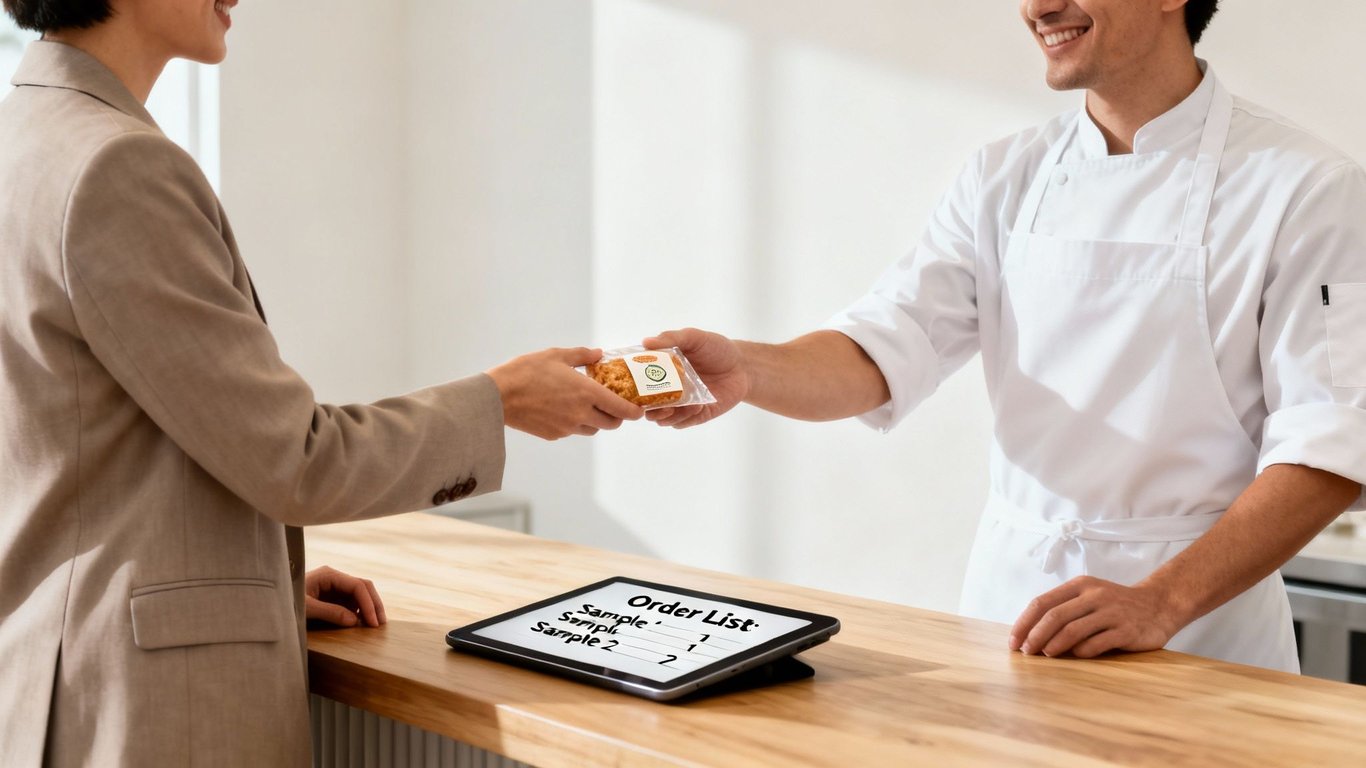
Consider a real estate agent analogy. A homeowner can attempt to sell a house independently, but a professional agent brings market knowledge, a list of potential buyers, and expertise in closing deals. A food service broker performs the equivalent function within a specific food service market or territory.
Their responsibilities extend beyond introductions. An effective broker manages the sales process from presentation to closing. This includes demonstrating products to chefs and purchasing managers, negotiating pricing and promotions, and providing critical market feedback to the manufacturer. They operate as a direct extension of your brand in the field.
Core Mission and Market Impact
A food service broker's primary objective is to generate sales. They achieve this by utilizing relationships developed over years, turning potential cold calls into trusted introductions.
A food service broker’s greatest asset is their relationships. They transform cold calls into warm introductions, significantly shortening the sales cycle for food manufacturers.
This provides a significant advantage in a large and competitive industry. The global food service market was valued at USD 3,738.84 billion in 2024 and is projected to reach USD 6,450.30 billion by 2032, according to Fortune Business Insights. With this level of market activity, expert representation is crucial. For detailed statistics, you can review the full food service market report.
The broker’s function is to move a manufacturer's products from the warehouse onto customer menus.
How Food Service Brokers Get Paid
Understanding a food service broker's compensation model is critical for establishing a successful partnership. The structure directly influences their motivation and strategy. A well-designed agreement ensures your goals are aligned.
Brokers perform numerous functions, including sales calls, promotional planning with buyers, and gathering market intelligence. Their compensation is a direct investment in your brand’s performance. The payment structure you establish will define the working relationship.
Commission Only Agreements
The most prevalent compensation model is commission-only. Under this structure, the broker earns a predetermined percentage of the net sales they generate. This is a performance-based model where payment is contingent on sales success. For manufacturers, it offers a low-risk entry, as there are no fixed costs.
For example, if a broker generates $100,000 in product sales at a 4% commission rate, their earning is $4,000. This direct correlation between sales and income ensures the broker is focused on increasing your revenue. This model is particularly effective in a growing market. For example, according to the U.S. Census Bureau, monthly retail sales for food services can exceed $700 billion.
A commission-only structure perfectly aligns the broker's success with the manufacturer's. When your sales grow, their income grows—creating a powerful incentive for consistent performance.
This approach is highly effective for established products with existing market demand. However, it can be less attractive for brokers when dealing with a new product launch, which requires significant upfront effort to educate buyers before sales materialize. For more information, consult this guide on setting effective sales rep commission rates.
Retainers and Hybrid Models
For situations requiring significant pre-sales activity, retainers and hybrid models are common alternatives.
-
Retainer-Based Model: This involves a fixed monthly fee paid to the broker for their services, independent of sales volume. It is often used when entering new markets or launching new products. The retainer compensates the broker for essential, non-revenue-generating activities like market research and initial buyer meetings.
-
Hybrid Model (Retainer + Commission): This model combines a smaller monthly retainer with a reduced commission rate on sales. It provides the broker with income stability to cover initial efforts while maintaining a strong incentive to close deals and drive sales growth.
The optimal model depends on your product’s market maturity, your budget, and your strategic objectives. A clear and equitable agreement is the foundation of a durable and successful partnership.
Choosing Your Sales Channel: Broker vs. Direct Rep vs. Distributor
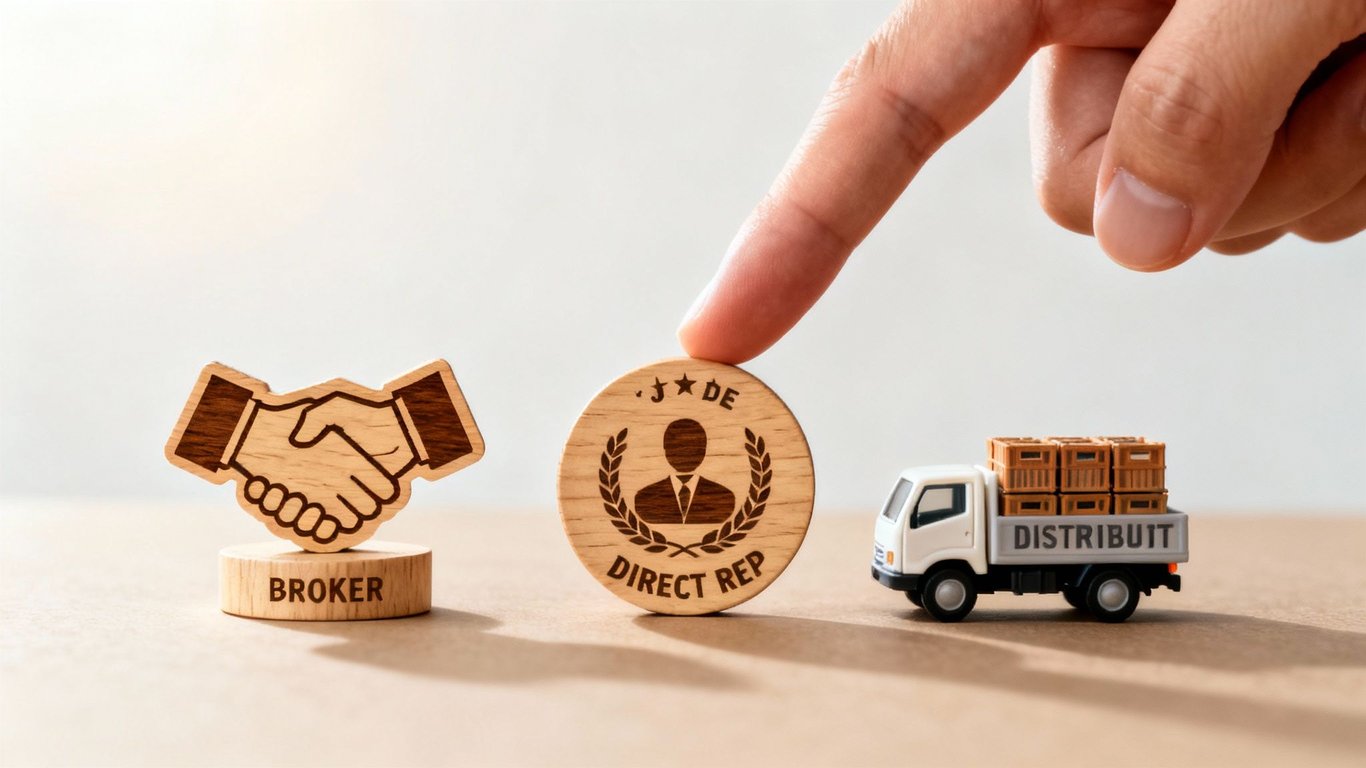
Selecting the appropriate sales channel is a critical decision for any food manufacturer. The choice between using a food service broker, hiring a direct sales team, or partnering with a distributor directly impacts brand control, market reach, and profitability.
Each channel has distinct advantages and disadvantages. The correct choice depends on your company's specific goals, financial resources, and stage of growth.
Understanding The Key Differences
A direct sales representative is a company employee. This model offers the highest degree of control over brand messaging and sales strategy. However, it also carries the highest fixed costs, including salary, benefits, training, and travel expenses.
A food distributor operates differently. They purchase your product, take ownership of the inventory, and then resell it to their network of customers. While distributors provide extensive logistical reach, your product becomes one of many in their portfolio, competing for the attention of their sales force.
The food service broker occupies a middle ground. Brokers are independent agents who do not purchase your product or receive a salary. They represent your brand to their existing network of buyers and earn a commission on the sales they generate. This model ties costs directly to performance and provides immediate access to established industry relationships. To learn more, read about the role of a manufacturers rep in our detailed guide.
The fundamental difference comes down to three things: control, cost, and ownership. A direct rep offers maximum control for a high fixed cost. A distributor takes ownership and gives you reach but dilutes focus. A broker delivers expert representation for a variable, performance-based cost.
A Direct Comparison of Your Options
To make an informed decision, compare these options based on key business attributes. The right choice depends on your company's current priorities.
Sales Channel Comparison: Broker vs Direct Rep vs Distributor
| Attribute | Food Service Broker | Direct Sales Rep | Food Distributor |
|---|---|---|---|
| Cost Structure | Variable (commission-based) | High Fixed (salary, benefits) | Lower Direct Cost (margin-based) |
| Brand Control | Moderate to High | Maximum Control | Low to Moderate |
| Market Access | Immediate access to relationships | Slower, must build from scratch | Broad logistical reach |
| Sales Focus | Represents multiple, non-competing lines | Dedicated to your brand only | Represents hundreds of brands |
| Financial Risk | Low (pay for performance) | High (upfront investment) | Moderate (tied to inventory) |
| Local Knowledge | Deep expertise in their specific territory | Varies by individual experience | Broad but less specialized |
There is no single "best" solution. A startup may use a broker for low-risk market entry, while an established brand might employ a direct team for maximum control in a strategic market. Analyze these factors against your resources and goals to select the right growth partner.
The Strategic Advantages of Using a Broker

Partnering with a food service broker is a strategic decision that provides immediate access to a pre-existing network of buyer relationships. A well-connected broker can place your product in front of key decision-makers from day one.
These established relationships shorten the sales cycle significantly. You bypass months of cold calling and unanswered emails. An introduction from a trusted broker lends instant credibility and opens doors that are typically closed to new brands.
Gaining Local Market Intelligence
Brokers provide invaluable on-the-ground intelligence from their territories. You receive real-time data on local consumer trends, competitor pricing, and regional flavor preferences. This granular information is essential for positioning your products effectively.
For example, a broker can alert you to a competitor's upcoming promotion or inform you that a major restaurant chain is searching for a product like yours. This inside knowledge offers a substantial competitive advantage.
A knowledgeable broker will understand the growth of retail foodservice. According to the Food Marketing Institute, consumer use of deli-prepared foods has grown from 12% to 28%, with retail foodservice sales reaching $52.1 billion. A broker provides access to this expanding channel. For more on this trend, review the data on the grocery industry's expanding dining role.
Optimizing Your Resources
From a financial perspective, using a broker converts a high fixed cost—a salaried sales team—into a variable expense. You only pay for performance. This significantly reduces financial risk and frees up capital for other business needs like R&D and marketing.
By partnering with a food service broker, manufacturers can scale their sales force and market reach without the heavy financial burden and administrative overhead of hiring a direct team.
This structure allows you to concentrate on your core competency: creating excellent products. While the broker manages sales and relationships, you can focus your resources on innovation and production.
How to Find and Vet the Right Broker
Identifying the right food service broker requires a methodical approach, not luck. A successful partnership is built on systematic sourcing and diligent vetting.
The process begins with knowing where to look. A broad internet search is often inefficient. The goal is to build a targeted pipeline of qualified candidates to find a partner who can effectively represent your brand.
Sourcing High-Quality Broker Candidates
Top-performing brokers are typically busy and not actively seeking new lines through public job boards. You must proactively identify and engage them. Use multiple sourcing channels to create a strong candidate pool.
Actionable sourcing strategies include:
- Industry Trade Shows: Attend events like the Fancy Food Show or the National Restaurant Association Show. Observe which brokers are effectively engaging with buyers. Ask non-competing exhibitors for recommendations.
- Peer Referrals: Identify brands you admire, particularly those successful in your target market. Leverage your professional network to request introductions to their brokers. A referral from a trusted source is highly valuable.
- Online Marketplaces: Specialized platforms are designed to connect manufacturers with pre-vetted, commission-only sales professionals. These tools allow you to filter candidates by industry, territory, and experience, eliminating the noise of general job sites.
For example, this screenshot from the Zilla Sales platform demonstrates how you can quickly identify food brokers with relevant connections in your target regions.
Using a specialized platform enables a precise search, ensuring you engage only with candidates who possess the necessary experience and buyer relationships.
The Essential Vetting Checklist
Once you have a shortlist of candidates, the vetting process begins. This is an investigation to confirm their capabilities and cultural fit with your brand.
Use this checklist to structure your evaluation:
- Analyze Their Current Portfolio: Request a complete list of the brands they represent. Look for potential conflicts of interest (e.g., representing a direct competitor) and complementary products. A broker selling non-competing items to your target buyer already has the access you need.
- Verify Target Account Relationships: Do not rely on claims alone. Ask for specific examples of their relationships with key accounts you wish to penetrate, such as a major restaurant chain, a hospital network, or a regional distributor.
- Assess Communication and Reporting Style: Define communication expectations. Determine how frequently they provide sales reports and market feedback. A lack of a clear reporting system is a significant red flag.
A broker's value is directly tied to the strength of their existing relationships and their ability to strategically position your product. The vetting process is your chance to verify both.
The final step is the interview. Ask them to outline a hypothetical launch plan for your product in their territory. Their response will reveal their market knowledge, strategic thinking, and suitability as a long-term partner. This structured approach is essential for finding the right fit, a topic further explored in our guide on how to find sales reps. A thorough process ensures you secure the right broker, not just any broker.
Setting Up Your New Broker for Success

Finalizing a contract with a food service broker is the beginning, not the end, of the process. The activities in the initial weeks—the onboarding phase—are critical for establishing a productive partnership.
To ensure success, you must equip your new broker with the tools, knowledge, and support needed to represent your brand effectively from the start.
The Foundational Onboarding Checklist
An effective onboarding process is an immersive experience designed to transform a new broker into a knowledgeable and motivated brand advocate. It is about building a genuine connection to your product and company mission.
Implement these steps to ensure a successful start:
- Immersive Product and Brand Training: Go beyond sending samples. Conduct a thorough training session, either in person or via video call. Detail your brand story, core values, and the key differentiators of your product. They must understand the why behind your brand to sell with authenticity.
- Define Clear Goals and KPIs: Establish specific, measurable Key Performance Indicators (KPIs) from the outset. These should include sales volume targets, new account acquisition goals, and timelines for key distributor introductions.
- Arm Them with a Complete Sales Toolkit: Prepare a well-organized digital folder containing all necessary sales assets before their official start date.
The goal of onboarding isn't just to inform, but to inspire. A broker who genuinely believes in your brand's story and mission will sell with a conviction that buyers can feel.
Equipping Your Broker for the Field
A well-equipped broker is a more effective one. Your sales toolkit should be comprehensive, easy to access, and consistently updated.
Ensure your toolkit contains these essential items:
- Detailed Spec Sheets: Include all nutritional information, ingredients, packaging specifications, shelf life, and allergen details.
- Current Price Lists: Provide clear pricing for all customer tiers, including distributors and direct accounts.
- High-Quality Marketing Collateral: Supply professional product photography, polished sell sheets, and relevant case studies.
- Sample Ordering Process: Establish a simple and efficient process for them to request and receive product samples for buyer meetings.
A comprehensive onboarding process demonstrates your commitment to a genuine partnership. It establishes clear communication channels and sets the foundation for a collaborative relationship focused on mutual success.
Common Questions About Food Service Brokers
Even with a solid understanding, specific questions often arise when considering a partnership with a food service broker. Addressing these common queries can help clarify whether this model is the right choice for your brand.
What’s a Typical Commission Rate?
A typical commission rate for a food service broker ranges from 3% to 7% of net sales. The exact percentage depends on factors such as the product category, potential sales volume, and the level of effort required to sell the product.
For example, a high-volume, established product may command a lower commission rate. Conversely, a new specialty item requiring significant market education and introductory efforts will likely warrant a rate at the higher end of the range. Ensure the agreed-upon rate is clearly defined in your contract.
How Is a Broker Different From a Distributor?
The primary distinction between a food service broker and a food distributor is product ownership. A broker acts solely as a sales agent. They facilitate transactions on your behalf but never purchase or hold your inventory. They earn a commission for their services.
A distributor, in contrast, purchases your product directly from you. They take ownership of the inventory, store it in their warehouses, and then resell it to their customers. The distributor profits from the markup between their purchase price and their selling price.
Here's a simple way to think about it: A broker sells your product for you. A distributor buys your product from you and then resells it.
Are Brokers a Good Idea for Small Brands?
Yes. Small and emerging brands are often the greatest beneficiaries of a broker partnership. A good broker provides immediate access to an established network of buyer relationships that could take a new company years and significant capital to build independently.
The commission-only model is particularly advantageous for startups with limited cash flow. It converts the high fixed cost of an in-house sales team into a variable expense directly tied to revenue. You pay only when sales are made, which minimizes upfront financial risk and allows you to scale your market presence efficiently.
Finding the right sales partner can make or break your growth. On the Zilla Sales marketplace, you can connect directly with vetted, commission-only food service brokers who already have the relationships you need. Post your opportunity for free and start seeing qualified matches in as little as 48 hours.
Keep Reading
More insights for high-performance sales teams.

A Modern Guide to B2B Door to Door Companies
Uncover how modern door to door companies work, the real costs, and the risks. Learn about a smarter alternative for fast B2B territory growth.

Mastering Software Sales Training for Elite Reps
Build a world-class software sales training program. This guide details the curriculum, metrics, and tools needed to accelerate revenue with your sales team.

How Does Commission Work in Sales? A Manufacturer’s Guide
Understand how does commission work in sales. This guide explains common structures, calculation examples, and best practices for B2B manufacturing companies.
Ready to find your sales partner?
Join manufacturers who are successfully expanding their territories with our network. Post a listing in minutes and start receiving matches.
✓ Verified Professionals • ✓ No Long-term Contracts