


The classic image of an automotive sales rep on a showroom floor is outdated. Today's automotive sales reps are the essential link between manufacturers, dealerships, and the end customer, acting as sophisticated strategists in a market that's more competitive and technically complex than ever before.
They are no longer just order-takers; they are key connectors who navigate the evolving landscape of the automotive industry. This guide provides actionable insights for becoming a successful rep or for building a high-performing sales team.
The New Blueprint for Automotive Sales Success
The most effective automotive sales reps today operate as consultants, product experts, and relationship managers. They are critical players in a massive global industry projected to reach a market size of $4.3 trillion in 2025. This market consists of approximately 471,000 distinct businesses worldwide, with no single dealer group holding more than a 5% market share. You can read the full research about the global car and automobile sales market for more details.
This fragmentation creates significant opportunities for sales professionals who can build trust and provide tangible value. Their role is not just to sell vehicles but to guide consumers through one of their most significant financial decisions.
Modern Challenges and Opportunities
The role of an automotive sales rep has fundamentally changed. They now face advanced technology and highly informed buyers. To succeed, reps must adapt their sales strategy to address these modern dynamics.
Key market forces include:
- The Rise of Electric Vehicles (EVs): Selling EVs requires specialized knowledge. An actionable strategy is to create a quick-reference guide for yourself covering battery life, charging station compatibility, and current government incentives to educate buyers effectively.
- Informed Consumers: With extensive online resources, customers often arrive with deep product knowledge. A 2022 survey by Cox Automotive revealed that car buyers spent an average of 14 hours and 51 minutes researching and shopping, mostly online. To add value, focus on providing personalized test-drive experiences and clarifying complex financing options that online research can't replicate.
- Supply Chain Disruptions: Inventory shortages and production delays have become common. The key action here is proactive communication. Implement a system to provide customers with regular, honest updates on their vehicle's status to manage expectations and maintain trust during long wait times.
The modern automotive sales representative is less of a closer and more of an educator. Their primary job is to translate complex vehicle features, financing options, and market trends into clear, personalized advice that empowers the customer to make a confident decision.
Why Expertise Is More Crucial Than Ever
In this new environment, basic product knowledge is insufficient. Top automotive sales reps differentiate themselves by becoming indispensable advisors. They build a personal brand centered on trust, reliability, and genuine expertise.
This requires moving beyond scripted pitches to engage in authentic conversations. A top-tier rep actively listens to understand a customer's lifestyle, budget, and specific needs to recommend the most suitable vehicle—whether it's a family SUV, an efficient commuter car, or an advanced EV. This customer-centric approach is what converts a single transaction into long-term loyalty and a consistent stream of referrals.
Breaking Down the Different Types of Automotive Sales Reps
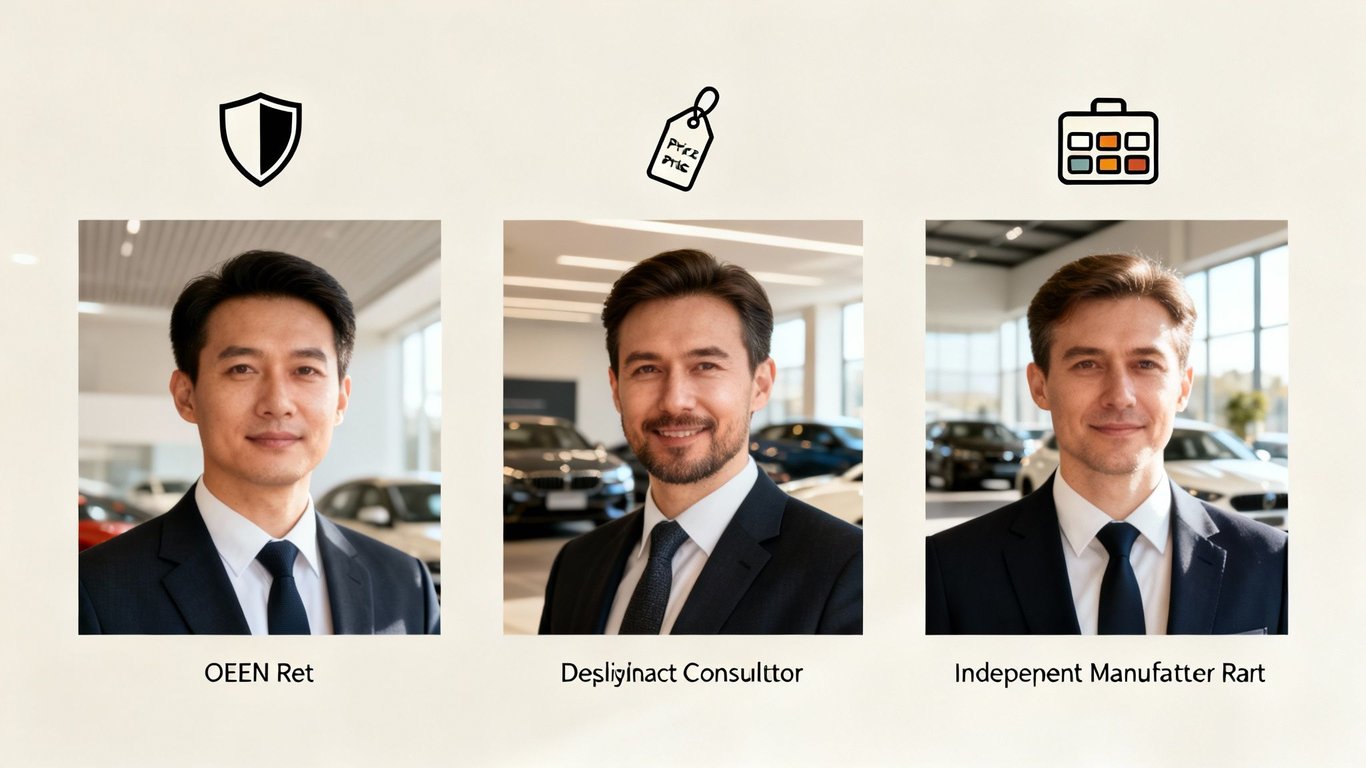
The term "automotive sales reps" encompasses a variety of roles, each contributing to the industry in a unique way. Understanding these distinctions is the first step toward building an effective sales strategy or finding the right position for your skillset.
Each type of sales professional has a specialized function, similar to a pit crew where each member has a distinct role in achieving a common goal. Let's analyze the three primary roles: OEM representatives, dealership sales consultants, and independent manufacturers' reps. Each operates with a different focus, and the right fit depends on your business model and target market.
OEM Representatives: The Brand Guardians
An Original Equipment Manufacturer (OEM) representative is employed by a major automaker, such as Ford, Toyota, or BMW. Their primary clients are not individual car buyers but the franchise dealerships that sell the brand’s vehicles.
Their main responsibility is to act as the liaison between corporate headquarters and the dealer network. They ensure dealerships within their assigned territory meet sales targets, adhere to brand standards, and receive adequate training on new models and sales initiatives.
An OEM rep functions as a brand ambassador and business consultant. Their success is measured not by individual car sales, but by the overall performance, operational health, and sales volume of their dealer network.
They analyze dealership performance data, assist in implementing marketing campaigns, and verify that the showroom and service centers meet the manufacturer's standards. This strategic role focuses on long-term goals and cultivating strong professional relationships with dealership owners and managers.
Dealership Sales Consultants: The Front Line
This is the role most people associate with automotive sales. These professionals are employed directly by a dealership and focus exclusively on the retail customer.
Their daily activities involve direct customer interaction, including greeting potential buyers, conducting test drives, negotiating prices, and arranging financing. Success is measured by clear metrics: achieving monthly sales quotas, earning high customer satisfaction scores, and developing a loyal client base that generates repeat business and referrals.
Independent Manufacturers' Reps: The Agile Connectors
Often referred to as independent or 1099 reps, these professionals are self-employed entrepreneurs. They represent multiple, non-competing product lines, typically within the automotive aftermarket.
They are a key resource for manufacturers of parts, accessories, or shop equipment who need market penetration without the overhead of an in-house sales team.
Their primary asset is their network of existing relationships and deep knowledge of their territory. Since they operate on a 100% commission basis, their motivation is directly tied to sales results. For companies looking to enter a new market, partnering with the right automotive aftermarket sales reps can provide immediate market access and accelerate sales growth.
To clarify these roles further, here is a side-by-side comparison.
Comparison of Automotive Sales Representative Roles
| Attribute | OEM Representative | Dealership Sales Consultant | Independent Manufacturers' Rep |
|---|---|---|---|
| Primary Employer | Vehicle Manufacturer (e.g., Ford, GM) | Car Dealership | Self-Employed (1099 Contractor) |
| Main "Customer" | Franchise Dealerships | Individual Car Buyers (End Consumers) | Distributors, Retailers, Repair Shops |
| Core Focus | Brand Compliance & Wholesale Targets | Retail Unit Sales & Customer Satisfaction | Product Penetration & Territory Sales |
| Compensation | Salary + Bonus/Incentives | Commission + Base Salary/Draw | Commission-Only |
| Sales Environment | Corporate/B2B Field Sales | Retail Showroom (B2C) | B2B Field Sales (Aftermarket) |
| Key Skillset | Relationship Management, Business Acumen | Negotiation, Customer Service, Product Knowledge | Networking, Entrepreneurship, Multi-tasking |
This table illustrates the distinct responsibilities and skillsets required for each role within the broader category of automotive sales.
Designing Territories and Commissions That Motivate
Two critical factors determine the success of your automotive sales team: territory design and compensation structure. Getting these elements right fosters a motivated, high-performing team. Getting them wrong leads to internal conflict, market gaps, and stagnant growth.
A well-designed sales territory provides each rep with a clear area of responsibility. This prevents overlap and ensures complete market coverage, allowing each team member to focus on their designated opportunities.
Defining Your Sales Territories
The method for dividing your market depends on your product and customer base. The primary objective is to create territories with balanced opportunities to ensure fairness and maintain motivation. While there is no single formula, most territory plans are based on established models.
Here are actionable models for structuring territories for automotive sales reps:
- Geographic Territories: The traditional approach of assigning reps to specific zip codes, cities, or states. This is effective for products with broad appeal and simplifies logistics.
- Product Line Territories: If you offer distinct product categories (e.g., performance parts vs. diagnostic equipment), assign reps to specialize in one. This fosters deep product expertise.
- Account-Based Territories: Assign reps to specific high-value accounts or customer segments (e.g., national retail chains, independent repair shops) regardless of their physical location. This is ideal for strategic B2B sales.
Developing a robust territory plan is crucial. You can learn more about creating a sales rep territory plan to build a fair and productive foundation for your team.
Crafting a Winning Commission Structure
Once territories are established, the commission plan provides the incentive for performance. A strong plan aligns a representative's financial goals with the company's strategic objectives. Research from Gartner indicates that well-designed sales compensation plans can improve quota attainment by up to 10%.
For automotive sales reps, effective commission models balance income stability with high earning potential.
A compensation plan should be simple enough for a rep to calculate their potential earnings quickly. Complexity diminishes its motivational power.
Consider these proven models for the industry:
- Straight Commission: This high-risk, high-reward model pays reps a direct percentage of the revenue they generate. It is highly motivating for top performers but can result in high turnover during slow periods.
- Salary Plus Commission: The most common structure, it provides a stable base salary supplemented by commissions. This offers financial security while still incentivizing sales performance.
- Tiered Commission: This model rewards top performers by increasing the commission percentage as sales volume rises. For example, a rep might earn 5% on the first $50,000 in sales and 8% on all sales thereafter. This encourages reps to exceed their quotas.
How to Find and Keep Top Automotive Sales Talent

In a competitive market, attracting and retaining top talent is a critical business function. Building an elite team of automotive sales reps requires a structured approach that extends beyond posting a job advertisement.
The first actionable step is to refine your sourcing strategy. Generic job boards are often saturated with unqualified applicants. To find proven performers, you must be strategic.
Sourcing Strategies That Go Beyond Job Boards
Effective sourcing means engaging with candidates where they are most active. This involves leveraging professional networks where experienced automotive sales reps congregate. Proactive outreach and referral programs are effective tools for connecting with high-quality candidates who may not be actively seeking a new role.
Implement these sourcing channels:
- Industry Networks: Actively participate in automotive trade associations, attend industry events, and engage in relevant online forums. Building relationships within these communities creates a natural pipeline of qualified candidates.
- Compelling Referral Programs: Your top performers likely know other high-achievers. Establish a referral program with a significant bonus to motivate your team to recommend talent they can personally endorse.
- Targeted Outreach: Use professional networking platforms to identify top performers at competing or complementary companies. A personalized message that clearly articulates your value proposition will be more effective than a generic job posting.
A Rigorous Vetting and Interview Process
After generating a pool of candidates, the vetting process begins. The goal is to distinguish candidates with genuine sales acumen from those who are merely good interviewees. Look for evidence of resilience, problem-solving skills, and a strong cultural fit.
Your interview process should be designed to test abilities, not just review experience. Instead of asking, "How do you handle rejection?" present a realistic scenario. For instance, ask the candidate to describe the exact steps they would take after a promising deal unexpectedly falls through.
The most effective interview questions are designed to reveal a candidate's thought process, problem-solving abilities, and capacity to remain motivated under pressure, rather than seeking a single "correct" answer.
This behavioral approach provides clearer insight into how a candidate will perform in a real-world sales environment.
The Structured 90-Day Onboarding Plan
Hiring a talented rep is only the beginning. A structured onboarding plan is essential for ensuring their long-term success and retention. The first 90 days are critical for setting the tone for their tenure with your company.
This plan should serve as a detailed roadmap for new hires, immersing them in your company culture, product specifications, and sales processes. A well-executed onboarding program not only converts talent into productive team members but also significantly reduces ramp-up time and improves retention rates.
Setting Performance Metrics That Actually Drive Growth
The adage "what gets measured gets managed" is true, but tracking only unit sales provides an incomplete picture. Building a high-performing team of automotive sales reps requires a balanced scorecard of key performance indicators (KPIs) that reveals the full story behind the revenue.
This approach is not about micromanagement; it's about understanding the drivers of success. Are deals profitable? Are customers satisfied? Answering these questions transforms performance reviews into constructive coaching sessions and fosters a data-driven culture of continuous improvement.
Key Metrics Beyond Unit Sales
To accurately assess performance, you must track both leading and lagging indicators. Lagging indicators, like profit per unit, measure past performance. Leading indicators, such as the number of appointments set, predict future results. A mix of both provides a comprehensive view of your sales operations.
Here are essential KPIs for any modern automotive sales team:
- Lead Conversion Rate: This metric measures the percentage of leads that result in a sale. A low conversion rate may indicate issues with lead quality or a need for additional sales training.
- Average Profit Per Unit (PPU): While sales volume is important, profitability is essential for business sustainability. Tracking PPU ensures the team focuses on the value of each transaction, not just the quantity.
- Customer Satisfaction Score (CSAT): Satisfied customers generate repeat business and referrals, which are crucial for long-term growth. A high CSAT score is a direct indicator of the dealership's health and market reputation.
Effective performance management systems use data as a diagnostic tool, not a punitive one. When automotive sales reps have clear visibility into their own metrics, they become self-directed and take ownership of their professional development.
Setting Targets in a Tough Market
Setting achievable yet ambitious goals is challenging, especially in a volatile economy. It is crucial to ground sales targets in market realities.
The current economic climate presents significant challenges for buyers. According to S&P Global Mobility, the average monthly payment for a new vehicle in the U.S. reached a record $777 in late 2022. These affordability issues directly impact the daily work of your automotive sales reps. You can find more details in the 2025 global auto sales forecast on spglobal.com. Setting unrealistic quotas without acknowledging these market headwinds will quickly demotivate your team.
A more effective strategy is to implement a tiered goal system. Establish a baseline target that is challenging but attainable for the entire team. Then, add stretch goals that reward top performers. This structure keeps all team members engaged and promotes a culture of continuous improvement.
Scale Your Sales Force with Zilla Sales
Traditional hiring processes are often slow and costly, leaving valuable territories uncovered. An alternative approach is to access a network of proven, on-demand automotive sales reps who are ready to start immediately. This modern strategy reduces risk and accelerates market entry.
Platforms like Zilla Sales are designed to address this challenge. Instead of investing months in recruiting and vetting, you can gain immediate access to experienced independent reps who already have established relationships with buyers in your target territories. This allows you to test new markets or expand coverage on a commission-only basis, protecting your budget.
Instantly Cover Your Target Markets
One of the greatest challenges in building a remote sales team is finding reps with both industry expertise and deep local market knowledge. A dedicated marketplace connects you with professionals who are a natural fit for your product line.
This allows you to visualize and strategically build a national sales force without the typical delays.
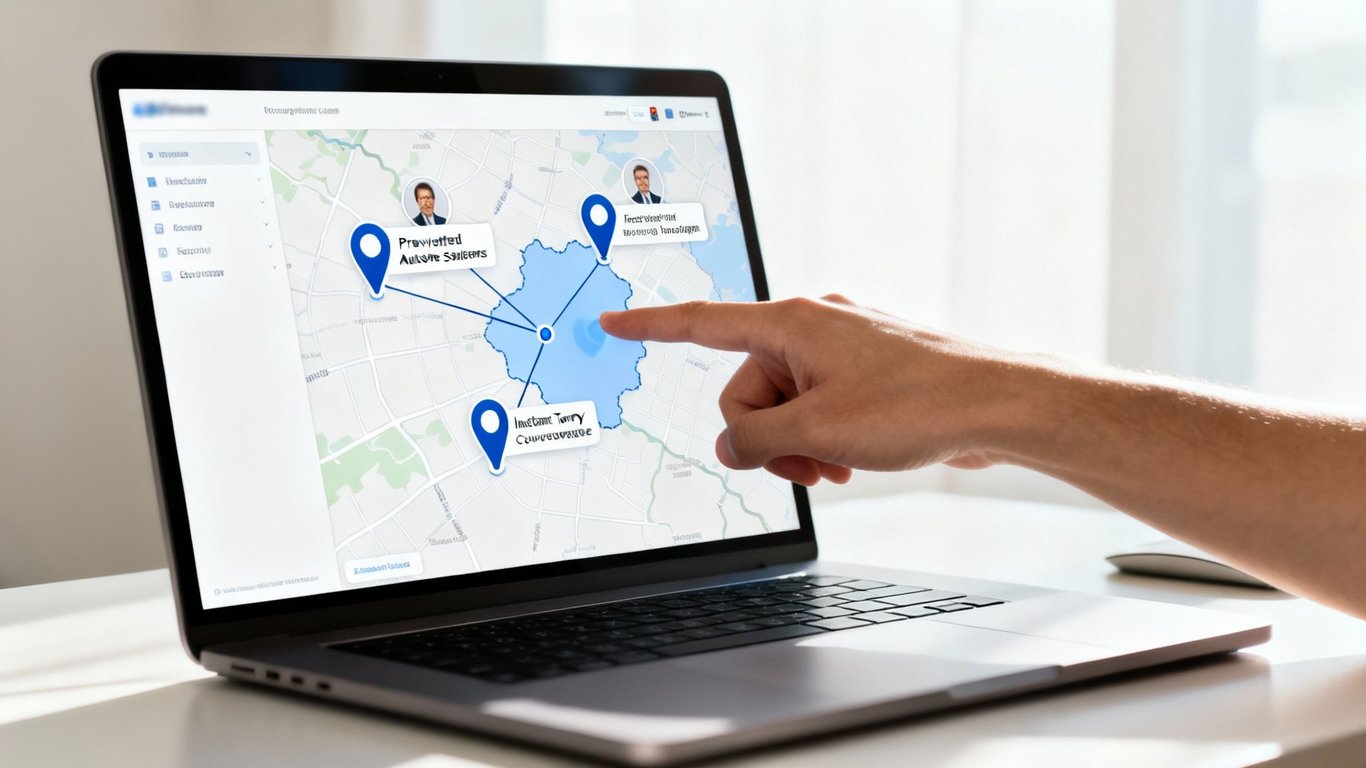
This visual approach provides a clear overview of available talent, enabling strategic team building. When you partner with reps who can add your products to their existing portfolio, you gain immediate access to their trusted network of buyers, shortening the sales cycle from months to weeks.
Got Questions? We’ve Got Answers
Whether you are pursuing a career in automotive sales or looking to hire, several common questions arise. Here are clear answers to some of the most frequent inquiries.
How Much Do Automotive Sales Reps Actually Make in Commission?
Compensation structures vary significantly depending on the role.
A dealership sales consultant typically earns 20% to 35% of the gross profit on a vehicle sale. This model is focused on individual transactions and offers high earning potential.
Independent reps in the aftermarket operate on a B2B volume basis, with commissions usually ranging from 5% to 15% of total sales. Their focus is on building a large and consistent book of business. OEM representatives are generally salaried employees whose bonuses are tied to the overall performance of their dealership network.
What Skills Separate the Best from the Rest?
Product knowledge is a baseline requirement. The most successful reps master soft skills, including active listening—understanding a customer's needs before proposing a solution. Strong negotiation skills, focused on creating mutually beneficial outcomes, are also essential.
Resilience is another critical trait. The ability to handle rejection and persistently pursue new opportunities is a hallmark of a top performer.
The most effective reps today act as trusted consultants. In an era where buyers are highly informed, a rep's value lies in building genuine trust and providing expert guidance through a complex purchasing decision. This approach fosters long-term customer relationships.
Additionally, proficiency with CRM software and the ability to interpret sales analytics are now core competencies. These skills enable reps to identify opportunities and stay ahead of market trends.
Ready to skip the endless interviews and hiring headaches? Zilla Sales gives you instant access to a network of vetted, on-demand automotive sales reps ready to hit the ground running. Find the perfect rep and start selling faster.
Keep Reading
More insights for high-performance sales teams.

A Modern Guide to B2B Door to Door Companies
Uncover how modern door to door companies work, the real costs, and the risks. Learn about a smarter alternative for fast B2B territory growth.

Mastering Software Sales Training for Elite Reps
Build a world-class software sales training program. This guide details the curriculum, metrics, and tools needed to accelerate revenue with your sales team.

How Does Commission Work in Sales? A Manufacturer’s Guide
Understand how does commission work in sales. This guide explains common structures, calculation examples, and best practices for B2B manufacturing companies.
Ready to find your sales partner?
Join manufacturers who are successfully expanding their territories with our network. Post a listing in minutes and start receiving matches.
✓ Verified Professionals • ✓ No Long-term Contracts